The magic timer game
1–2 yearsSuccess MindsetMaterials: Visual timer (sand timer, color-changing timer, or phone timer)
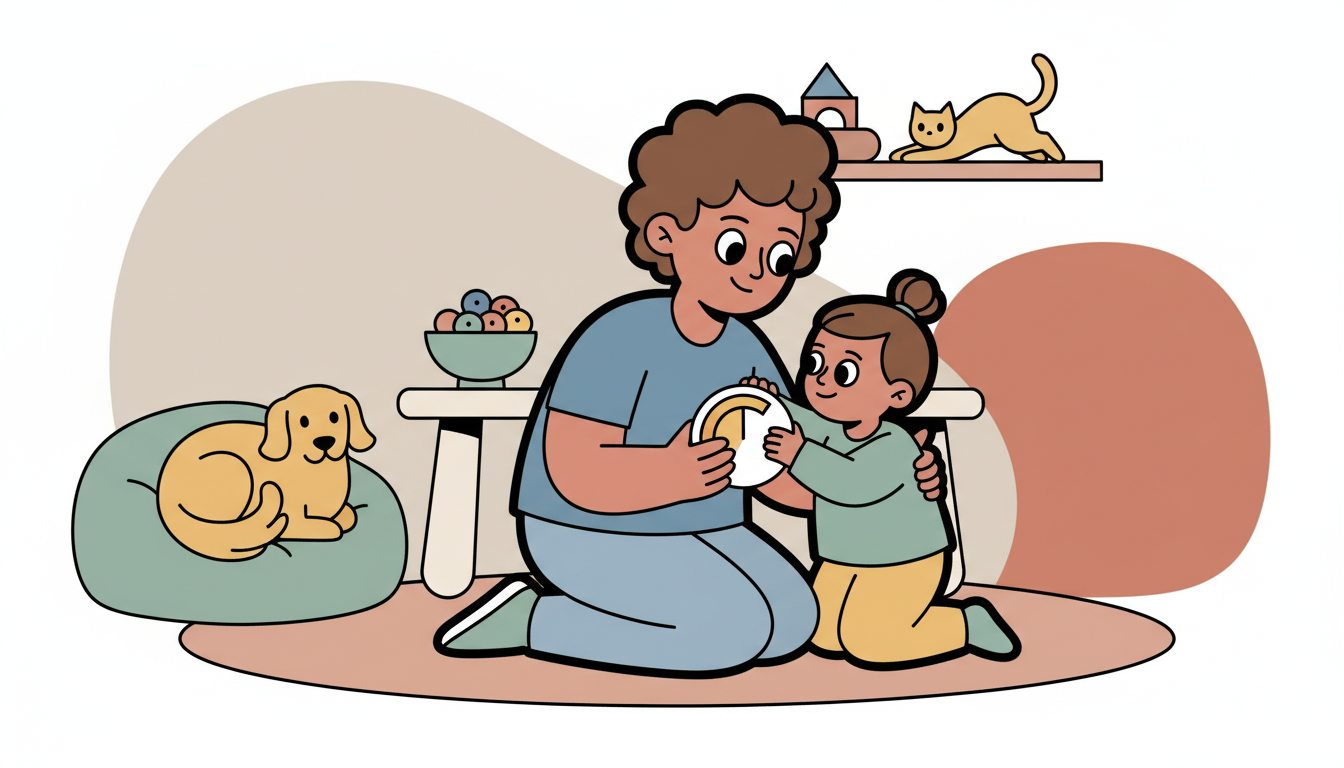
Use a simple visual timer for brief waiting periods. Show your child the timer and say 'when the timer is done, we'll have our snack.' Start with just 30 seconds. The visual element helps your child see time passing. This makes waiting feel more manageable and predictable.
Part of the Imprint developmental journey — personalized to your child.
How to Do This Activity
Use a simple visual timer for brief waiting periods. Show your child the timer and say 'when the timer is done, we'll have our snack.' Start with just 30 seconds. The visual element helps your child see time passing. This makes waiting feel more manageable and predictable.
Why It Works
Visual timers make abstract time concepts concrete for toddlers who cannot yet understand time mentally. Self-control in first grade predicts being 54% more likely to graduate high school on time (Johnson et al., 2022). Starting with visual supports for waiting in toddlerhood builds the self-regulation skills that support later academic persistence and success.
Tips for Parents
Choose a timer with a clear visual element like sand falling or colors changing.
Stay with your child during the wait and talk about what you see happening.
Celebrate together when the timer finishes to make waiting rewarding.
Materials Needed
Visual timer (sand timer, color-changing timer, or phone timer)
Learning Methods
Language-Rich EnvironmentMontessori Practical Life Activities

Loved this activity? Let us do the planning for you.
Imprint personalizes every activity to your child — their interests, their stage, the traits they're building — so playtime is more fun and every moment counts.
Science-backed. Private by design. No spam.