Simple solution steps
1–2 yearsFamily ConnectionNo materials needed
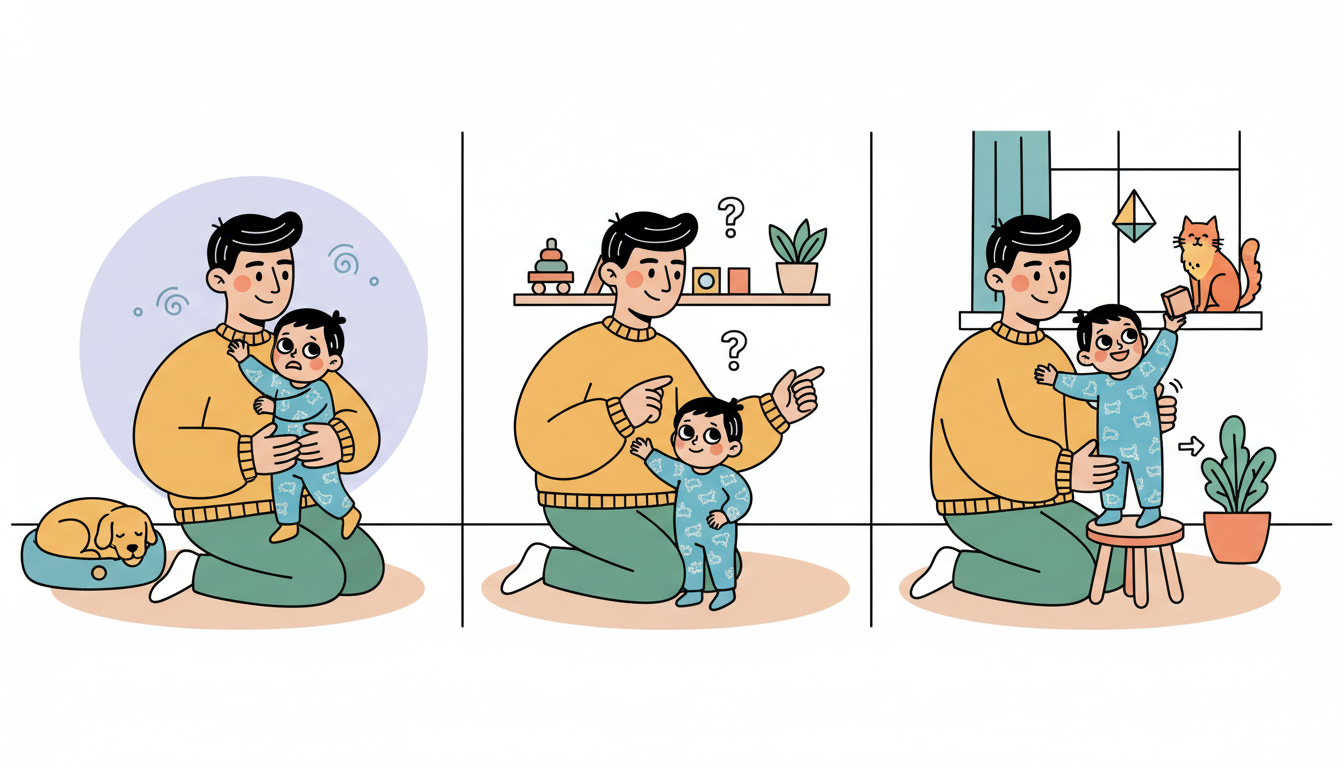
When a conflict happens, walk your child through very simple problem-solving steps using actions and few words. First, help them calm down. Then, show the problem (pointing or demonstrating). Finally, show a simple solution. For example, if they can't reach something, show the problem, then bring a stool. This teaches a basic conflict resolution process.
Part of the Imprint developmental journey — personalized to your child.
How to Do This Activity
When a conflict happens, walk your child through very simple problem-solving steps using actions and few words. First, help them calm down. Then, show the problem (pointing or demonstrating). Finally, show a simple solution. For example, if they can't reach something, show the problem, then bring a stool. This teaches a basic conflict resolution process.
Why It Works
At this age, children are beginning to understand cause and effect and can follow simple one-step instructions. Breaking problem-solving into tiny, visible steps helps them begin to internalize a conflict resolution process. Collaborative problem-solving approaches in families predict better parent-child relationships during adolescence and young adulthood (Robin & Foster, 1989). Children who learn to seek mutually beneficial solutions show 30% better emotional regulation throughout development (Shantz, 1987). You're planting seeds for more complex problem-solving skills later.
Tips for Parents
Use more actions than words. Show what you mean with gestures and demonstrations.
Keep it to two or three simple steps maximum. Their attention span is only 3-6 minutes at this age.
Materials Needed
None
Learning Methods
Language-Rich EnvironmentImitation and Modeling

Loved this activity? Let us do the planning for you.
Imprint personalizes every activity to your child — their interests, their stage, the traits they're building — so playtime is more fun and every moment counts.
Science-backed. Private by design. No spam.