Name that feeling
1–2 yearsFamily ConnectionNo materials needed
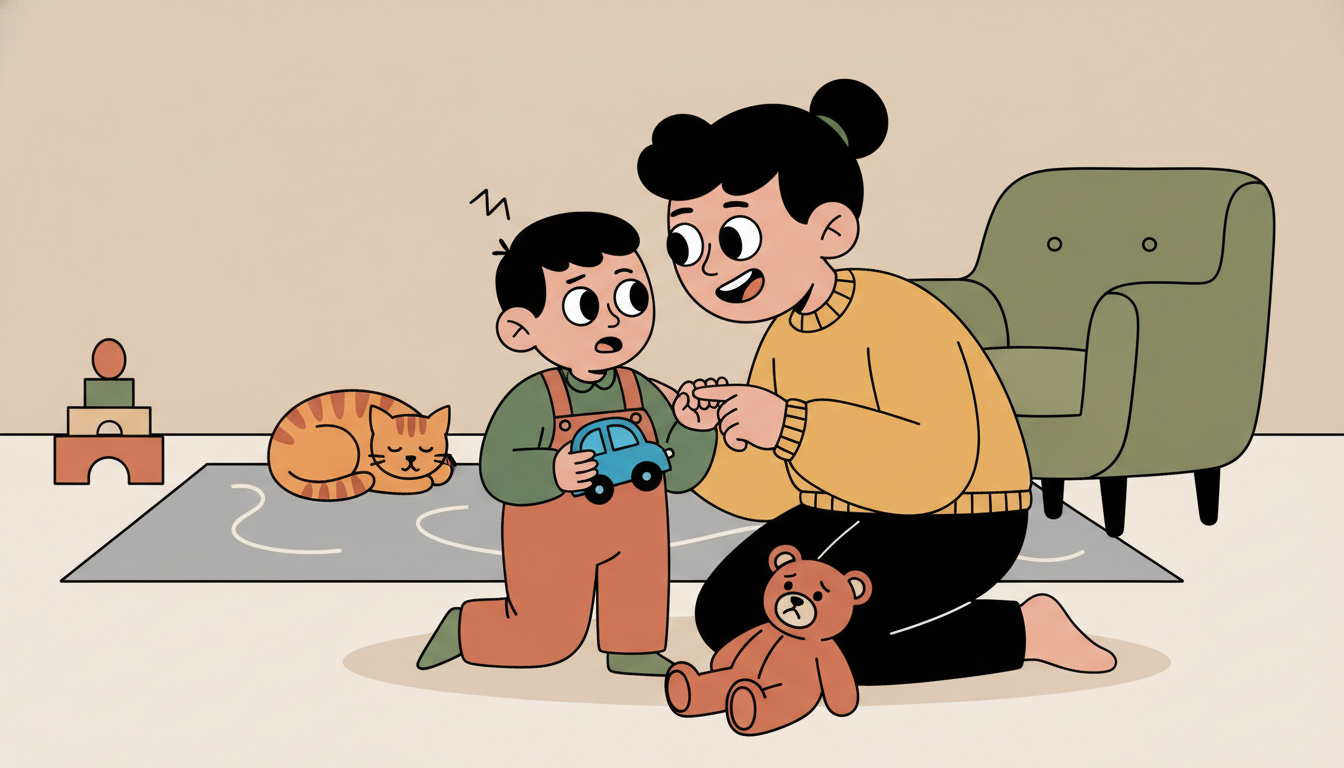
Throughout your time together, point out and name emotions you see in yourself, your child, and others around you. When your child looks frustrated with a toy, say 'You feel frustrated.' When you smile, say 'I feel happy.' When another child cries, say 'Baby is sad.' This simple labeling helps your child begin to recognize and understand emotions in themselves and others.
Part of the Imprint developmental journey — personalized to your child.
How to Do This Activity
Throughout your time together, point out and name emotions you see in yourself, your child, and others around you. When your child looks frustrated with a toy, say 'You feel frustrated.' When you smile, say 'I feel happy.' When another child cries, say 'Baby is sad.' This simple labeling helps your child begin to recognize and understand emotions in themselves and others.
Why It Works
Labeling emotions builds the foundation for empathy by helping children recognize feelings in themselves and others. Research shows that parental empathy toward children predicts the child's own empathy development, and when parents model emotional awareness, children learn to understand and respond to others' emotions (Liu et al., 2020). At this age, children are beginning to move from emotional contagion to early cognitive empathy, making consistent emotion labeling particularly effective.
Tips for Parents
Keep your emotion words simple and clear. Use the same basic emotion words consistently (happy, sad, mad, scared).
Match your facial expression to the emotion you are naming. Your child learns by watching your face.
Acknowledge your child's attempts to show concern for others, even small ones. Say 'You noticed baby is sad' when they look at a crying child.
Materials Needed
None
Learning Methods
Language-Rich EnvironmentImitation and ModelingBeginning Symbolic Play

Loved this activity? Let us do the planning for you.
Imprint personalizes every activity to your child — their interests, their stage, the traits they're building — so playtime is more fun and every moment counts.
Science-backed. Private by design. No spam.