Mirror your baby's feelings
6–12 monthsFamily ConnectionNo materials needed
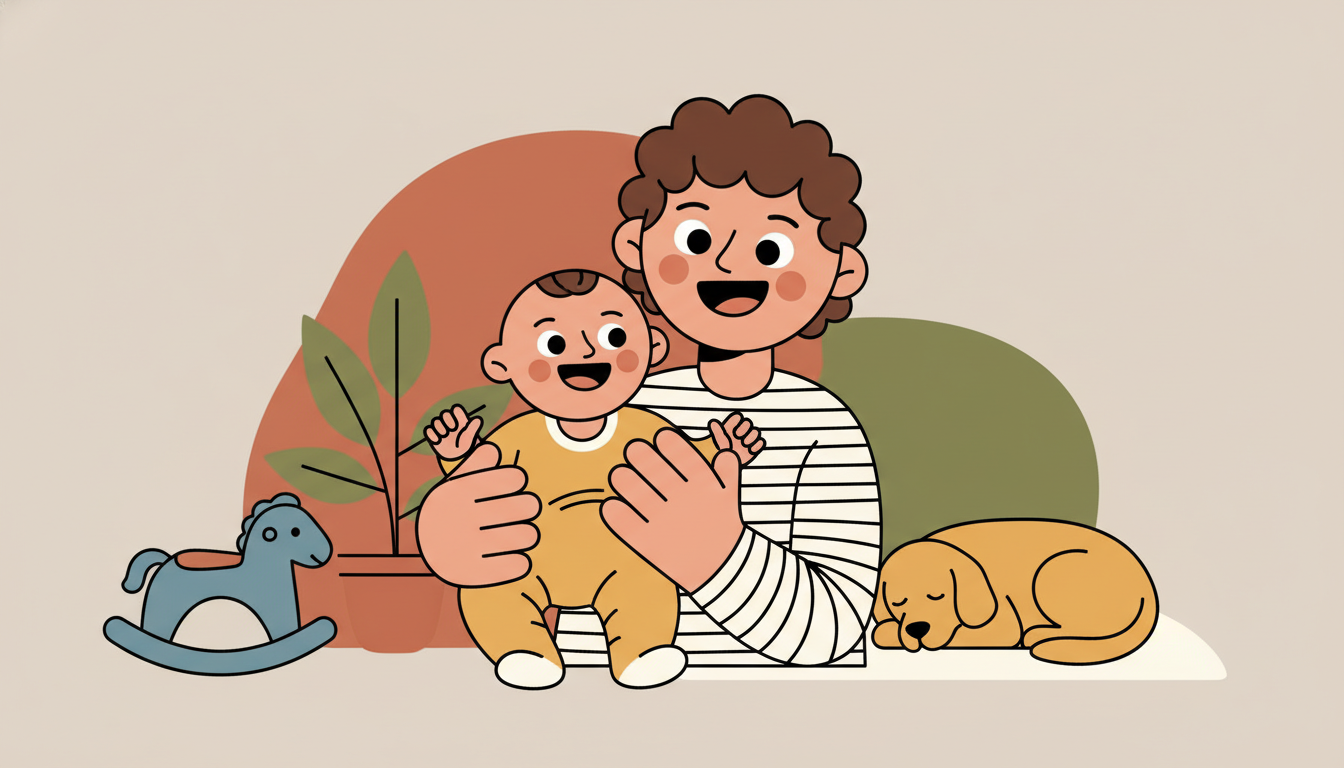
Watch your baby's face during your time together. When your baby shows an emotion, reflect it back gently with your own expression and a soft voice. If they smile, smile back warmly. If they look worried, soften your face and use a comforting tone. This simple back-and-forth helps your baby learn that their feelings matter and that you understand them.
Part of the Imprint developmental journey — personalized to your child.
How to Do This Activity
Watch your baby's face during your time together. When your baby shows an emotion, reflect it back gently with your own expression and a soft voice. If they smile, smile back warmly. If they look worried, soften your face and use a comforting tone. This simple back-and-forth helps your baby learn that their feelings matter and that you understand them.
Why It Works
When you respond sensitively to your baby's emotional states, you build neural templates for empathy and emotional understanding. Research shows that parental empathy toward children has indirect effects on children's emotional and behavioral development through building social competence (Liu et al., 2020). By mirroring emotions, you create a safe space for your baby to express themselves, which reduces anxiety and promotes belonging (Bhansali, 2023).
Tips for Parents
You can do this anytime during the day, like during diaper changes or playtime.
If your baby seems overwhelmed, take a gentle break and try again when they're calm.
Your warm response teaches your baby about emotional connection.
Materials Needed
None
Learning Methods
Responsive InteractionSensory Exploration

Loved this activity? Let us do the planning for you.
Imprint personalizes every activity to your child — their interests, their stage, the traits they're building — so playtime is more fun and every moment counts.
Science-backed. Private by design. No spam.