Match your voice tone
0–6 monthsEmotional WellbeingNo materials needed
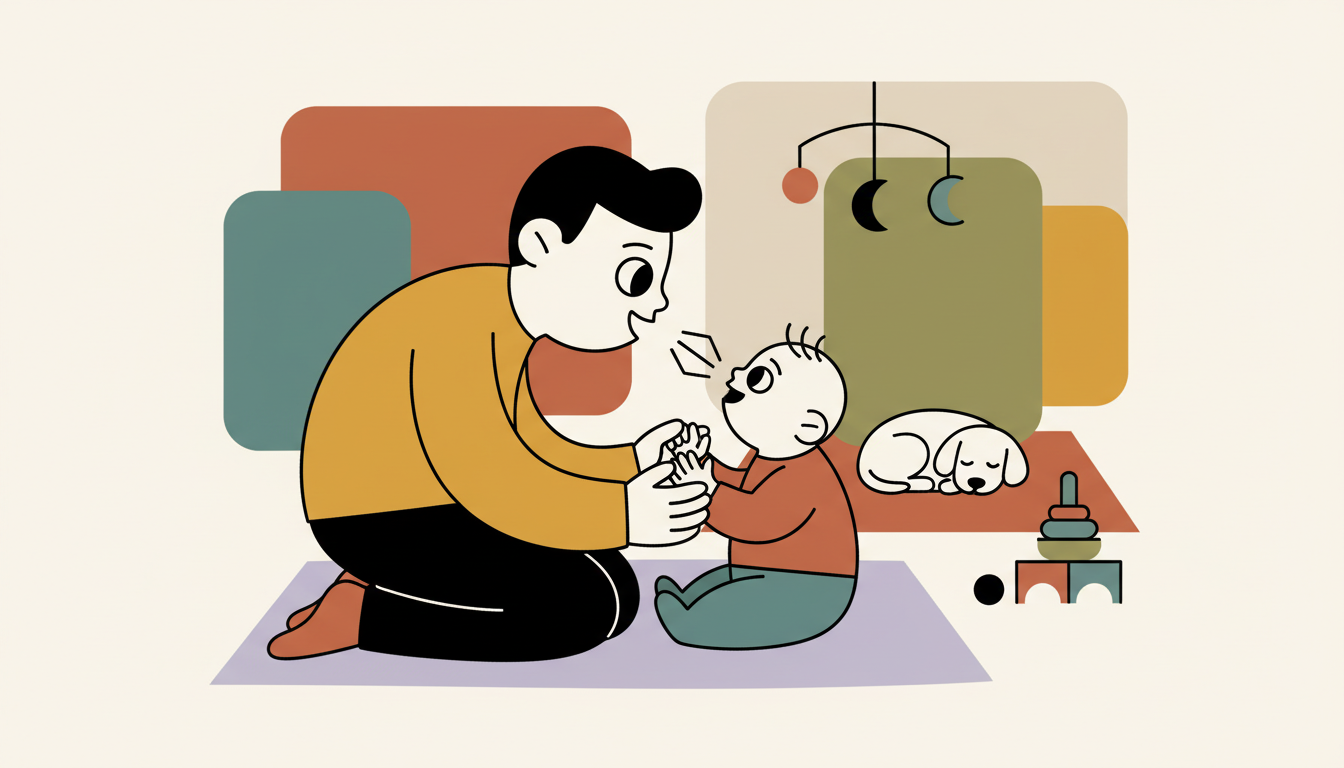
Pay attention to the sounds your baby makes and match your voice tone to theirs. If they babble softly, respond softly. If they make louder sounds, you can be a bit louder too. This happens naturally during play or care routines.
Part of the Imprint developmental journey — personalized to your child.
How to Do This Activity
Pay attention to the sounds your baby makes and match your voice tone to theirs. If they babble softly, respond softly. If they make louder sounds, you can be a bit louder too. This happens naturally during play or care routines.
You're showing your baby that you understand their emotional state. This attunement helps them feel seen and heard, building emotional trust and awareness.
Why It Works
Vocal attunement and matching help infants develop emotional awareness through caregiver responsiveness. When parents mirror emotional tone, babies begin understanding that emotions are recognized and validated, supporting the development of self-awareness and emotional expression skills that are core to emotional intelligence (Goleman, 1995).
Tips for Parents
Notice changes in their voice tone throughout the day. These changes often match their emotional state.
You don't need to copy exactly. Just show you're paying attention to how they sound.
Materials Needed
None
Learning Methods
Responsive InteractionSensory Exploration

Loved this activity? Let us do the planning for you.
Imprint personalizes every activity to your child — their interests, their stage, the traits they're building — so playtime is more fun and every moment counts.
Science-backed. Private by design. No spam.