Feelings in picture books
1–2 yearsEmotional WellbeingMaterials: Picture books with expressive characters
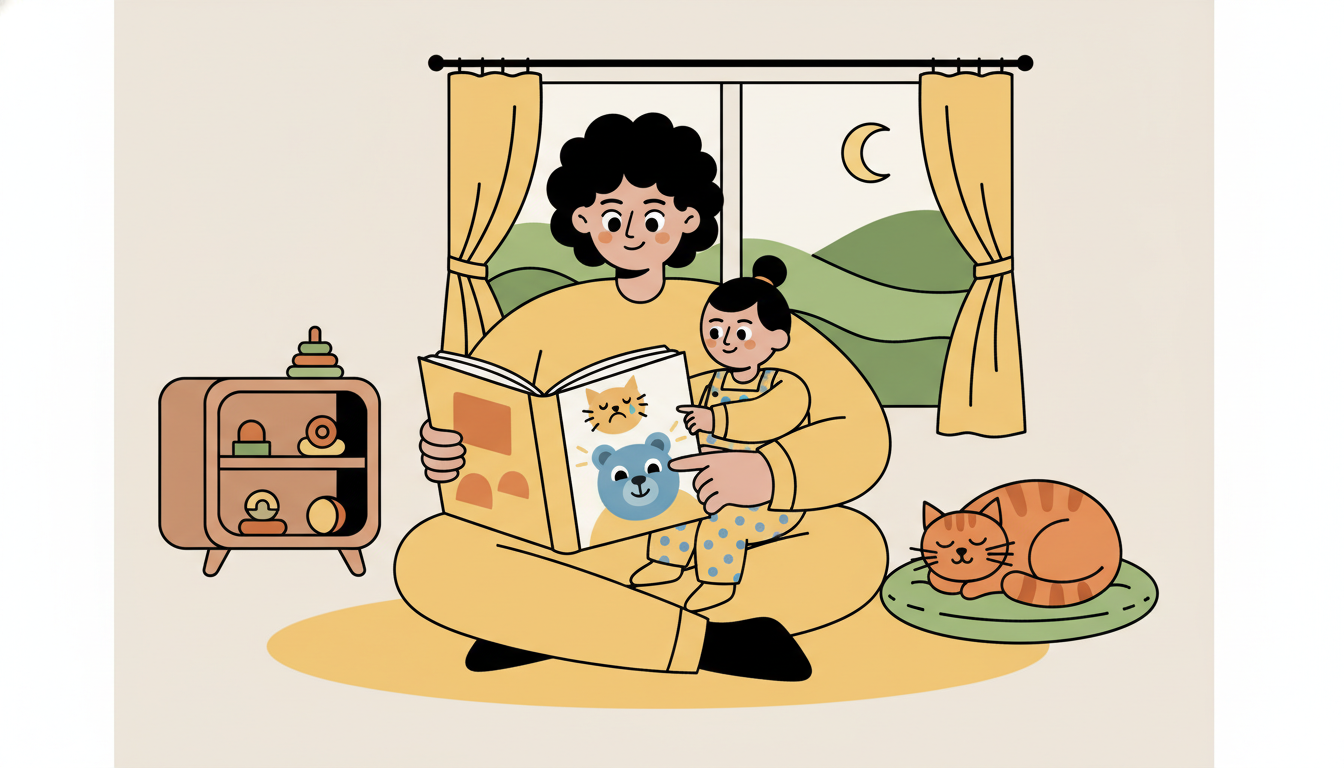
During reading time, point to characters' faces and name their emotions. Ask simple questions like 'Is the bear happy or sad?' Let your child point to the faces. You can use the same book many times, focusing on different emotions each time. This builds emotional vocabulary naturally during a routine you already do.
Part of the Imprint developmental journey — personalized to your child.
How to Do This Activity
During reading time, point to characters' faces and name their emotions. Ask simple questions like 'Is the bear happy or sad?' Let your child point to the faces. You can use the same book many times, focusing on different emotions each time. This builds emotional vocabulary naturally during a routine you already do.
Why It Works
Reading about feelings in a language-rich environment supports the vocabulary explosion happening at this age. Research shows that emotional intelligence development in early childhood leads to better emotional recognition and expression skills in adulthood, with improved concentration and study habits (Goleman, 1995). Books provide safe scenarios to explore emotions.
Tips for Parents
Choose books with clear, expressive illustrations of faces.
Pause to let your child look at and process the pictures.
Connect the character's emotions to your child's experiences, like 'The rabbit is sad, just like when you dropped your toy.'
Materials Needed
Picture books with expressive characters
Learning Methods
Language-Rich EnvironmentImitation and ModelingBeginning Symbolic Play

Loved this activity? Let us do the planning for you.
Imprint personalizes every activity to your child — their interests, their stage, the traits they're building — so playtime is more fun and every moment counts.
Science-backed. Private by design. No spam.