Feelings in books
1–2 yearsFamily ConnectionMaterials: Picture books with clear emotions shown on faces
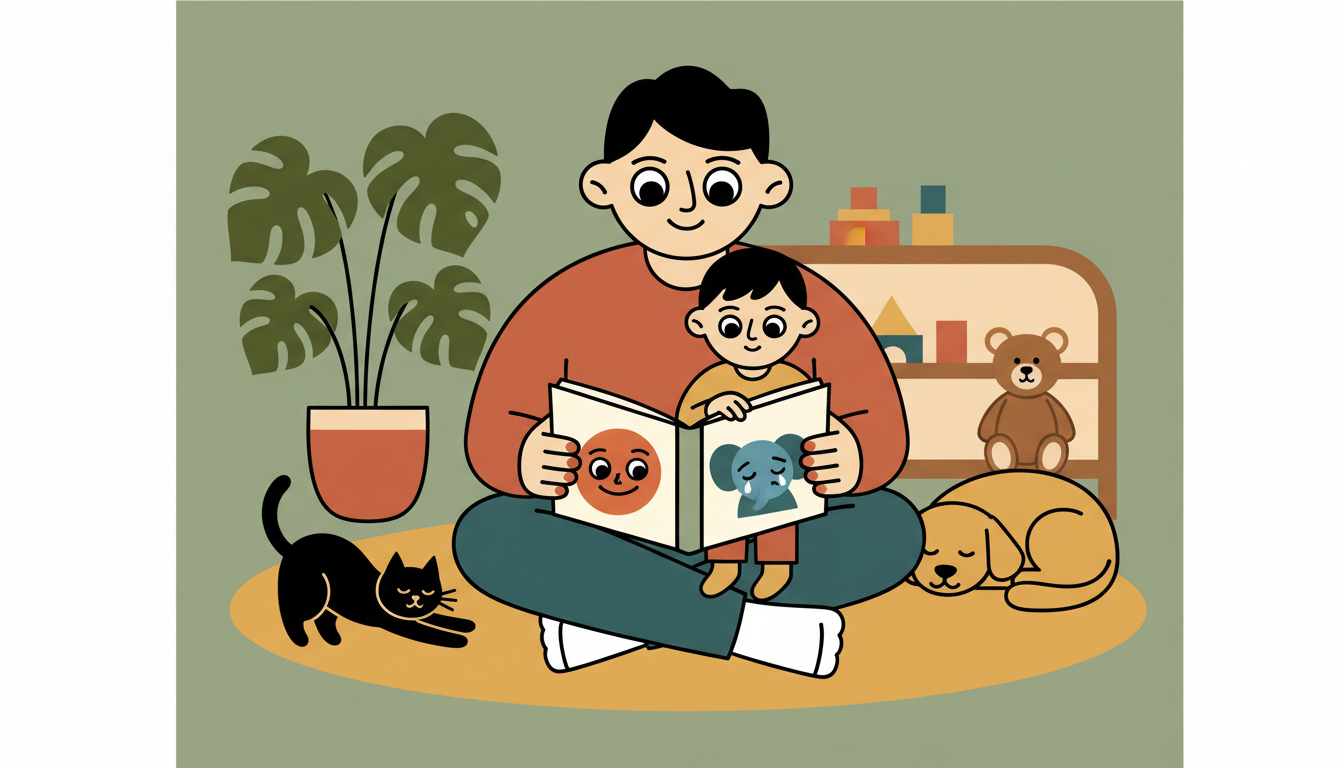
Choose a simple picture book and point out how characters feel as you read together. When you see a happy character, point and say 'She is happy. See her smile?' When a character looks sad, say 'He is sad' and make a sad face. Pause to let your child look at the pictures. This helps your child learn to recognize emotions in others through the safe distance of a story.
Part of the Imprint developmental journey — personalized to your child.
How to Do This Activity
Choose a simple picture book and point out how characters feel as you read together. When you see a happy character, point and say 'She is happy. See her smile?' When a character looks sad, say 'He is sad' and make a sad face. Pause to let your child look at the pictures. This helps your child learn to recognize emotions in others through the safe distance of a story.
Why It Works
Books provide a valuable tool for building empathy by showing diverse emotional situations in a safe, controlled way. Research shows that empathy development follows a predictable path from emotional contagion in infancy to cognitive empathy later, and books support this progression by helping children recognize and understand others' emotions (Eisenberg et al., 2015). The language-rich environment of reading together also supports the vocabulary explosion happening at this age, giving children words to think and talk about feelings.
Tips for Parents
Pick books with clear facial expressions in the pictures. Simple board books work well.
Keep your comments short and clear. One or two words about the feeling is enough.
Let your child point at pictures too. Follow their interest and name what they notice.
Materials Needed
Picture books with clear emotions shown on faces
Learning Methods
Language-Rich EnvironmentImitation and ModelingBeginning Symbolic Play

Loved this activity? Let us do the planning for you.
Imprint personalizes every activity to your child — their interests, their stage, the traits they're building — so playtime is more fun and every moment counts.
Science-backed. Private by design. No spam.