Feeling faces matching
1–2 yearsFamily ConnectionMaterials: Paper and crayons to draw simple faces, or pictures from magazines
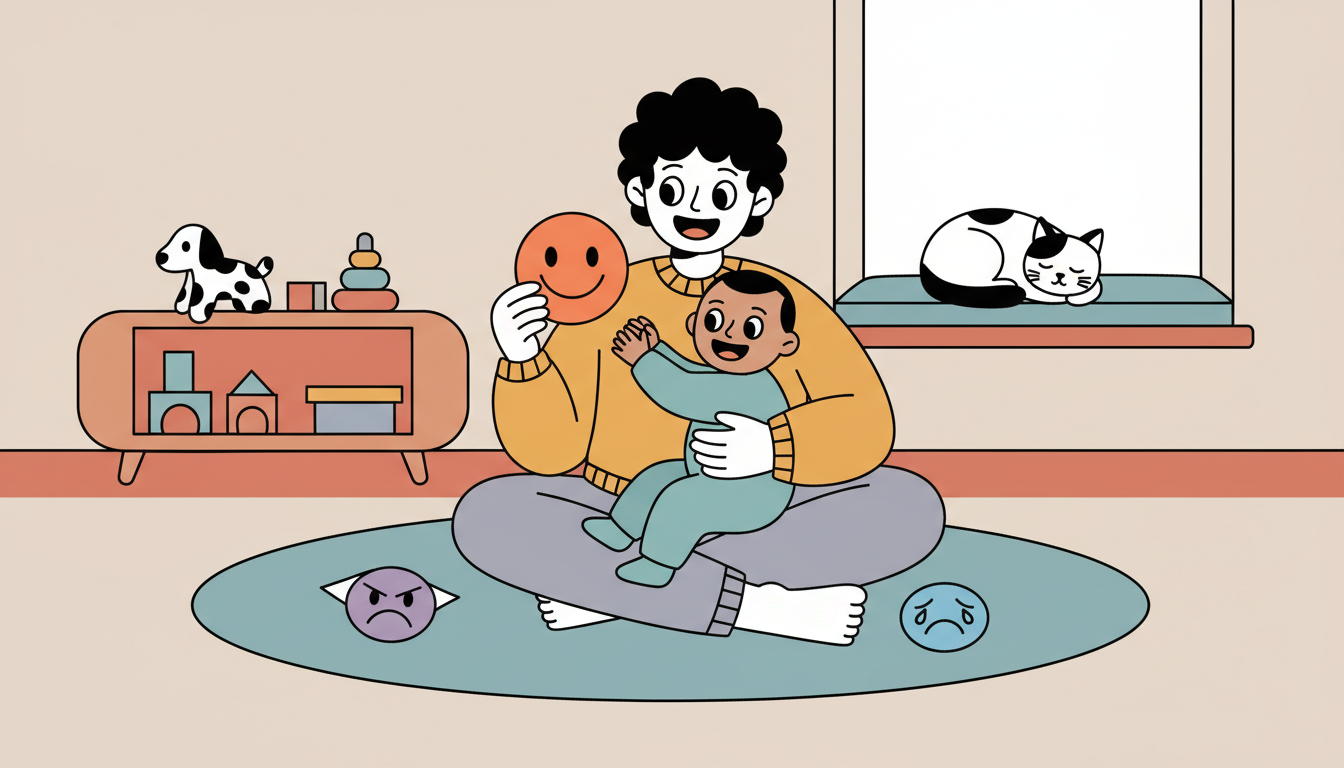
Cut out or draw simple faces showing different emotions (happy, sad, angry). Show your child one face at a time and name the feeling. Then make that expression yourself and help your child copy it. Keep just two or three emotion faces at first. This simple matching activity helps your child learn to recognize and reproduce emotional expressions, building the foundation for understanding how others feel.
Part of the Imprint developmental journey — personalized to your child.
How to Do This Activity
Cut out or draw simple faces showing different emotions (happy, sad, angry). Show your child one face at a time and name the feeling. Then make that expression yourself and help your child copy it. Keep just two or three emotion faces at first. This simple matching activity helps your child learn to recognize and reproduce emotional expressions, building the foundation for understanding how others feel.
Why It Works
Recognizing emotions in facial expressions is fundamental to empathy development. Research shows that childhood behaviors including recognizing and responding sensitively to emotions predict stronger adult empathy and relationship quality (Eisenberg et al., 2015). This matching activity uses the toddler's emerging ability to recognize and match similar items while building emotional vocabulary. The imitation component leverages one of the most powerful learning methods at this age, helping children internalize the connection between facial expressions and emotional states.
Tips for Parents
Start with happy and sad. These are the easiest emotions for toddlers to recognize.
Use simple, clear drawings. Complicated pictures can be confusing.
Praise your child's attempts to make the faces. Say 'You made a sad face just like the picture.'
Materials Needed
Paper and crayons to draw simple faces, or pictures from magazines
Learning Methods
Language-Rich EnvironmentImitation and ModelingBeginning Symbolic Play

Loved this activity? Let us do the planning for you.
Imprint personalizes every activity to your child — their interests, their stage, the traits they're building — so playtime is more fun and every moment counts.
Science-backed. Private by design. No spam.