Face-to-face discovery
0–6 monthsSuccess MindsetNo materials needed
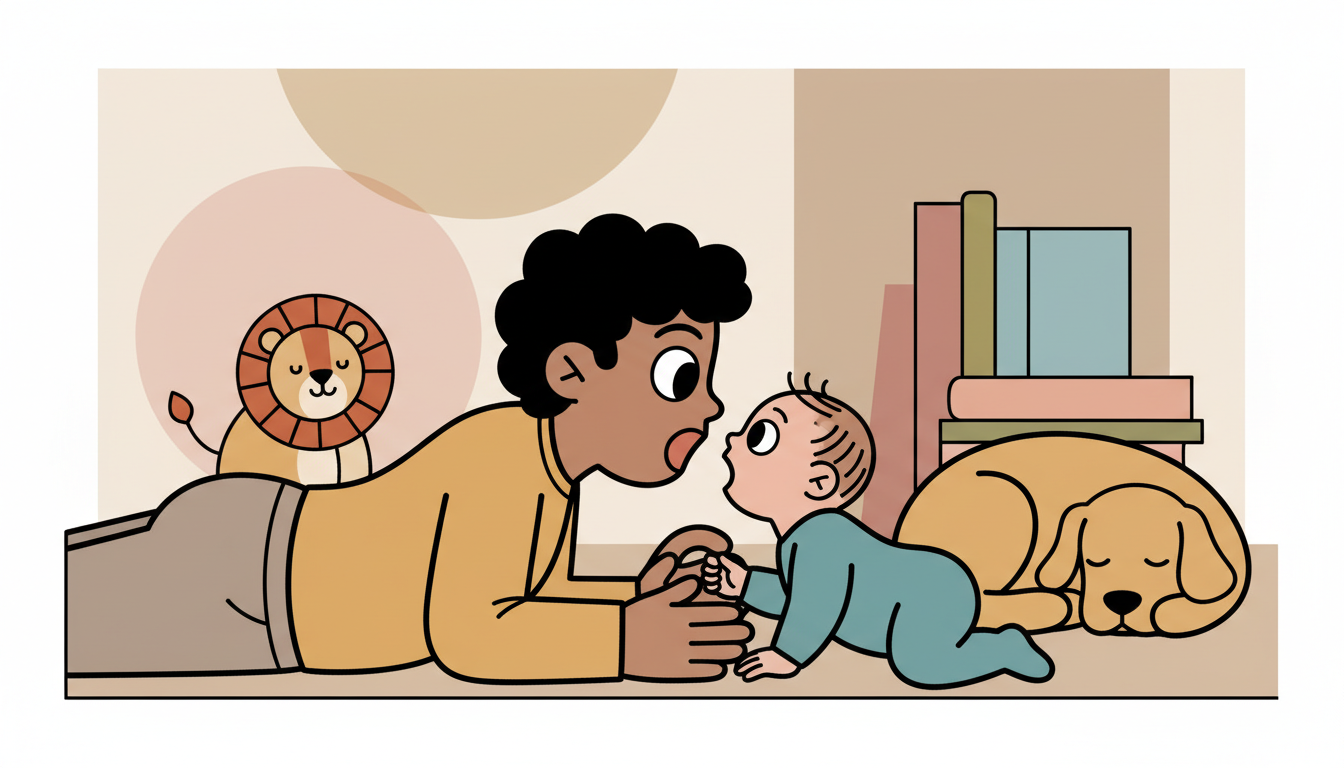
Lie down facing your child during tummy time or hold them at eye level. Make different facial expressions slowly, like opening your mouth wide, sticking out your tongue, or raising your eyebrows. Pause after each expression to let your child study your face. Many infants will try to imitate or simply gaze with intense focus at these changes.
Part of the Imprint developmental journey — personalized to your child.
How to Do This Activity
Lie down facing your child during tummy time or hold them at eye level. Make different facial expressions slowly, like opening your mouth wide, sticking out your tongue, or raising your eyebrows. Pause after each expression to let your child study your face. Many infants will try to imitate or simply gaze with intense focus at these changes.
Why It Works
Face-to-face interaction provides rich sensory input that engages infant curiosity. When babies attend to facial expressions, they are learning to process social information and practicing imitation skills. This type of engaged attention reflects curiosity, which enhances memory formation and learning (Gruber et al., 2014). Early curiosity about social cues supports later openness to new experiences (Kidd & Hayden, 2015).
Tips for Parents
Keep your movements slow and exaggerated so your child can clearly see each change in your expression.
This works well when your child is alert and content, usually after feeding or a nap.
Materials Needed
None
Learning Methods
Sensory ExplorationMovement-Based Learning

Loved this activity? Let us do the planning for you.
Imprint personalizes every activity to your child — their interests, their stage, the traits they're building — so playtime is more fun and every moment counts.
Science-backed. Private by design. No spam.