Emotional storytelling with toys
1–2 yearsEmotional WellbeingMaterials: Stuffed animals or dolls your child already has
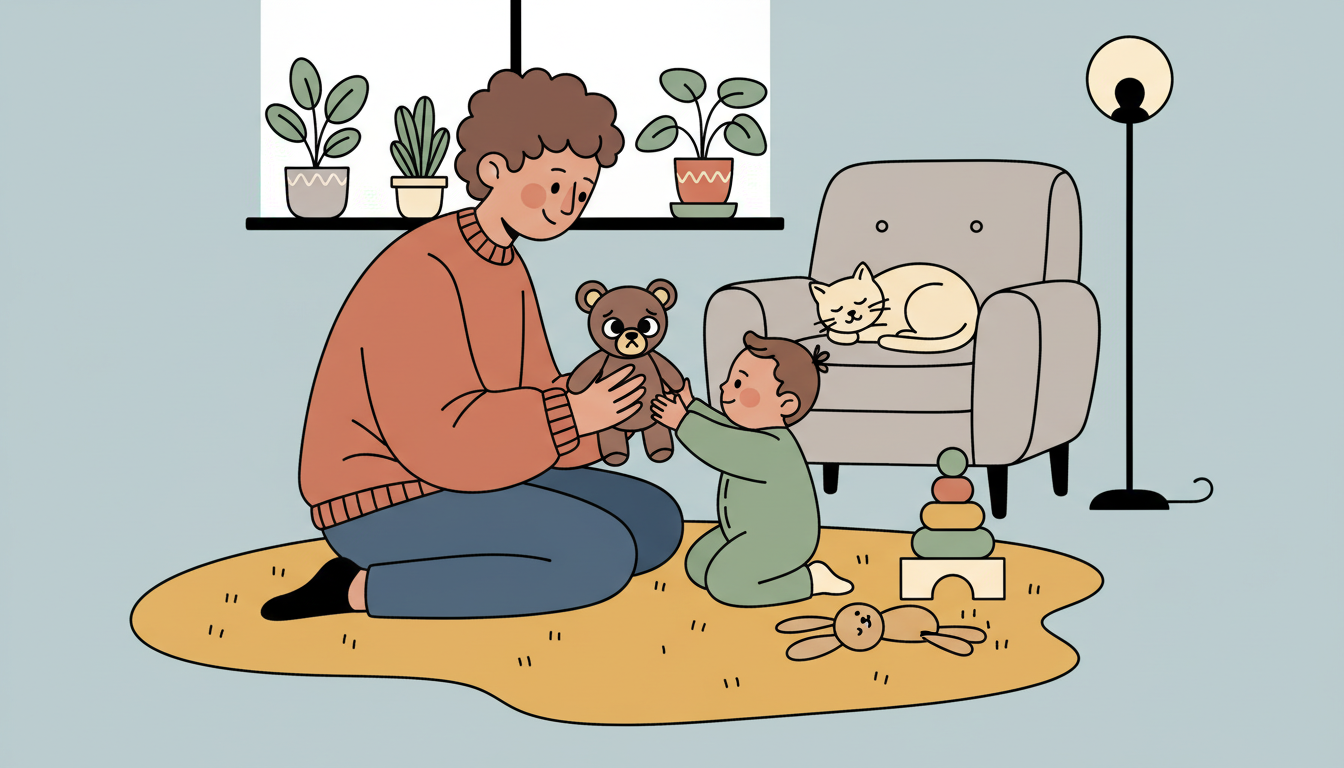
During play time, use your child's toys to act out simple emotional scenarios. Make a stuffed bear sad because it lost its toy, then help it feel better. Use simple language like 'Bear is sad. Bear needs a hug.' Invite your child to help comfort the toy. This uses symbolic play to explore feelings safely.
Part of the Imprint developmental journey — personalized to your child.
How to Do This Activity
During play time, use your child's toys to act out simple emotional scenarios. Make a stuffed bear sad because it lost its toy, then help it feel better. Use simple language like 'Bear is sad. Bear needs a hug.' Invite your child to help comfort the toy. This uses symbolic play to explore feelings safely.
Why It Works
Beginning symbolic play at this age allows children to explore emotional scenarios safely. This builds both emotional understanding and empathy as children practice helping others feel better. Children with higher emotional intelligence show significantly better relationship satisfaction and job performance in adulthood (Bar-On, 2006). Pretend play supports emotional skill development.
Tips for Parents
Keep scenarios very simple with clear emotions and resolutions.
Let your child lead sometimes and respond to their play ideas.
End scenarios positively to show that emotions pass and problems can be solved.
Materials Needed
Stuffed animals or dolls your child already has
Learning Methods
Language-Rich EnvironmentImitation and ModelingBeginning Symbolic Play

Loved this activity? Let us do the planning for you.
Imprint personalizes every activity to your child — their interests, their stage, the traits they're building — so playtime is more fun and every moment counts.
Science-backed. Private by design. No spam.