Emotion matching cards
1–2 yearsEmotional WellbeingMaterials: Cards or pictures with simple facial expressions
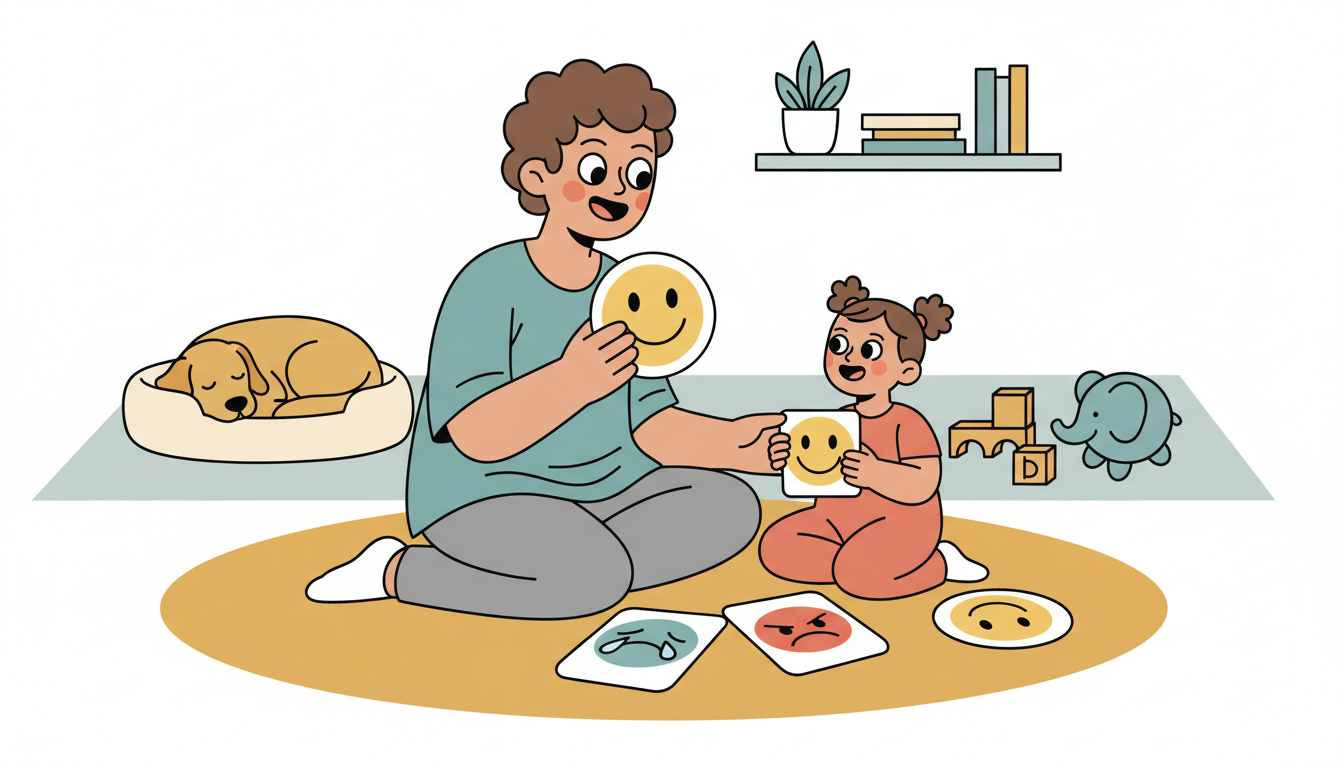
Use simple cards or pictures showing happy, sad, and mad faces. Show your child one card and make that face yourself. Then help them find another card with the same expression. Keep the game short and playful. You can make your own cards by drawing simple faces or cutting pictures from magazines.
Part of the Imprint developmental journey — personalized to your child.
How to Do This Activity
Use simple cards or pictures showing happy, sad, and mad faces. Show your child one card and make that face yourself. Then help them find another card with the same expression. Keep the game short and playful. You can make your own cards by drawing simple faces or cutting pictures from magazines.
Why It Works
Toddlers at this age can recognize and match similar items, making this activity developmentally appropriate. Matching emotions builds emotional recognition skills, a key component of emotional intelligence. Students with higher emotional intelligence show better psychological well-being and positive psychological characteristics (Brackett, Rivers, & Salovey, 2011).
Tips for Parents
Start with just two emotions and add more as your child masters these.
Celebrate when they make a match, even if it takes time.
Use real photos of faces if your child responds better to realistic images.
Materials Needed
Cards or pictures with simple facial expressions
Learning Methods
Language-Rich EnvironmentImitation and ModelingBeginning Symbolic Play

Loved this activity? Let us do the planning for you.
Imprint personalizes every activity to your child — their interests, their stage, the traits they're building — so playtime is more fun and every moment counts.
Science-backed. Private by design. No spam.