What happens if experiment
2–3 yearsSuccess MindsetMaterials: Water in a bowl or basin
Safe objects to test (plastic toys, wooden spoons, small balls, blocks)
Towel for cleanup
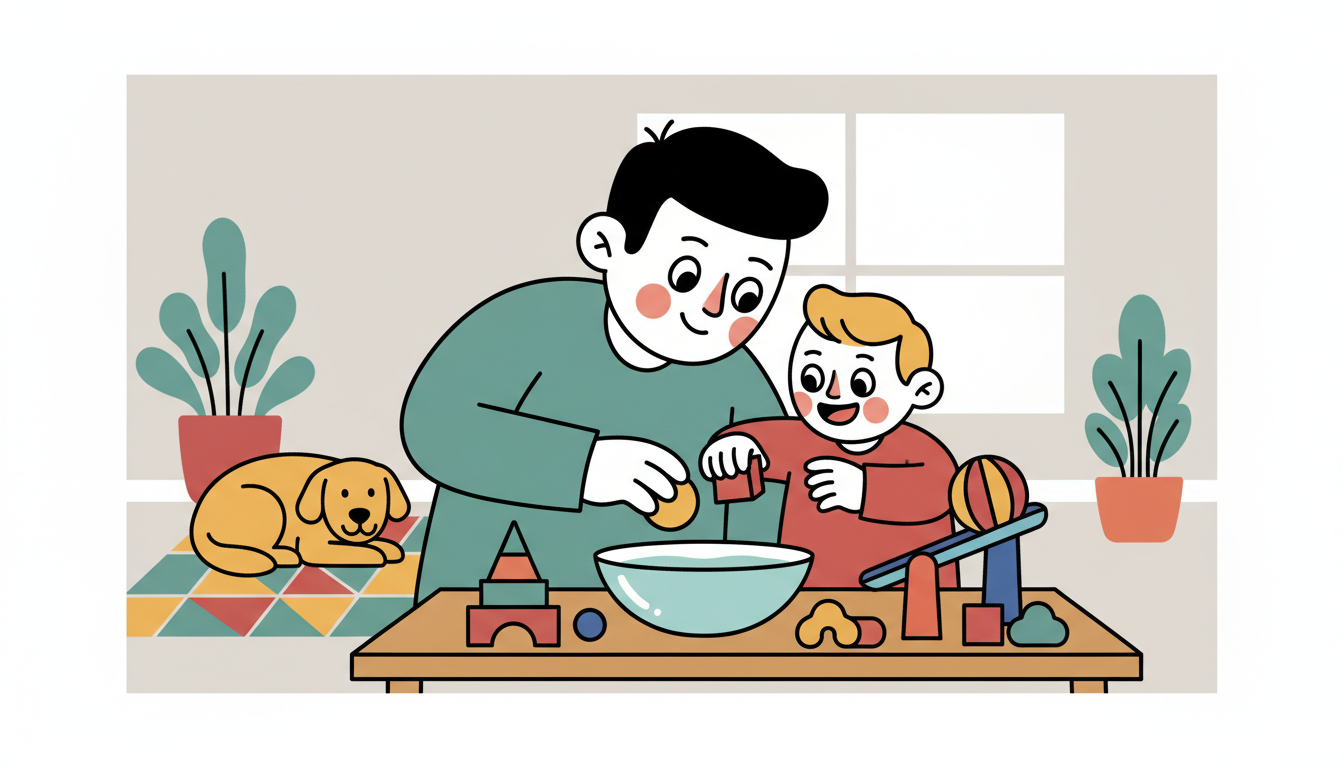
Set up simple cause-and-effect experiments using everyday items. Try dropping different objects into water to see what floats and what sinks. Roll balls of different sizes down a ramp. Stack blocks to see how high you can build before they fall. Let your child make predictions before each try, then discover what actually happens. Talk about what you both notice together.
Part of the Imprint developmental journey — personalized to your child.
How to Do This Activity
Set up simple cause-and-effect experiments using everyday items. Try dropping different objects into water to see what floats and what sinks. Roll balls of different sizes down a ramp. Stack blocks to see how high you can build before they fall. Let your child make predictions before each try, then discover what actually happens. Talk about what you both notice together.
Why It Works
Trial-and-error problem solving is exactly how children this age learn best. When children are curious about outcomes, they remember what they discover much better than when they're simply told information (Gruber et al., 2014). This hands-on exploration builds scientific thinking skills while supporting your child's natural drive to understand how the world works. Research shows that fostering this kind of curiosity during early childhood optimizes later academic achievement (Arnone et al., 2011). The predictions and discoveries create memorable learning moments.
Tips for Parents
Ask open-ended questions like "What do you think will happen?" before each experiment. There are no wrong answers.
Keep the experiments simple and safe. You're building curiosity, not teaching physics concepts yet.
Let your child repeat the same experiment multiple times if they want. Repetition is how they learn at this age.
Materials Needed
Water in a bowl or basin
Safe objects to test (plastic toys, wooden spoons, small balls, blocks)
Towel for cleanup
Learning Methods
Symbolic and Pretend PlayHands-On Sensory ActivitiesInteractive Play-Based Learning

Loved this activity? Let us do the planning for you.
Imprint personalizes every activity to your child — their interests, their stage, the traits they're building — so playtime is more fun and every moment counts.
Science-backed. Private by design. No spam.