Wait for the timer
2–3 yearsSuccess MindsetMaterials: Kitchen timer or phone timer
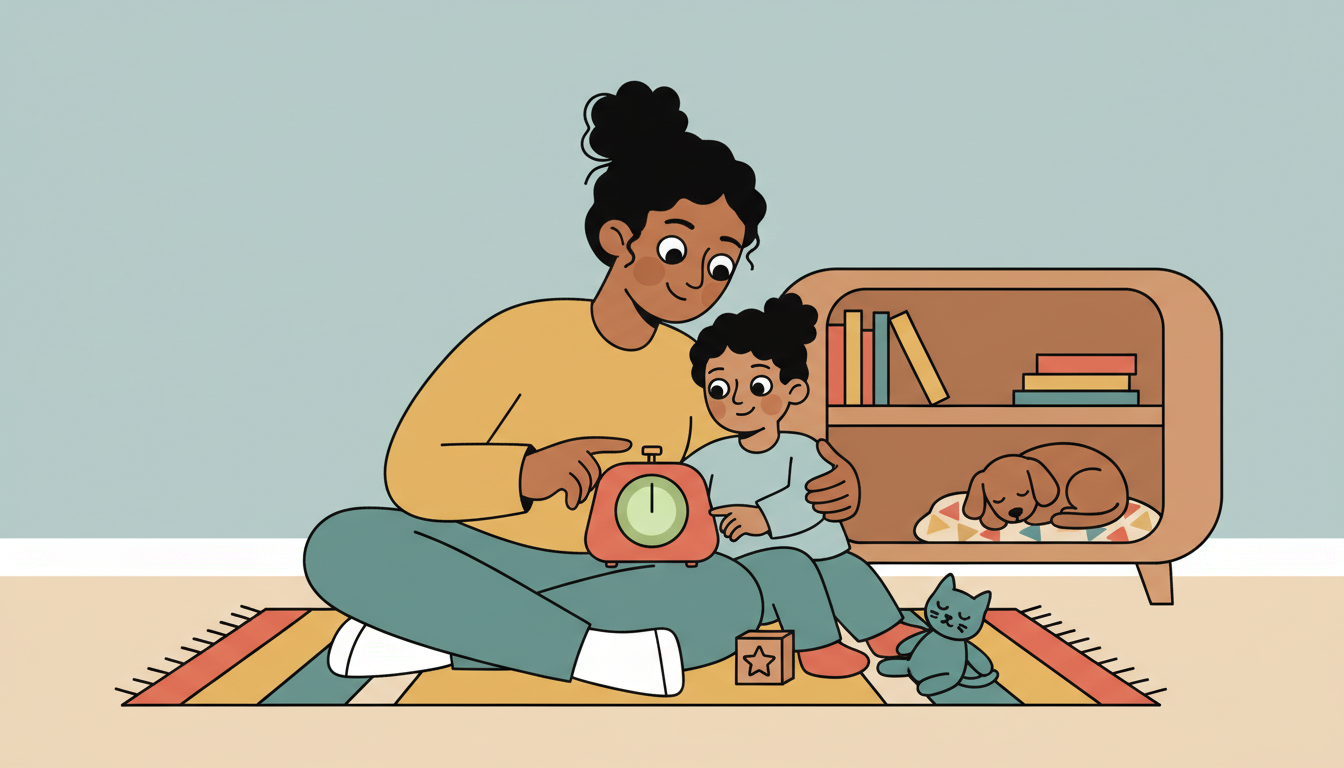
Set a kitchen timer for one to two minutes and practice waiting together. Start with small waits like 30 seconds, then gradually increase. You can wait for a snack, a toy, or a turn at something fun. Let your child watch the timer count down so waiting feels more concrete.
Part of the Imprint developmental journey — personalized to your child.
How to Do This Activity
Set a kitchen timer for one to two minutes and practice waiting together. Start with small waits like 30 seconds, then gradually increase. You can wait for a snack, a toy, or a turn at something fun. Let your child watch the timer count down so waiting feels more concrete.
Why It Works
Making waiting visible and predictable helps toddlers develop self-control during this critical period when the prefrontal cortex is rapidly developing. Using concrete tools like timers provides the structure needed for children ages 24-36 months to practice self-regulation successfully. Research shows that cool self-regulation skills developed at age 3 are directly related to academic achievement by age 6 (Liew, Chen, & Hughes, 2010).
Tips for Parents
Start with very short waits and gradually build up time.
Give your child language to use while waiting, like 'almost time' or 'timer will beep soon'.
Stay nearby during the wait to offer support and encouragement.
Materials Needed
Kitchen timer or phone timer
Learning Methods
Interactive Play-Based LearningSongs, Stories, and RhymesSocial Learning Through Peers

Loved this activity? Let us do the planning for you.
Imprint personalizes every activity to your child — their interests, their stage, the traits they're building — so playtime is more fun and every moment counts.
Science-backed. Private by design. No spam.