Truth-telling puppet show
2–3 yearsSuccess MindsetMaterials: Stuffed animals or simple puppets
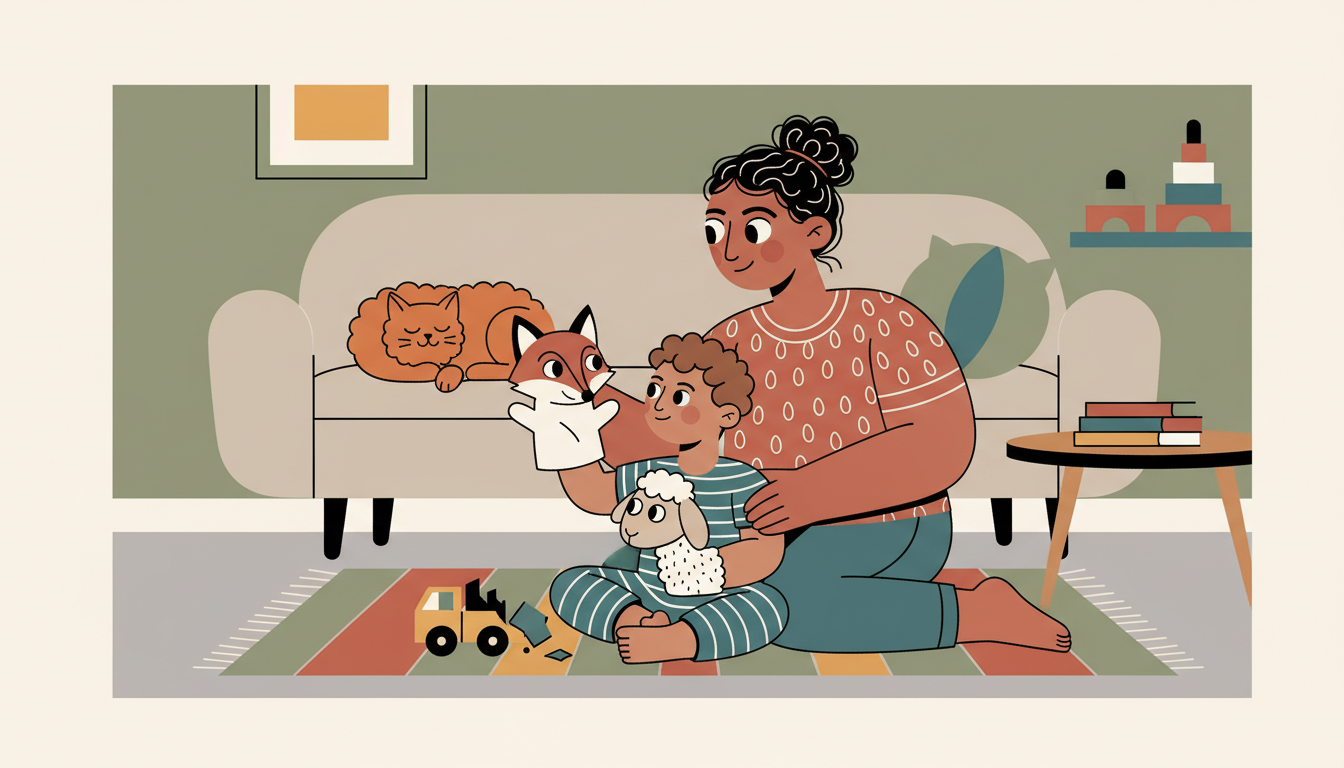
Use stuffed animals or simple hand puppets to act out short scenarios where a character faces a choice about telling the truth. Keep scenes simple, like a puppet accidentally breaking a toy and deciding whether to tell. After each scene, talk with your child about what happened and what the puppet should do.
Part of the Imprint developmental journey — personalized to your child.
How to Do This Activity
Use stuffed animals or simple hand puppets to act out short scenarios where a character faces a choice about telling the truth. Keep scenes simple, like a puppet accidentally breaking a toy and deciding whether to tell. After each scene, talk with your child about what happened and what the puppet should do.
Why It Works
Role-playing and pretend play help young children explore moral concepts in a safe, playful context. Children who demonstrate truthfulness and accountability for mistakes show stronger trust-building capabilities, which correlate with better collaborative relationships and academic success in group settings (Hoffman, 2000). At this age, symbolic play allows children to practice honesty scenarios without the pressure of real consequences.
Tips for Parents
Keep scenarios very simple and relatable to your child's daily experiences. Use a warm, calm tone when the puppet admits mistakes.
Praise your child when they identify the honest choice. You can say something like, "You're right, telling the truth helps everyone feel better."
Materials Needed
Stuffed animals or simple puppets
Learning Methods
Symbolic and Pretend PlaySongs, Stories, and Rhymes

Loved this activity? Let us do the planning for you.
Imprint personalizes every activity to your child — their interests, their stage, the traits they're building — so playtime is more fun and every moment counts.
Science-backed. Private by design. No spam.