Truth or imagination game
3–4 yearsSuccess MindsetNo materials needed
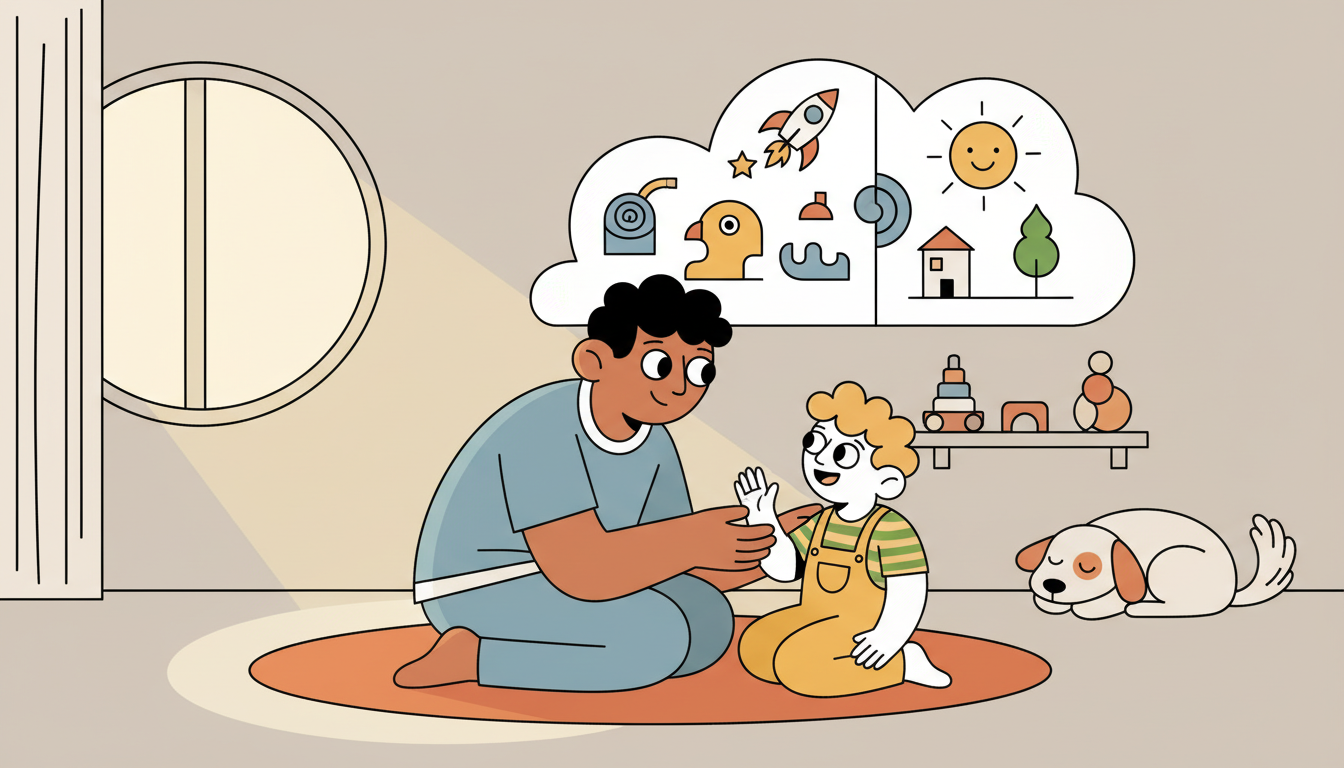
Take turns telling simple stories about your day. After each story, decide together if it was true or pretend. This helps your child distinguish between imagination and intentional deception. Make it playful and fun, celebrating both creative pretending and accurate truth-telling.
Part of the Imprint developmental journey — personalized to your child.
How to Do This Activity
Take turns telling simple stories about your day. After each story, decide together if it was true or pretend. This helps your child distinguish between imagination and intentional deception. Make it playful and fun, celebrating both creative pretending and accurate truth-telling.
Why It Works
Children as young as 2 begin lying, but moral reasoning develops through middle childhood. At 36-48 months, children can begin to grasp simple moral concepts and distinguish fantasy from reality. Modeling and praising honesty are most effective approaches (Hoffman, 2000). This activity builds that distinction in an encouraging way.
Tips for Parents
Start by clearly labeling your own stories as "real" or "pretend" to model the difference.
Praise both creativity and honesty. Say things like, "What a fun pretend story" or "Thank you for telling me what really happened."
Materials Needed
None
Learning Methods
Narrative and Literacy-Rich ExperiencesCollaborative and Cooperative PlayInquiry-Based Learning

Loved this activity? Let us do the planning for you.
Imprint personalizes every activity to your child — their interests, their stage, the traits they're building — so playtime is more fun and every moment counts.
Science-backed. Private by design. No spam.