The take turns timer
3–4 yearsFamily ConnectionMaterials: Timer (kitchen timer or phone)
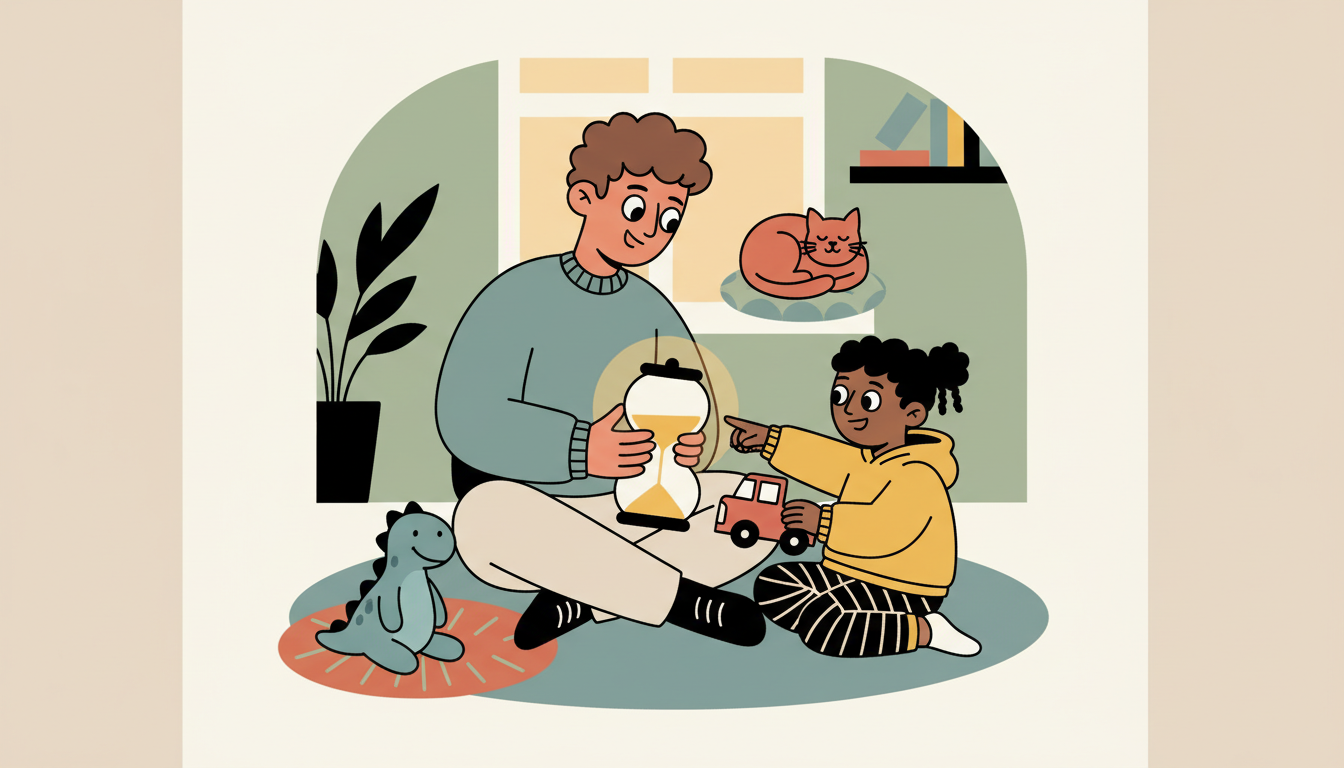
When your child and someone else both want the same thing, set a simple timer. One person gets a turn while the other waits, then you switch. This teaches that both people can get what they want if they wait and share time. Use a visual timer if possible so your child can see the time passing. Start with short turns of two to three minutes.
Part of the Imprint developmental journey — personalized to your child.
How to Do This Activity
When your child and someone else both want the same thing, set a simple timer. One person gets a turn while the other waits, then you switch. This teaches that both people can get what they want if they wait and share time. Use a visual timer if possible so your child can see the time passing. Start with short turns of two to three minutes.
Why It Works
Turn-taking is a concrete form of compromise that children this age can understand and practice. Early training in problem-solving skills leads to better peer relationships and reduced aggression (Webster-Stratton & Reid, 2004). Using a timer makes the solution feel fair and objective, reducing arguments about whose turn it is.
Tips for Parents
Be consistent with the timer. If you set it for three minutes, honor that time even if your child protests.
Praise your child when they wait patiently, even if they find it hard.
Gradually increase turn times as your child gets better at waiting.
Materials Needed
Timer (kitchen timer or phone)
Learning Methods
Collaborative and Cooperative PlayNarrative and Literacy-Rich ExperiencesStructured Learning Activities

Loved this activity? Let us do the planning for you.
Imprint personalizes every activity to your child — their interests, their stage, the traits they're building — so playtime is more fun and every moment counts.
Science-backed. Private by design. No spam.