The puzzle progression game
4–5 yearsSuccess MindsetMaterials: Two or three puzzles of increasing difficulty
Flat surface for working
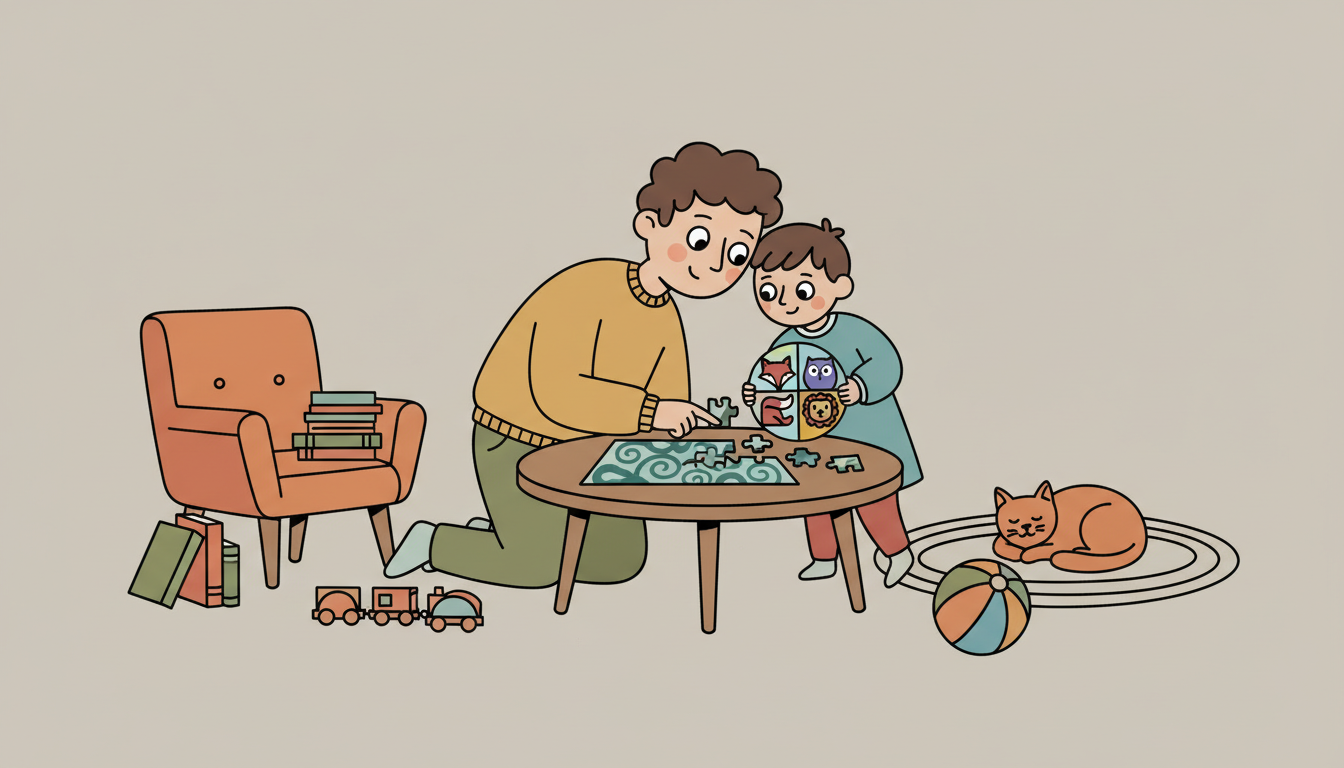
Start with a puzzle your child can already complete. Once finished, introduce a slightly harder puzzle with more pieces or smaller parts. The goal is not to finish the harder puzzle today, but to try it and notice what makes it challenging. Put it away and return to it tomorrow. Over several days, watch as pieces that seemed confusing become familiar. Talk about how their brain is learning the new puzzle, even when they are not working on it.
Part of the Imprint developmental journey — personalized to your child.
How to Do This Activity
Start with a puzzle your child can already complete. Once finished, introduce a slightly harder puzzle with more pieces or smaller parts. The goal is not to finish the harder puzzle today, but to try it and notice what makes it challenging. Put it away and return to it tomorrow. Over several days, watch as pieces that seemed confusing become familiar. Talk about how their brain is learning the new puzzle, even when they are not working on it.
Why It Works
Progressively challenging activities teach children that mastery requires sustained effort over time. This approach aligns with research showing that perseverance of effort has stronger correlations with academic achievement than natural ability. A systematic review of 44 studies found that grit and its facets, particularly perseverance of effort, were positively associated with academic achievement across age groups (Lam & Zhou, 2019). At ages 4-5, children can sustain interest in complex projects over multiple sessions, making this an ideal period for building persistence through graduated challenges.
Tips for Parents
Choose the next difficulty level carefully. Too hard leads to frustration, not persistence.
Normalize putting the puzzle away unfinished. Say 'We'll figure out this tricky part tomorrow.'
When your child wants to quit, try working on it together for just two more minutes before stopping.
Materials Needed
Two or three puzzles of increasing difficulty
Flat surface for working
Learning Methods
Project-Based and Thematic LearningGuided Discovery and InquiryMetacognitive Strategies

Loved this activity? Let us do the planning for you.
Imprint personalizes every activity to your child — their interests, their stage, the traits they're building — so playtime is more fun and every moment counts.
Science-backed. Private by design. No spam.