Thank you drawing time
4–5 yearsEmotional WellbeingMaterials: Paper and crayons or markers
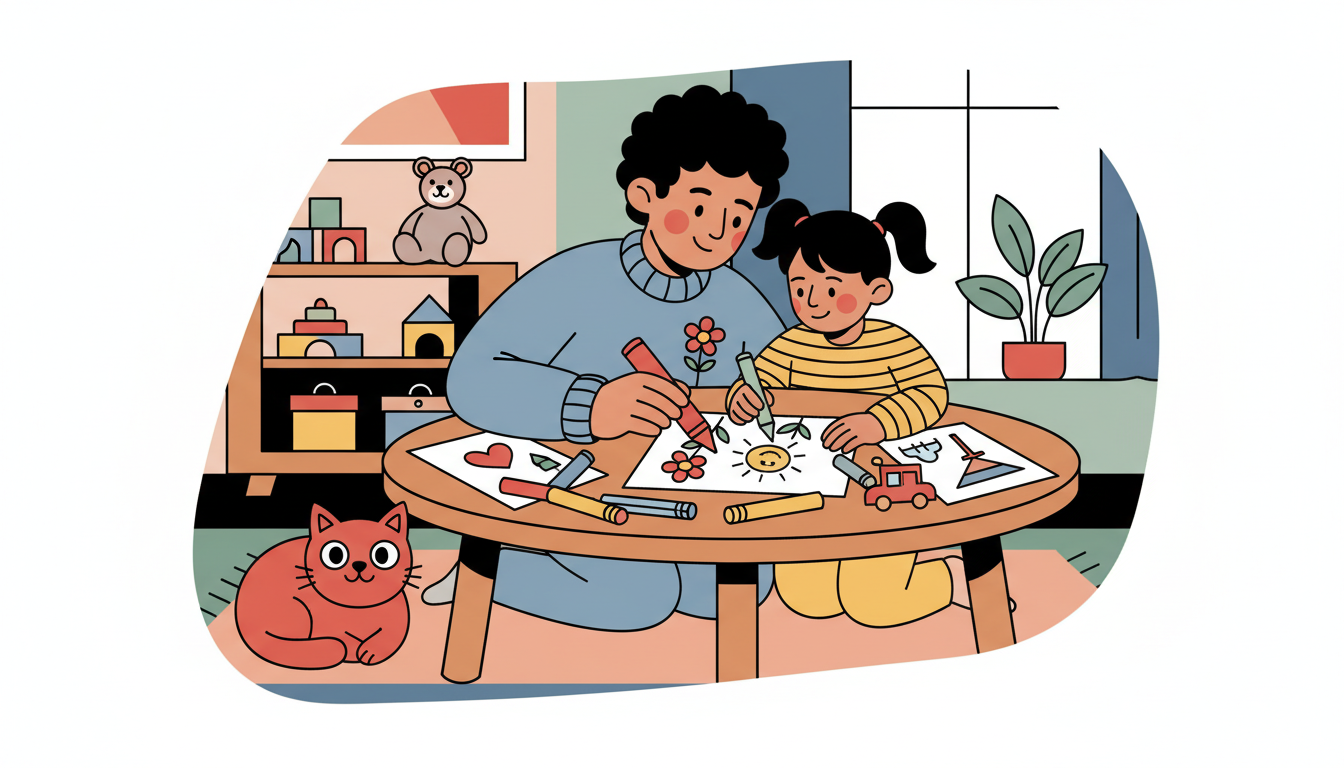
Set aside a few minutes to draw together about things you're both thankful for. Your child can draw people, pets, toys, or experiences they appreciate. You can draw too and share your own gratitude. Talk about why these things matter to you both. This simple practice helps your child notice and name the good things in their life.
Part of the Imprint developmental journey — personalized to your child.
How to Do This Activity
Set aside a few minutes to draw together about things you're both thankful for. Your child can draw people, pets, toys, or experiences they appreciate. You can draw too and share your own gratitude. Talk about why these things matter to you both. This simple practice helps your child notice and name the good things in their life.
Why It Works
Regular gratitude practice rewires the brain for positivity and helps children develop habits that persist into adulthood. Research shows that adults who regularly practice gratitude experience approximately 15% greater life satisfaction, and childhood gratitude habits developed through regular acknowledgment and appreciation predict adult gratitude practices (Emmons & McCullough, 2003). Drawing makes gratitude concrete and accessible for children at this developmental stage.
Tips for Parents
Keep it simple and fun. Your child's drawings don't need to be detailed or perfect.
Ask open questions like "What made you happy today?" or "Who helped you this week?"
Share your own gratitude drawings to model the practice.
Materials Needed
Paper and crayons or markers
Learning Methods
Metacognitive StrategiesCooperative LearningProject-Based and Thematic Learning

Loved this activity? Let us do the planning for you.
Imprint personalizes every activity to your child — their interests, their stage, the traits they're building — so playtime is more fun and every moment counts.
Science-backed. Private by design. No spam.