Story and feelings talk
4–5 yearsFamily ConnectionMaterials: Any picture book
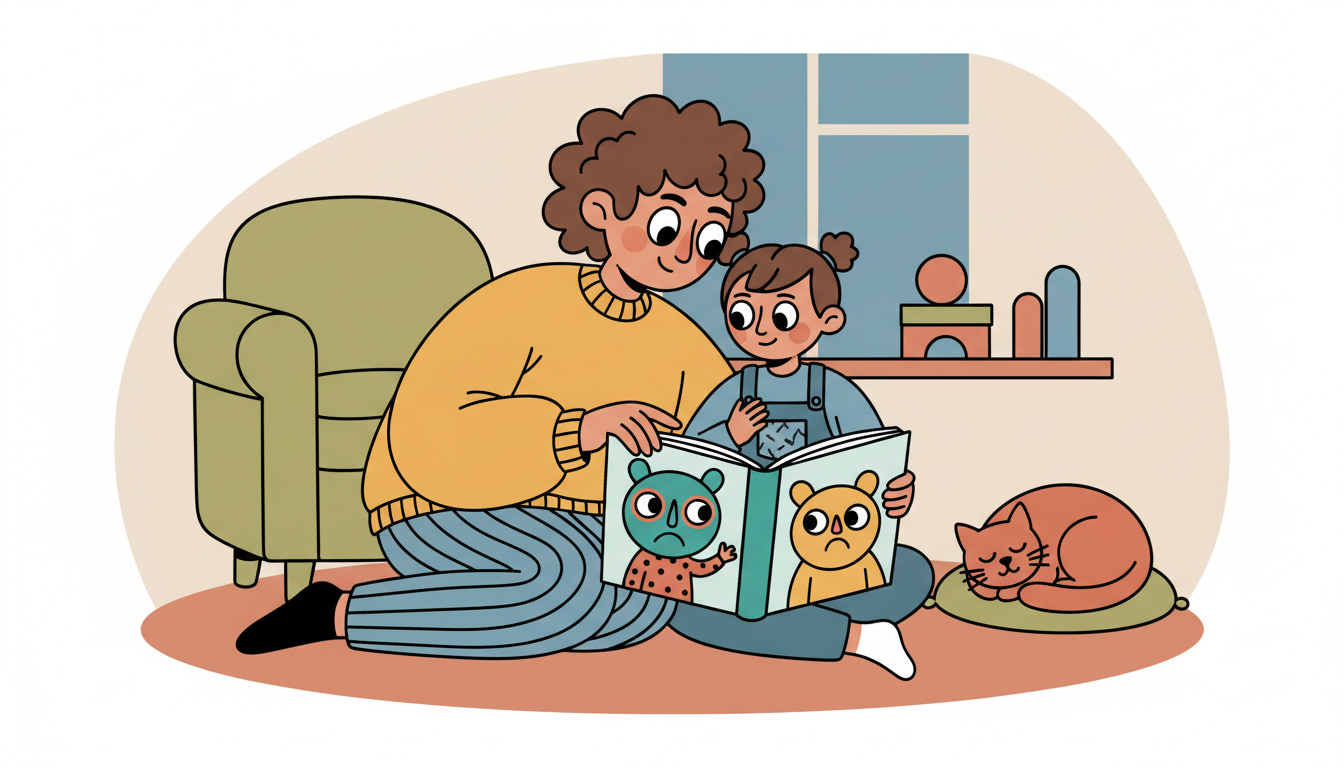
During story time, pause to talk about what characters might be feeling and why. Ask your child to identify emotions in the pictures or imagine what they would feel in that situation. Connect the story to your child's own experiences when relevant. This helps your child develop emotional vocabulary and understand that all feelings are acceptable.
Part of the Imprint developmental journey — personalized to your child.
How to Do This Activity
During story time, pause to talk about what characters might be feeling and why. Ask your child to identify emotions in the pictures or imagine what they would feel in that situation. Connect the story to your child's own experiences when relevant. This helps your child develop emotional vocabulary and understand that all feelings are acceptable.
Why It Works
Secure attachment promotes the development of emotion understanding and expression. Research demonstrates that securely attached children show better emotion understanding and learn to modulate their feelings more effectively (Thompson, 2008). Talking about emotions in stories provides a safe way to explore feelings and learn that emotions can be shared and understood.
Tips for Parents
Use simple feeling words like happy, sad, scared, or frustrated. You can point to facial expressions in pictures to help.
Share what you notice about feelings too. You might say "I think that character looks worried because their friend left."
Materials Needed
Any picture book
Learning Methods
Cooperative LearningMetacognitive StrategiesProject-Based and Thematic Learning

Loved this activity? Let us do the planning for you.
Imprint personalizes every activity to your child — their interests, their stage, the traits they're building — so playtime is more fun and every moment counts.
Science-backed. Private by design. No spam.