Sound detective game
2–3 yearsSuccess MindsetMaterials: Household items that make sounds (pots, spoons, containers, paper, coins)
None needed for listening walks
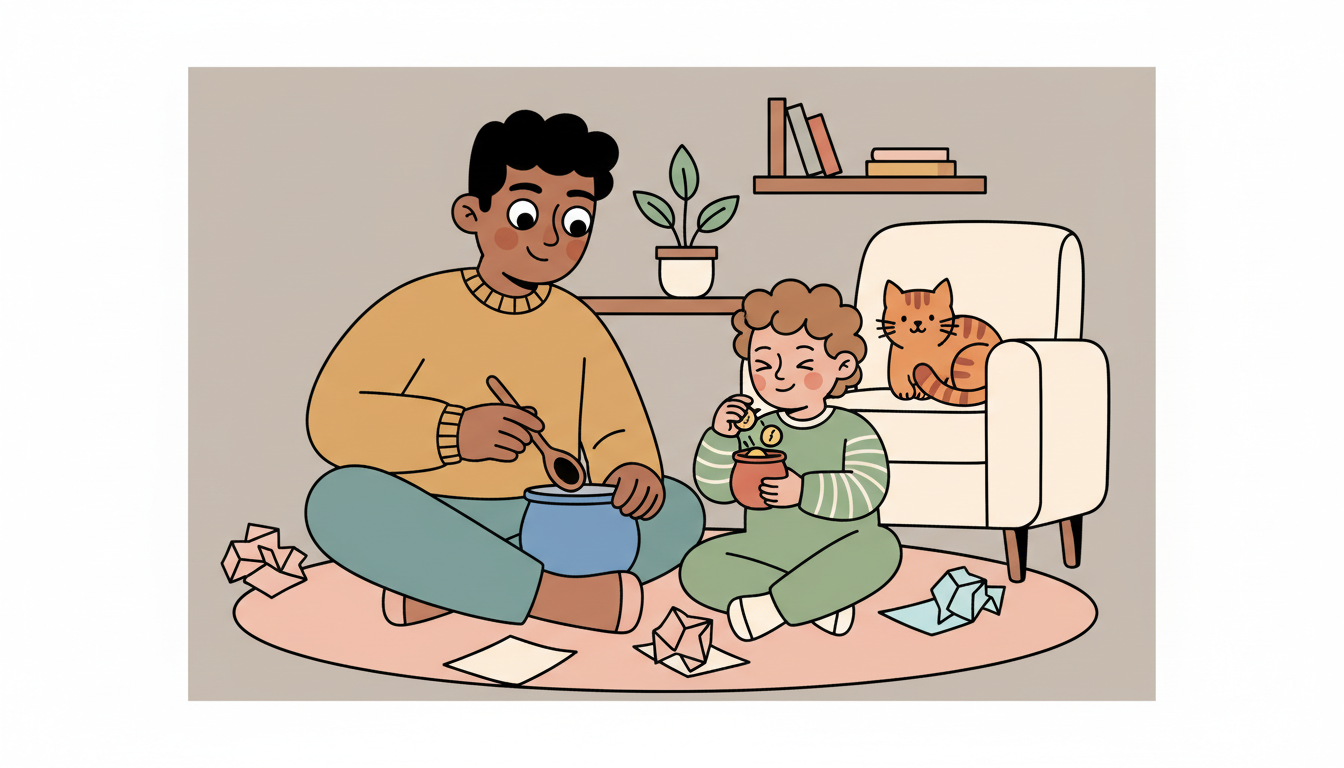
Explore the different sounds objects make when you tap, shake, or drop them. Try a wooden spoon on a pot, coins in a container, or crumpled paper. Take turns making sounds while the other person closes their eyes and guesses what's making the noise. You can also go on a listening walk around your home or outside, pausing to identify sounds like birds, cars, or the refrigerator humming.
Part of the Imprint developmental journey — personalized to your child.
How to Do This Activity
Explore the different sounds objects make when you tap, shake, or drop them. Try a wooden spoon on a pot, coins in a container, or crumpled paper. Take turns making sounds while the other person closes their eyes and guesses what's making the noise. You can also go on a listening walk around your home or outside, pausing to identify sounds like birds, cars, or the refrigerator humming.
Why It Works
This activity engages your child's natural curiosity about their sensory world. When children wonder about something and then discover the answer, the learning sticks (Gruber et al., 2014). Sound exploration supports auditory discrimination skills that are important for language development. By encouraging your child to ask questions and make predictions about sounds, you're building the curious, engaged approach to learning that research links to academic success (Kashdan & Yuen, 2007). The element of mystery keeps children motivated to explore and discover.
Tips for Parents
Start with very different sounds to make guessing easier. As your child gets better, you can use more similar sounds.
Model curiosity by saying things like "I wonder what sound this will make" before trying something new.
If your child wants to make the same sound over and over, that's perfectly fine. They're experimenting and learning through repetition.
Materials Needed
Household items that make sounds (pots, spoons, containers, paper, coins)
None needed for listening walks
Learning Methods
Symbolic and Pretend PlayHands-On Sensory ActivitiesInteractive Play-Based Learning

Loved this activity? Let us do the planning for you.
Imprint personalizes every activity to your child — their interests, their stage, the traits they're building — so playtime is more fun and every moment counts.
Science-backed. Private by design. No spam.