Skill practice tracker

4–5 yearsSuccess MindsetMaterials: Paper and markers for chart Equipment for chosen skill such as ball, jump rope, or pencil

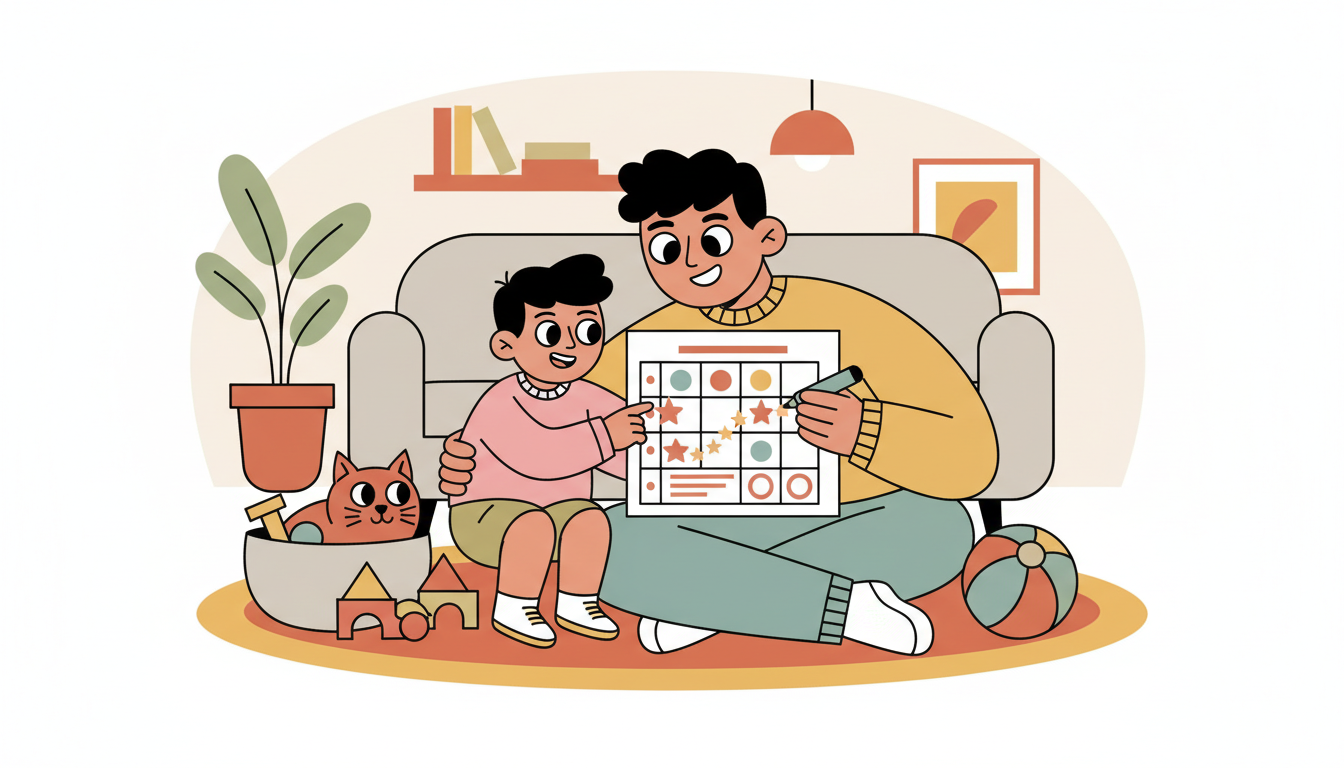
Help your child choose a physical skill they want to improve, like catching a ball, skipping, or writing their name. Create a simple chart with the days of the week. Each day, practice for just five to ten minutes. After practicing, ask your child to show what they can do now. Mark the chart together. At the end of the week, compare their first attempt to their latest one. Talk about how practice changed what they could do. Decide together whether to continue another week or start a new skill.

Part of the Imprint developmental journey — personalized to your child.
Skill practice tracker

How to Do This Activity

Help your child choose a physical skill they want to improve, like catching a ball, skipping, or writing their name. Create a simple chart with the days of the week. Each day, practice for just five to ten minutes. After practicing, ask your child to show what they can do now. Mark the chart together. At the end of the week, compare their first attempt to their latest one. Talk about how practice changed what they could do. Decide together whether to continue another week or start a new skill.

Why It Works

Deliberate practice of challenging skills builds both competence and grit. Research shows that perseverance of effort and adaptability to situations were linked to higher academic engagement, even during challenging circumstances (Datu et al., 2023). When children see their own improvement through sustained practice, they develop confidence that effort leads to mastery. This understanding is critical for building grit, as children learn that abilities can be developed rather than being fixed traits. The concrete tracking helps children at this age, who think logically about concrete situations, make the connection between practice and improvement.

Tips for Parents

Focus on effort, not perfection. Say 'You kept trying even when it was hard' rather than 'You're naturally good at this.' If your child wants to quit mid-week, acknowledge the difficulty and practice together. Let them experience small plateaus. Learning is not always linear, and that is normal.

Materials Needed

Paper and markers for chart Equipment for chosen skill such as ball, jump rope, or pencil

Learning Methods

Project-Based and Thematic LearningGuided Discovery and InquiryMetacognitive Strategies

Loved this activity? Let us do the planning for you.

Imprint personalizes every activity to your child — their interests, their stage, the traits they're building — so playtime is more fun and every moment counts.

Science-backed. Private by design. No spam.

Learn how Imprint works →