Simple puzzle practice
2–3 yearsEmotional WellbeingMaterials: Simple wooden or chunky cardboard puzzles with three to five pieces
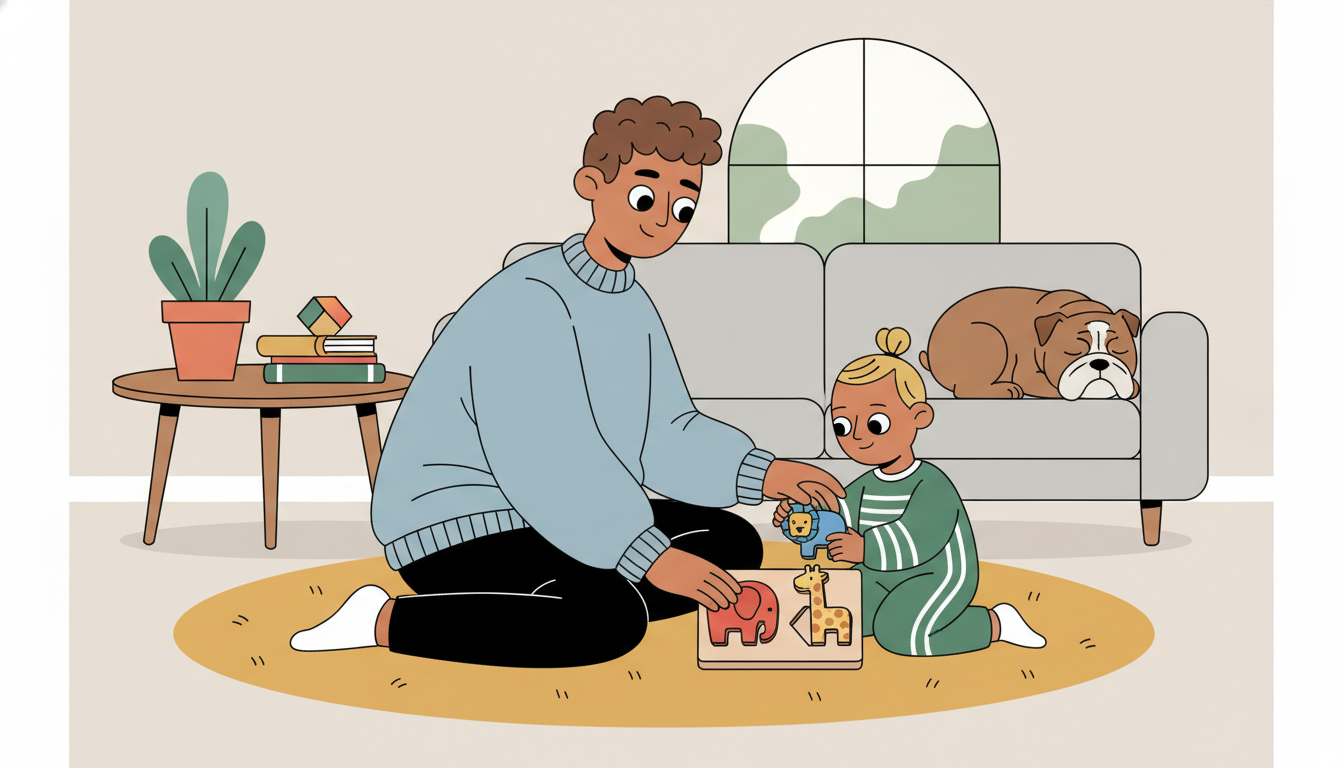
Work on a simple three to five piece puzzle with your child. Choose puzzles with large, chunky pieces that fit their developing fine motor skills. When a piece doesn't fit, resist the urge to immediately fix it. Instead, say, 'That one doesn't fit yet. Let's try turning it.' This teaches your child that persistence pays off and that struggle is part of learning. The satisfaction of finally placing a piece builds confidence in their ability to solve problems.
Part of the Imprint developmental journey — personalized to your child.
How to Do This Activity
Work on a simple three to five piece puzzle with your child. Choose puzzles with large, chunky pieces that fit their developing fine motor skills. When a piece doesn't fit, resist the urge to immediately fix it. Instead, say, 'That one doesn't fit yet. Let's try turning it.' This teaches your child that persistence pays off and that struggle is part of learning. The satisfaction of finally placing a piece builds confidence in their ability to solve problems.
Why It Works
Puzzle solving provides the ideal balance of challenge and achievability that builds resilience. Adults with high resilience developed in childhood show a 65% lower risk of anxiety disorders and depression (Masten & Motti-Stefanidi, 2020). By supporting your child through puzzle frustration rather than solving it for them, you help them develop problem-solving skills and emotional regulation that predict better resilience and coping strategies in later childhood.
Tips for Parents
Start with easier puzzles and gradually increase difficulty as your child succeeds. This builds confidence before adding challenge.
When your child struggles, offer hints rather than solutions. Point to the right area or suggest, 'Maybe try a different spot.'
Take breaks if frustration builds. Come back to the puzzle later, showing that it's okay to step away and try again.
Materials Needed
Simple wooden or chunky cardboard puzzles with three to five pieces
Learning Methods
Interactive Play-Based LearningSymbolic and Pretend PlaySocial Learning Through Peers

Loved this activity? Let us do the planning for you.
Imprint personalizes every activity to your child — their interests, their stage, the traits they're building — so playtime is more fun and every moment counts.
Science-backed. Private by design. No spam.