Role-play friendship scenarios
4–5 yearsEmotional WellbeingMaterials: Stuffed animals or dolls
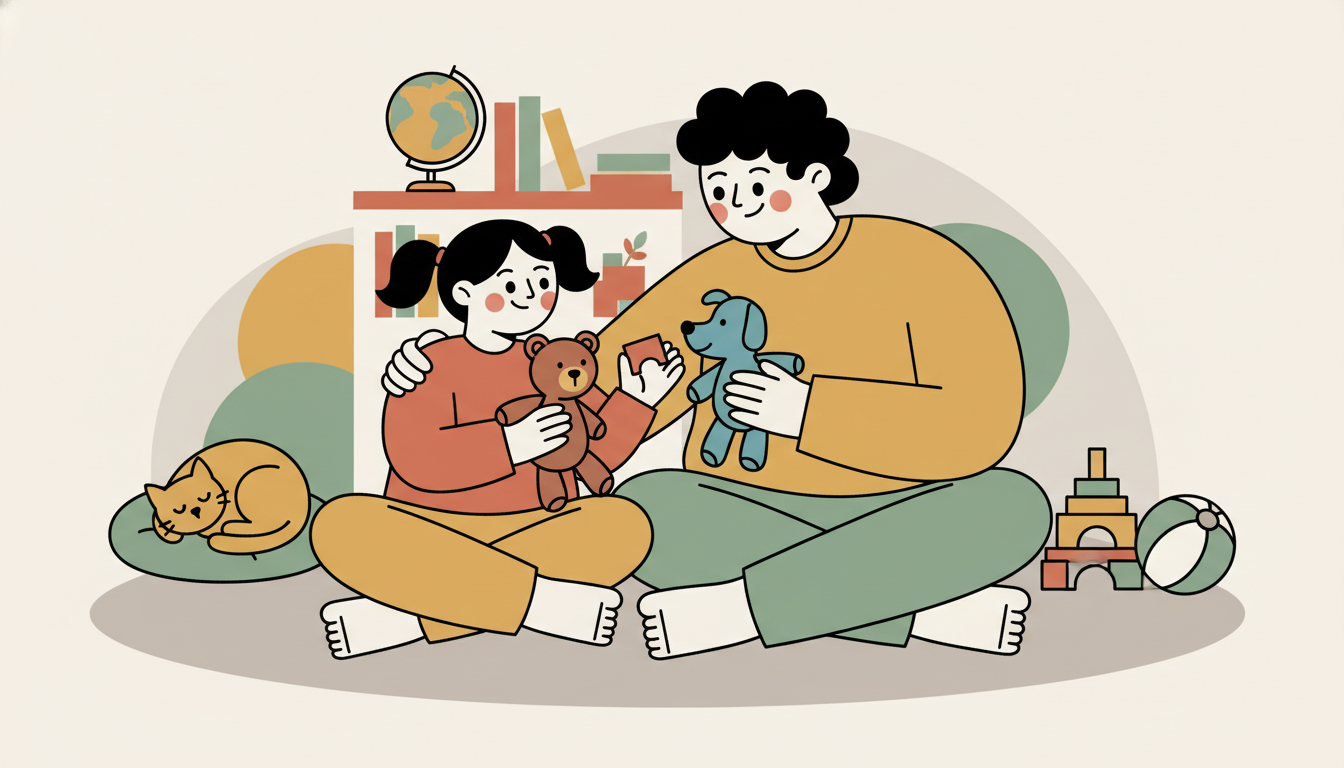
Act out common friendship situations together using stuffed animals or pretend play. You might practice sharing toys, taking turns, saying sorry, or asking someone to play. Take turns being different characters. Talk about how each character might feel and what they might do. This gives your child a safe space to practice social skills before using them with peers.
Part of the Imprint developmental journey — personalized to your child.
How to Do This Activity
Act out common friendship situations together using stuffed animals or pretend play. You might practice sharing toys, taking turns, saying sorry, or asking someone to play. Take turns being different characters. Talk about how each character might feel and what they might do. This gives your child a safe space to practice social skills before using them with peers.
Why It Works
Practicing social situations through play helps children develop problem-solving skills and emotional regulation in relationships. Children with stronger social connections show better emotional regulation and stress management, skills that support lifelong relationship quality. (Source: Dunn, J., & Cutting, A. L. (1999). Understanding others, and individual differences in friendship interactions in young children. Social Development, 8(2), 201-219.)
Tips for Parents
Choose scenarios your child might actually face, like wanting the same toy as a friend or feeling left out.
Ask "What could you do next." rather than telling them the answer. Let them problem-solve with your support.
Materials Needed
Stuffed animals or dolls
Learning Methods
Cooperative LearningProject-Based and Thematic LearningStructured Academic Learning

Loved this activity? Let us do the planning for you.
Imprint personalizes every activity to your child — their interests, their stage, the traits they're building — so playtime is more fun and every moment counts.
Science-backed. Private by design. No spam.