Role play daily scenarios
3–4 yearsSuccess MindsetMaterials: None, or stuffed animals and dolls for acting out scenarios
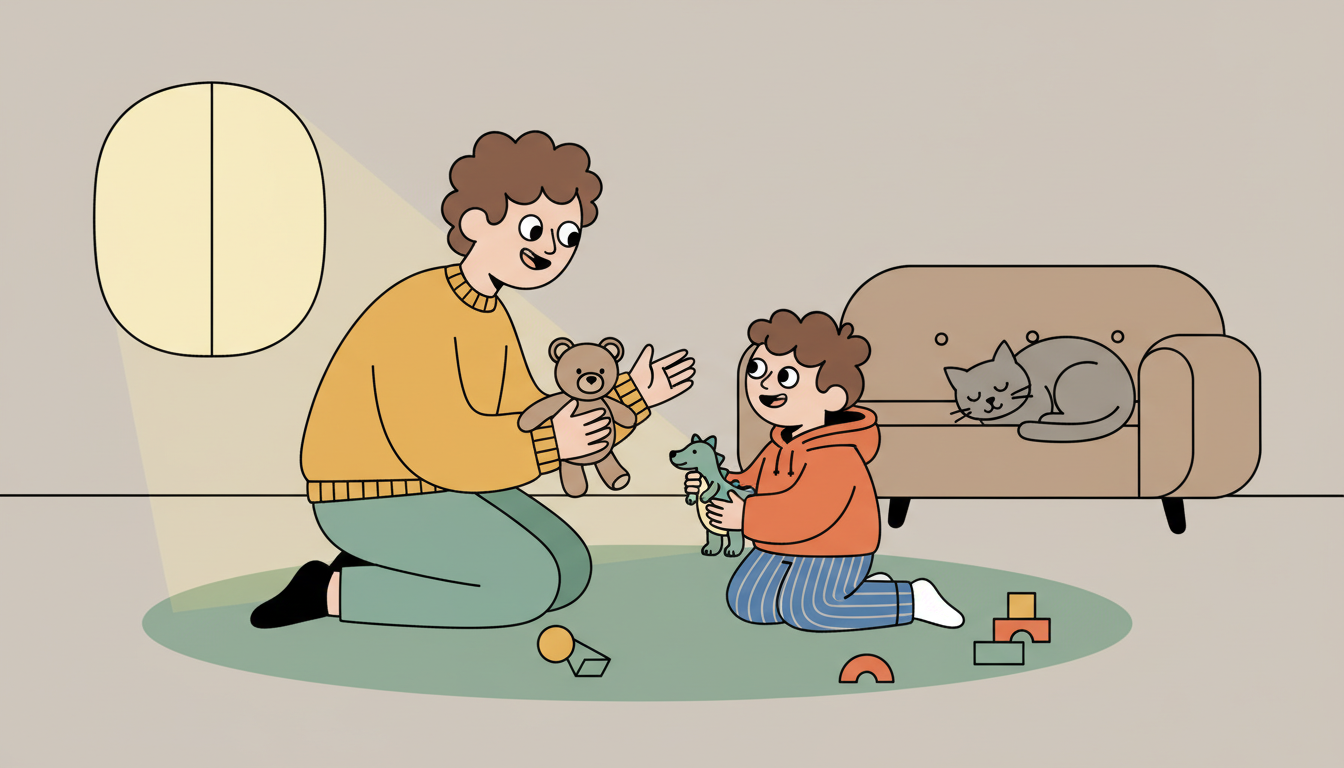
Act out common social situations your child encounters, like greeting a friend, asking to join play, or handling someone taking a toy. Take turns playing different roles. Practice kind words and appropriate responses. This safe rehearsal helps your child prepare for real interactions.
Part of the Imprint developmental journey — personalized to your child.
How to Do This Activity
Act out common social situations your child encounters, like greeting a friend, asking to join play, or handling someone taking a toy. Take turns playing different roles. Practice kind words and appropriate responses. This safe rehearsal helps your child prepare for real interactions.
Why It Works
Social competence at preschool entry predicts school adjustment, academic achievement, and peer acceptance. For every one-point increase in social competence, children were twice as likely to attain a college degree (Jones, Greenberg, & Crowley, 2015). Role-playing during the 36-48 month window, when language skills support negotiation and theory of mind enables perspective-taking, provides the explicit social skills coaching that research shows is highly effective.
Tips for Parents
Choose scenarios your child has actually experienced or might encounter soon.
After role-playing, ask 'How do you think your friend felt when you asked nicely?'
Keep it playful and low-pressure. If your child resists, try using stuffed animals as the actors instead.
Materials Needed
None, or stuffed animals and dolls for acting out scenarios
Learning Methods
Collaborative and Cooperative PlayStructured Learning ActivitiesProject-Based Learning

Loved this activity? Let us do the planning for you.
Imprint personalizes every activity to your child — their interests, their stage, the traits they're building — so playtime is more fun and every moment counts.
Science-backed. Private by design. No spam.