Pretend play perspectives
3–4 yearsFamily ConnectionMaterials: Toys for pretend play
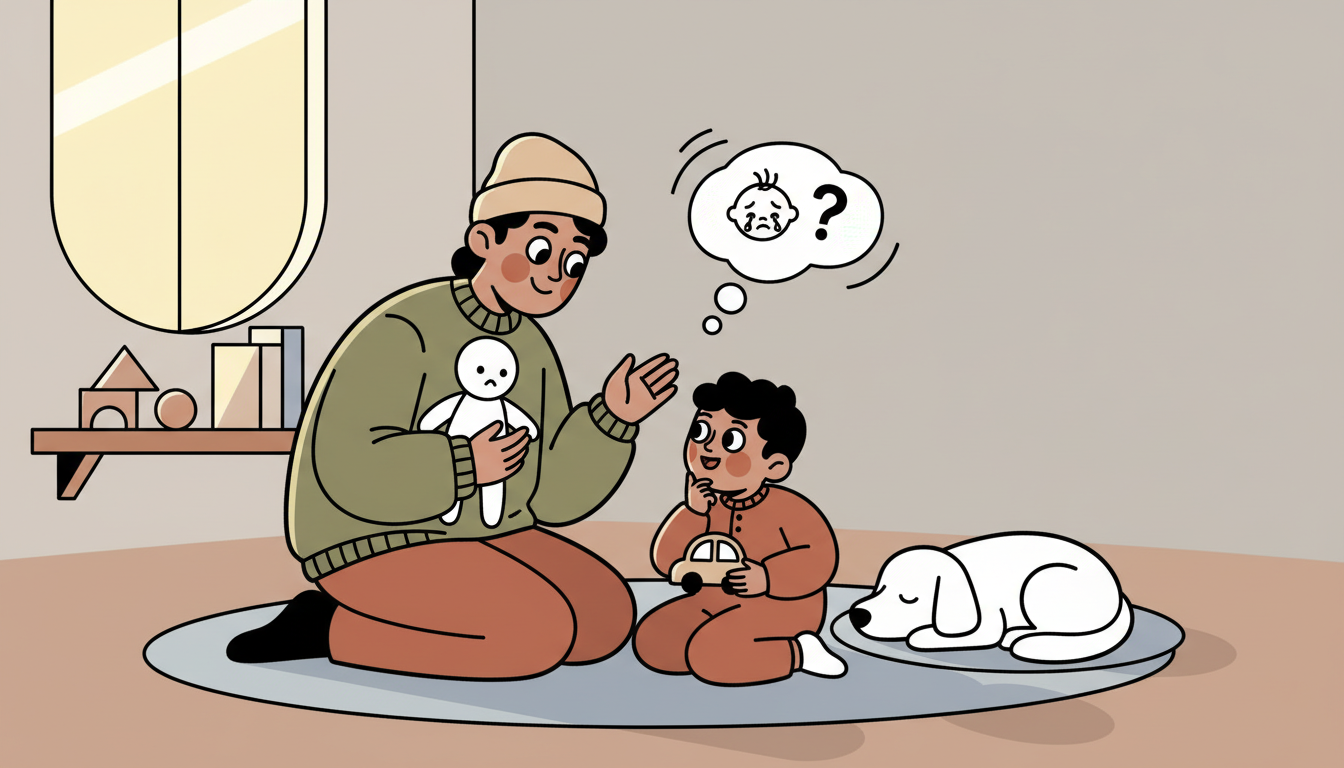
During pretend play time, take on different roles and talk about how each character feels. If you're playing house, you might say, 'I'm the baby and I'm hungry. How does the baby feel?' Then switch roles and ask your child, 'Now you're the parent. How do you think the parent feels when the baby cries?' This role-switching helps your child practice seeing situations from different viewpoints. Keep the scenarios simple and based on familiar experiences.
Part of the Imprint developmental journey — personalized to your child.
How to Do This Activity
During pretend play time, take on different roles and talk about how each character feels. If you're playing house, you might say, 'I'm the baby and I'm hungry. How does the baby feel?' Then switch roles and ask your child, 'Now you're the parent. How do you think the parent feels when the baby cries?' This role-switching helps your child practice seeing situations from different viewpoints. Keep the scenarios simple and based on familiar experiences.
Why It Works
Cognitive empathy mediates the association between positive family climate and children's social competence (Sánchez-Pérez et al., 2018). Pretend play provides a natural context for perspective-taking practice. At 36-48 months, children develop the cognitive ability to understand that others have different thoughts and feelings. By explicitly discussing characters' emotions during play, you help your child practice the mental flexibility needed for empathy in real social situations.
Tips for Parents
Let your child choose the pretend play scenario to increase engagement.
Switch roles frequently so your child experiences multiple perspectives.
Ask questions like 'How does your character feel about what just happened?' throughout the play.
Materials Needed
Toys for pretend play
Learning Methods
Narrative and Literacy-Rich ExperiencesCollaborative and Cooperative PlayInquiry-Based Learning

Loved this activity? Let us do the planning for you.
Imprint personalizes every activity to your child — their interests, their stage, the traits they're building — so playtime is more fun and every moment counts.
Science-backed. Private by design. No spam.