Memory matching game
4–5 yearsSuccess MindsetMaterials: Matching cards, photos, or hand-drawn picture pairs on paper or cardboard
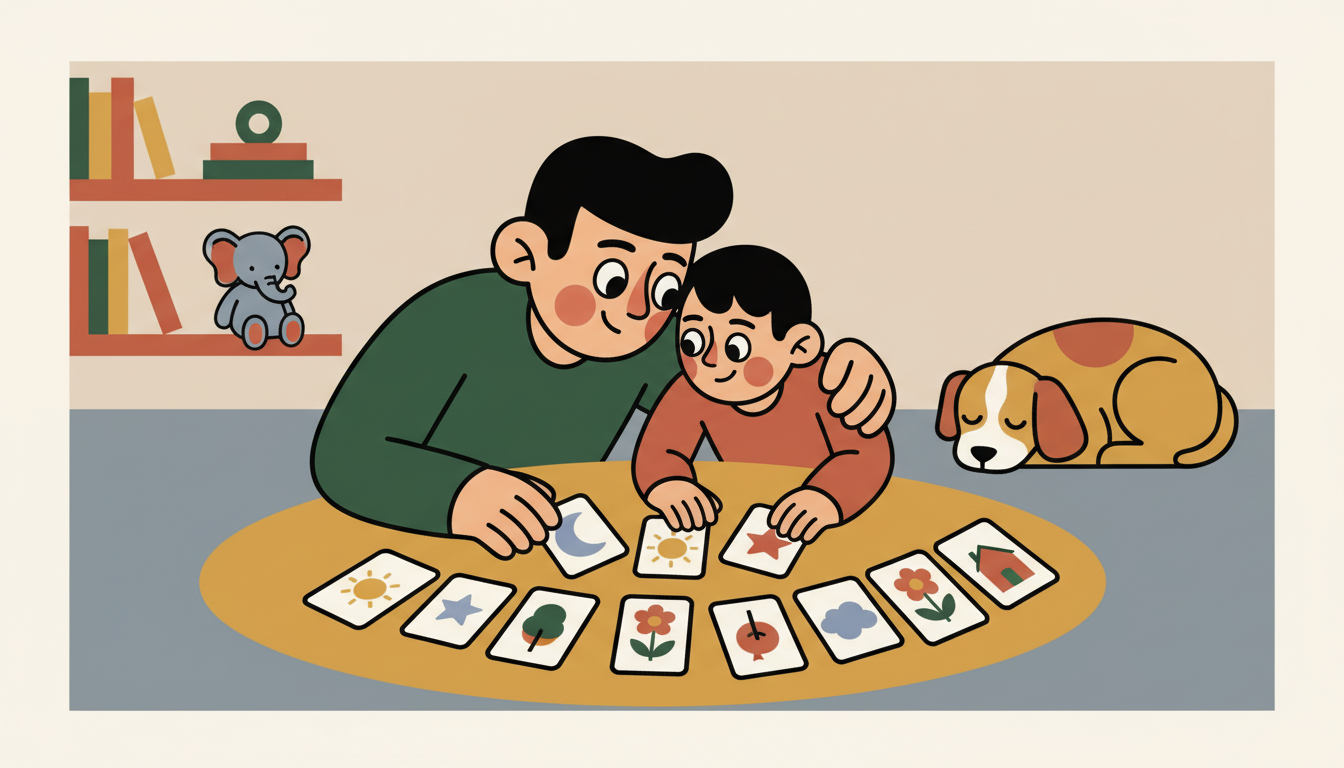
Create a simple memory game using pairs of matching cards, photos, or drawn pictures. Start with 6-8 pairs spread face down. Take turns flipping two cards at a time, trying to find matches. Talk about strategies for remembering where cards are located. Gradually increase the number of pairs as your child improves.
Part of the Imprint developmental journey — personalized to your child.
How to Do This Activity
Create a simple memory game using pairs of matching cards, photos, or drawn pictures. Start with 6-8 pairs spread face down. Take turns flipping two cards at a time, trying to find matches. Talk about strategies for remembering where cards are located. Gradually increase the number of pairs as your child improves.
Why It Works
Working memory is a critical executive function skill that develops rapidly during this age period. Research shows that working memory in pre-kindergarten makes unique contributions to kindergarten reading and math achievement (Welsh, Nix, Blair, Bierman, & Nelson, 2010). Memory games provide focused practice in holding and manipulating information, which strengthens cognitive abilities that support all academic learning.
Tips for Parents
Start with fewer pairs and increase difficulty as your child masters the game. This maintains appropriate challenge.
Talk aloud about your own memory strategies. This helps your child learn techniques for remembering.
Materials Needed
Matching cards, photos, or hand-drawn picture pairs on paper or cardboard
Learning Methods
Structured Academic LearningGuided Discovery and InquiryProject-Based and Thematic Learning

Loved this activity? Let us do the planning for you.
Imprint personalizes every activity to your child — their interests, their stage, the traits they're building — so playtime is more fun and every moment counts.
Science-backed. Private by design. No spam.