Honest feelings check-in
4–5 yearsSuccess MindsetNo materials needed
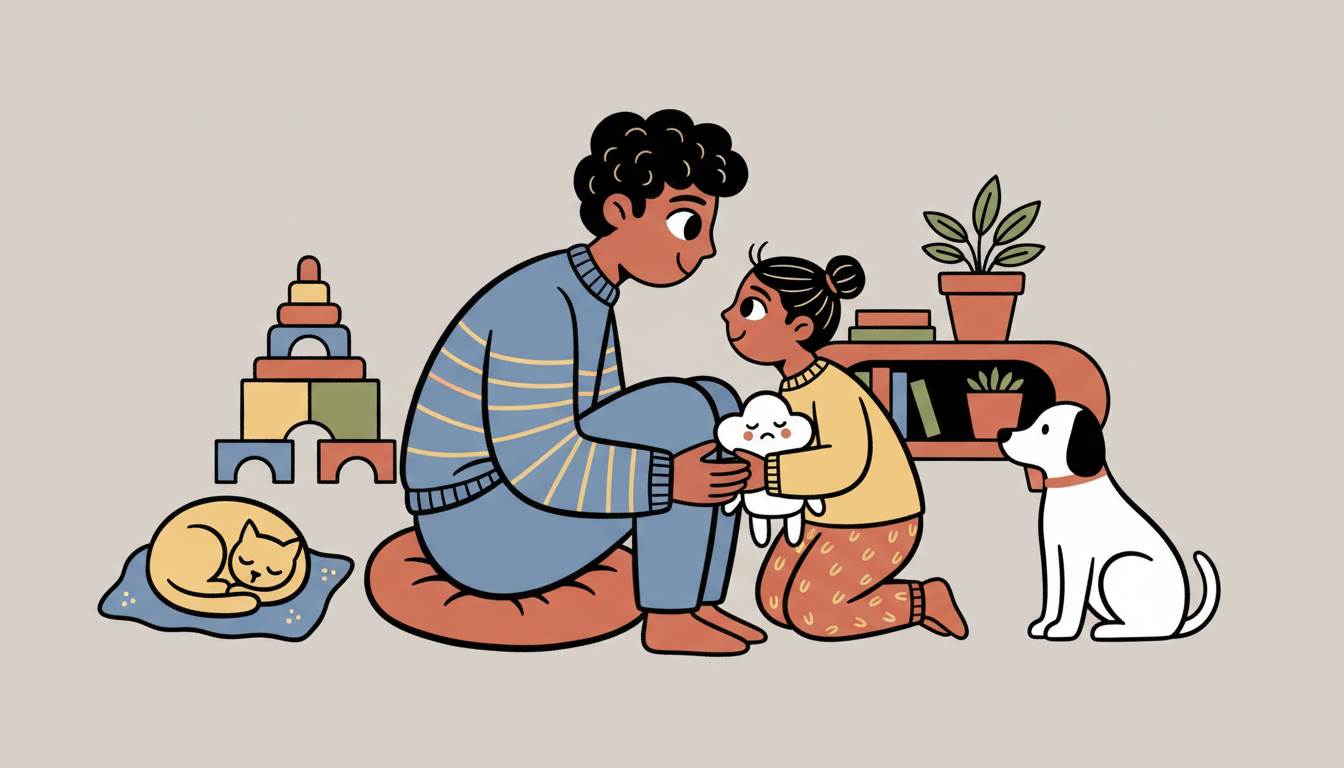
Set aside time each day to ask your child how they really feel. Make it safe to share hard feelings like anger, sadness, or frustration. Say things like "It's okay to feel upset. Thank you for being honest with me." This teaches that honesty includes sharing true feelings.
Part of the Imprint developmental journey — personalized to your child.
How to Do This Activity
Set aside time each day to ask your child how they really feel. Make it safe to share hard feelings like anger, sadness, or frustration. Say things like "It's okay to feel upset. Thank you for being honest with me." This teaches that honesty includes sharing true feelings.
Why It Works
Emotional honesty builds the foundation for integrity in all areas of life. When children feel safe being truthful about feelings, they develop trust and honest communication patterns. Children who demonstrate truthfulness build stronger trust-building capabilities, which correlate with better collaborative relationships (Hoffman, 2000).
Tips for Parents
Accept all feelings without judgment. Your child learns that honesty is valued when you welcome their true emotions. Avoid dismissing feelings with "You're fine" or "Don't be sad."
Share your own feelings in simple terms. "I feel frustrated when I can't find my keys" shows that everyone has feelings and it's good to be honest about them.
Materials Needed
None
Learning Methods
Cooperative LearningProject-Based and Thematic LearningMetacognitive Strategies

Loved this activity? Let us do the planning for you.
Imprint personalizes every activity to your child — their interests, their stage, the traits they're building — so playtime is more fun and every moment counts.
Science-backed. Private by design. No spam.