Friendship skills practice
3–4 yearsEmotional WellbeingMaterials: Stuffed animals, dolls, or action figures
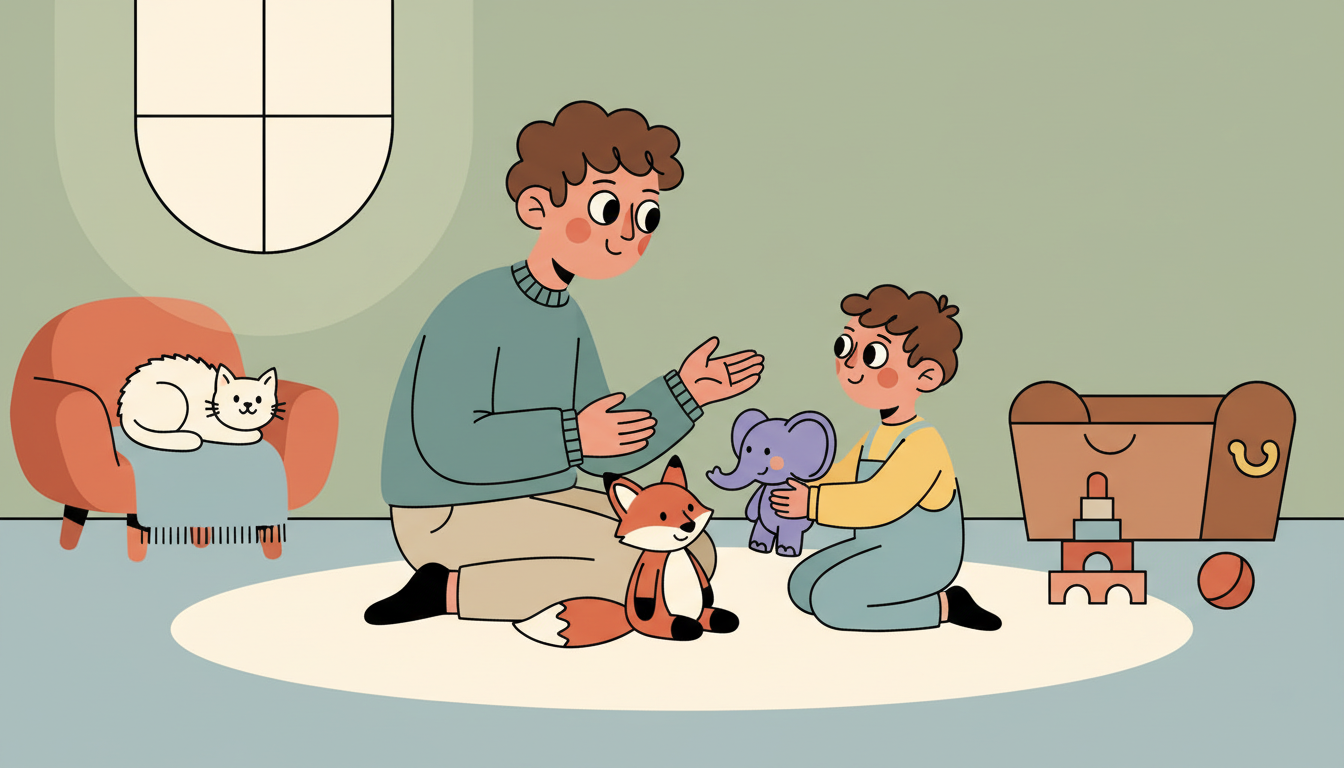
Use stuffed animals or dolls to act out simple friendship scenarios. You and your child take turns being different characters and practice skills like sharing, asking to play, or helping a friend. Make it playful and let your child guide some of the scenarios. This gives your child a safe way to practice social skills before using them with real friends.
Part of the Imprint developmental journey — personalized to your child.
How to Do This Activity
Use stuffed animals or dolls to act out simple friendship scenarios. You and your child take turns being different characters and practice skills like sharing, asking to play, or helping a friend. Make it playful and let your child guide some of the scenarios. This gives your child a safe way to practice social skills before using them with real friends.
Why It Works
Explicit teaching of friendship skills through play helps children learn and practice social behaviors in a low-pressure setting. Childhood behaviors emphasizing friendship-building, sharing, and cooperation strongly predict adult social health (Dunn, J., & Cutting, A. L., 1999). Role-playing with toys allows your child to practice perspective-taking and try out different social strategies, building confidence for real friendship situations.
Tips for Parents
Start with scenarios your child has experienced, like two friends wanting the same toy.
Keep it light and playful. If your child takes the story in a silly direction, go with it. The practice still helps.
Materials Needed
Stuffed animals, dolls, or action figures
Learning Methods
Collaborative and Cooperative PlayNarrative and Literacy-Rich ExperiencesProject-Based Learning

Loved this activity? Let us do the planning for you.
Imprint personalizes every activity to your child — their interests, their stage, the traits they're building — so playtime is more fun and every moment counts.
Science-backed. Private by design. No spam.