Feelings story time
4–5 yearsEmotional WellbeingMaterials: Children's book
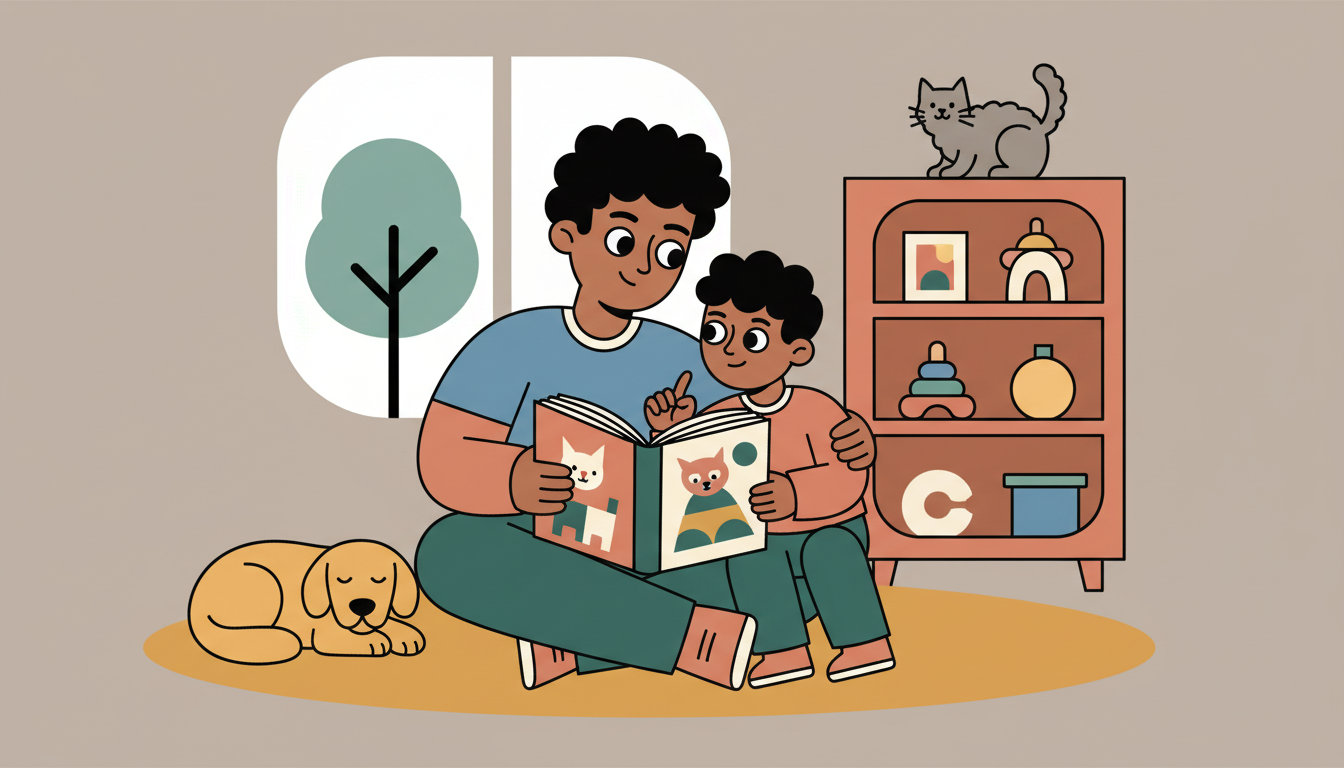
Read a story together and pause to discuss characters' emotions. Ask your child how they think the character feels and why. Discuss what the character might do next based on their feelings. Ask how your child would feel in the same situation. This builds emotional vocabulary and perspective-taking skills naturally through stories your child already enjoys.
Part of the Imprint developmental journey — personalized to your child.
How to Do This Activity
Read a story together and pause to discuss characters' emotions. Ask your child how they think the character feels and why. Discuss what the character might do next based on their feelings. Ask how your child would feel in the same situation. This builds emotional vocabulary and perspective-taking skills naturally through stories your child already enjoys.
Why It Works
Using stories with emotional content followed by discussion is an evidence-based activity for developing emotional intelligence at this age. Children's fully developed theory of mind enables sophisticated emotional understanding through narrative. Students with higher emotional intelligence show significantly better academic performance and psychological well-being, with positive effects on study habits and social interactions (Brackett, M. A., Rivers, S. E., & Salovey, P., 2011). Discussing characters' emotions builds the emotional recognition and understanding that forms the foundation of emotional intelligence.
Tips for Parents
Choose books with clear emotional content. Most children's books work well for this activity.
Ask open-ended questions like, how do you think she feels right now, rather than yes or no questions.
Connect story emotions to your child's own experiences. This makes emotions more concrete and relatable.
Materials Needed
Children's book
Learning Methods
Metacognitive StrategiesCooperative LearningStructured Academic Learning

Loved this activity? Let us do the planning for you.
Imprint personalizes every activity to your child — their interests, their stage, the traits they're building — so playtime is more fun and every moment counts.
Science-backed. Private by design. No spam.