Feelings face mirror play
3–4 yearsEmotional WellbeingMaterials: Mirror
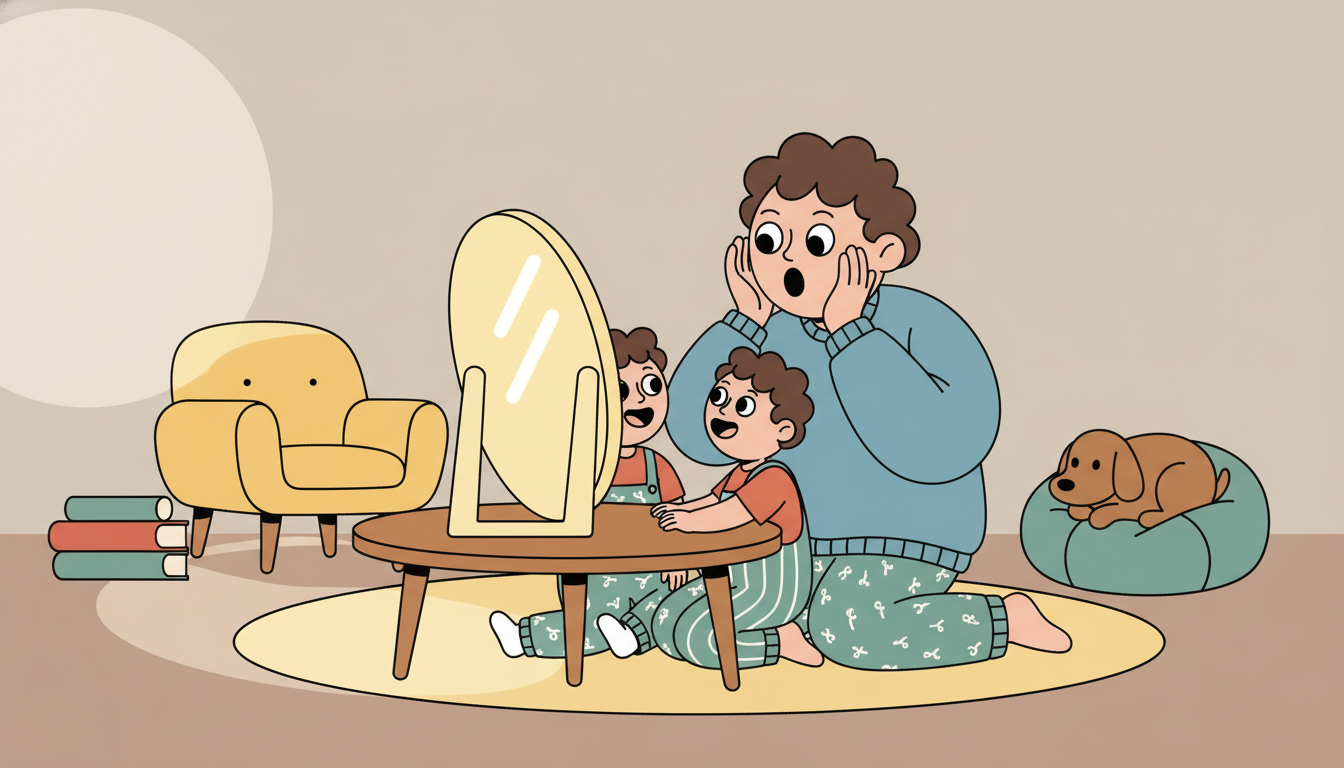
Sit with your child and take turns making different emotion faces in a mirror together. Name each emotion as you make the face. Try happy, sad, angry, surprised, and worried. Ask your child to copy your expressions and then let them lead. This helps build emotional recognition skills while having fun together.
Part of the Imprint developmental journey — personalized to your child.
How to Do This Activity
Sit with your child and take turns making different emotion faces in a mirror together. Name each emotion as you make the face. Try happy, sad, angry, surprised, and worried. Ask your child to copy your expressions and then let them lead. This helps build emotional recognition skills while having fun together.
Why It Works
Learning to recognize emotions in faces builds emotional intelligence during a critical developmental window. Children with better emotion understanding and regulation at age four show better peer relationships years later. Emotional intelligence development in early childhood leads to better emotional recognition, expression, and regulation skills in adulthood (Goleman, 1995).
Tips for Parents
Start with easy emotions like happy and sad.
Exaggerate your expressions to make it easier.
Let your child be the leader sometimes.
Materials Needed
Mirror
Learning Methods
Narrative and Literacy-Rich ExperiencesCollaborative and Cooperative PlayInquiry-Based Learning

Loved this activity? Let us do the planning for you.
Imprint personalizes every activity to your child — their interests, their stage, the traits they're building — so playtime is more fun and every moment counts.
Science-backed. Private by design. No spam.