Feelings face drawing
4–5 yearsEmotional WellbeingMaterials: Paper
Crayons or markers
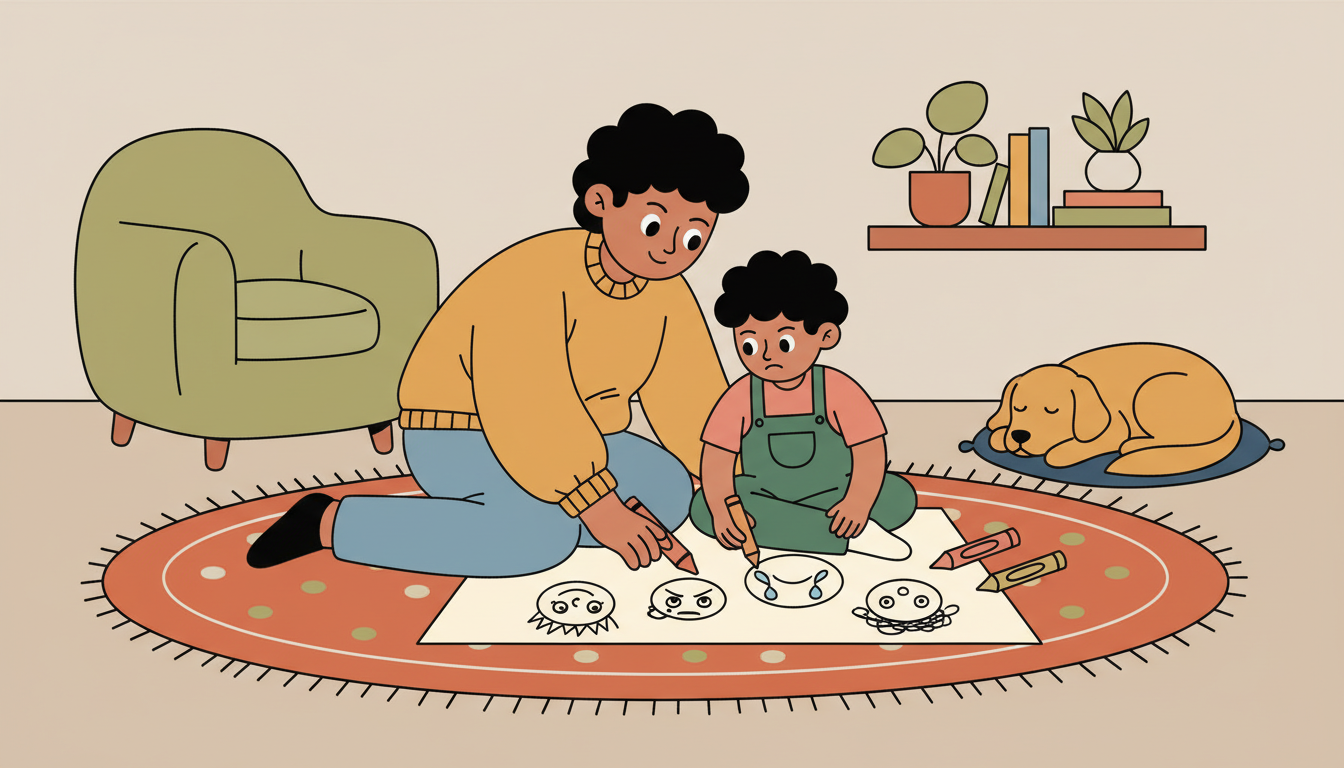
During your time together, draw different emotion faces with your child. Start with basic emotions like happy, sad, angry, and scared. Then introduce complex emotions like frustrated, disappointed, proud, or embarrassed. Take turns drawing and naming emotions. Talk about times when you each felt these emotions. This builds emotional vocabulary in a fun, creative way.
Part of the Imprint developmental journey — personalized to your child.
How to Do This Activity
During your time together, draw different emotion faces with your child. Start with basic emotions like happy, sad, angry, and scared. Then introduce complex emotions like frustrated, disappointed, proud, or embarrassed. Take turns drawing and naming emotions. Talk about times when you each felt these emotions. This builds emotional vocabulary in a fun, creative way.
Why It Works
Building rich emotional vocabulary is essential for emotional intelligence development. When children can identify and label their emotions accurately, they develop better emotional regulation and self-awareness. Research shows that emotional knowledge at age five predicts social competence and academic achievement, as children who can identify and understand emotions show better peer relationships and classroom behavior (Brackett, M. A., Rivers, S. E., & Salovey, P., 2011). At this age, children's theory of mind is fully developed, enabling them to understand sophisticated emotions beyond basic feelings.
Tips for Parents
Let your child lead sometimes by choosing which emotion to draw next. This builds their confidence.
Ask what each emotion feels like in their body. This helps them recognize emotions when they happen.
Keep drawings simple. Stick figures work perfectly for this activity.
Materials Needed
Paper
Crayons or markers
Learning Methods
Metacognitive StrategiesCooperative LearningStructured Academic Learning

Loved this activity? Let us do the planning for you.
Imprint personalizes every activity to your child — their interests, their stage, the traits they're building — so playtime is more fun and every moment counts.
Science-backed. Private by design. No spam.