Feelings check-in time
4–5 yearsFamily ConnectionNo materials needed
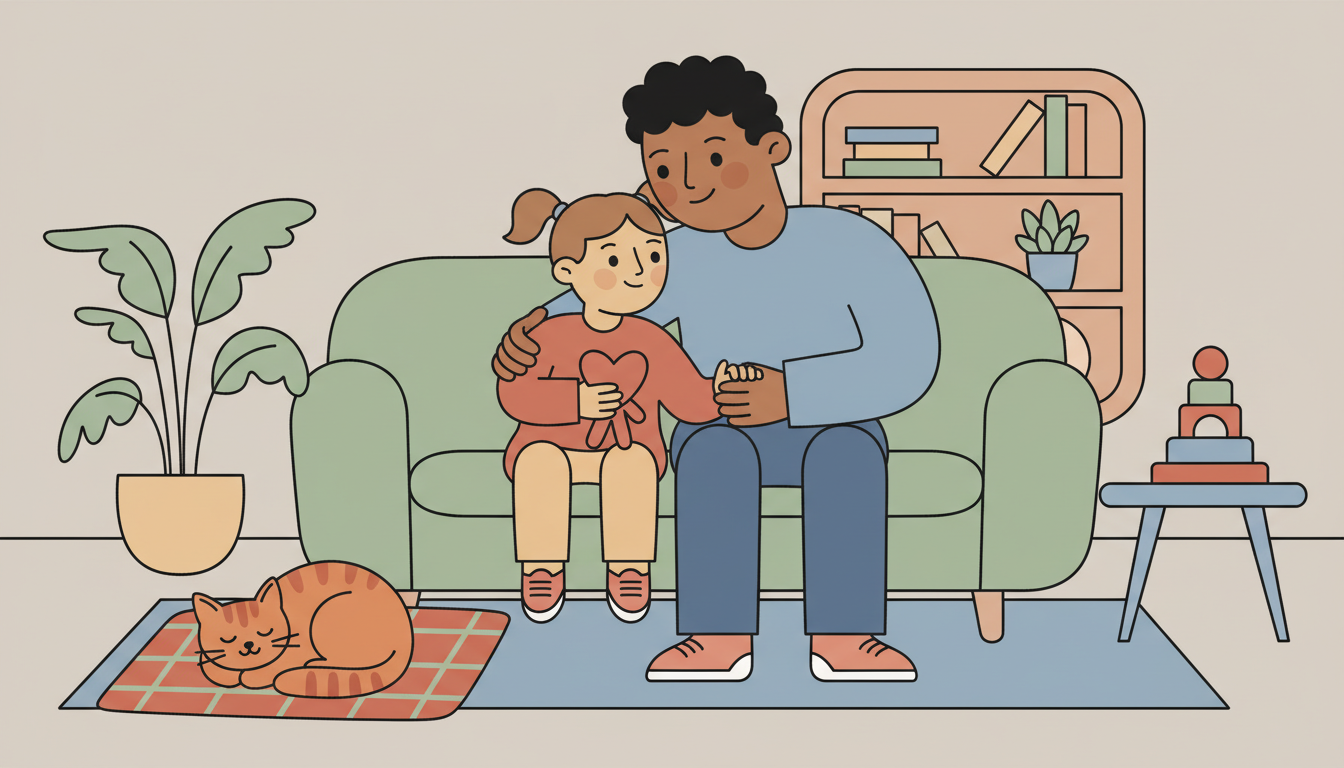
Set aside a few minutes each day for your child to share their feelings. Sit together in a comfortable spot and ask open-ended questions about their day. Listen without judgment as they describe happy moments, frustrations, or worries. Validate their emotions by naming what you hear and showing you understand. This creates a safe space for emotional expression.
Part of the Imprint developmental journey — personalized to your child.
How to Do This Activity
Set aside a few minutes each day for your child to share their feelings. Sit together in a comfortable spot and ask open-ended questions about their day. Listen without judgment as they describe happy moments, frustrations, or worries. Validate their emotions by naming what you hear and showing you understand. This creates a safe space for emotional expression.
Why It Works
Secure attachment helps children learn to trust parents with their emotions and develop better emotional regulation. Research shows securely attached children demonstrate better emotion understanding and modulation, as they learn to appraise situations with changing demands (Thompson, 2008). Regular emotional check-ins reinforce that you are a safe person to turn to with all feelings.
Tips for Parents
Let your child lead the conversation and share at their own pace. You can say things like "I hear that made you feel sad" to show you understand.
Share one of your own feelings too. This models emotional openness and builds connection.
Materials Needed
None
Learning Methods
Cooperative LearningMetacognitive StrategiesProject-Based and Thematic Learning

Loved this activity? Let us do the planning for you.
Imprint personalizes every activity to your child — their interests, their stage, the traits they're building — so playtime is more fun and every moment counts.
Science-backed. Private by design. No spam.