Feeling faces check-in
3–4 yearsFamily ConnectionNo materials needed
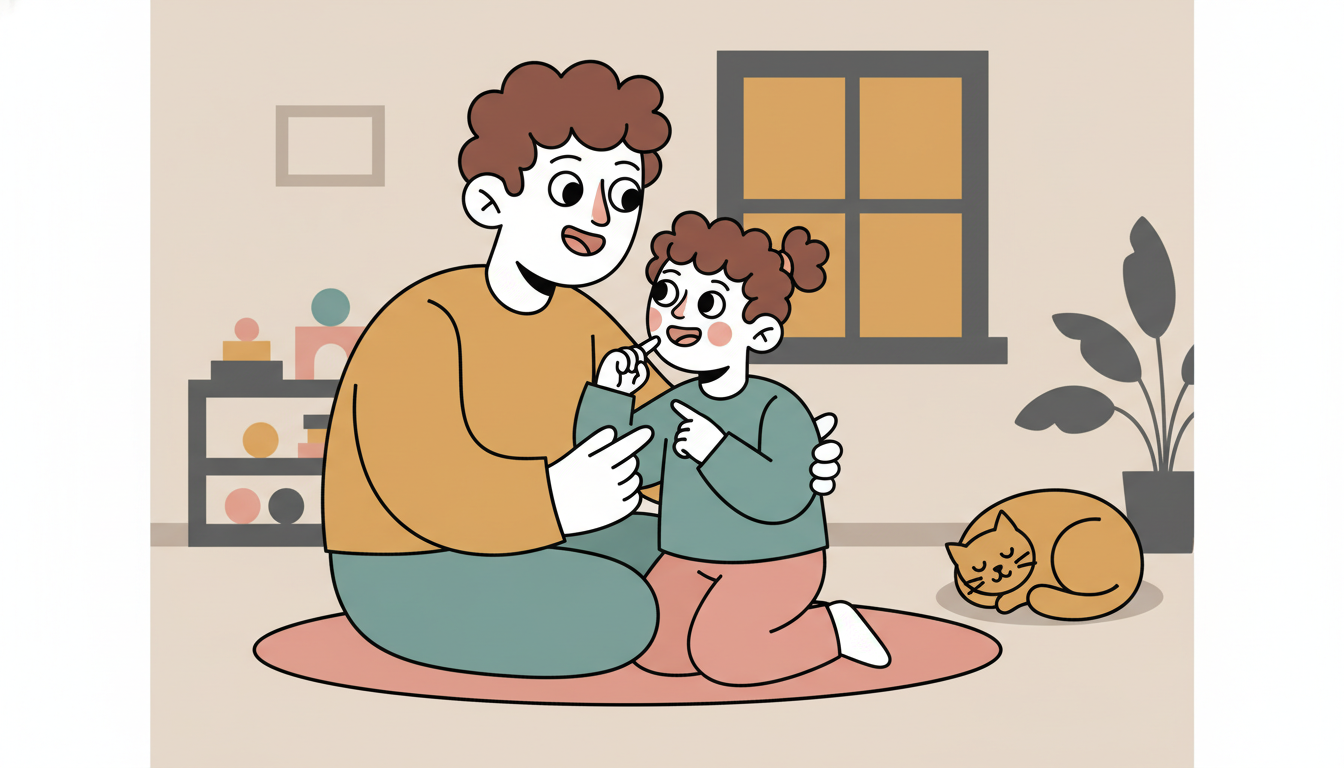
Several times during your time together, pause and ask your child 'How are you feeling right now?' Encourage them to tell you in words rather than just pointing or nodding. Share your own feelings too, using simple statements like 'I feel happy when we play together' or 'I feel tired after work.'
Part of the Imprint developmental journey — personalized to your child.
How to Do This Activity
Several times during your time together, pause and ask your child 'How are you feeling right now?' Encourage them to tell you in words rather than just pointing or nodding. Share your own feelings too, using simple statements like 'I feel happy when we play together' or 'I feel tired after work.'
Why It Works
Frequent emotional check-ins build the communication quality factors of mirroring and appropriate response that enhance children's psychological development (Zhang & Li, 2024). When parents validate and reflect feelings before problem-solving, children learn that their emotional experiences are understood and valued. This practice establishes the open communication patterns that correlate with enduring parent-child relationships (Hartos & Power, 2000).
Tips for Parents
Make this feel natural rather than like a test by weaving it into activities you're already doing.
When your child shares a feeling, reflect it back like 'It sounds like you're feeling frustrated that the blocks keep falling.'
Use your own feeling statements to model how to express emotions clearly.
Materials Needed
None
Learning Methods
Narrative and Literacy-Rich ExperiencesCollaborative and Cooperative PlayInquiry-Based Learning

Loved this activity? Let us do the planning for you.
Imprint personalizes every activity to your child — their interests, their stage, the traits they're building — so playtime is more fun and every moment counts.
Science-backed. Private by design. No spam.