Emotion sorting game
4–5 yearsSuccess MindsetMaterials: Paper
Crayons or magazines with pictures
Scissors (with parent supervision)
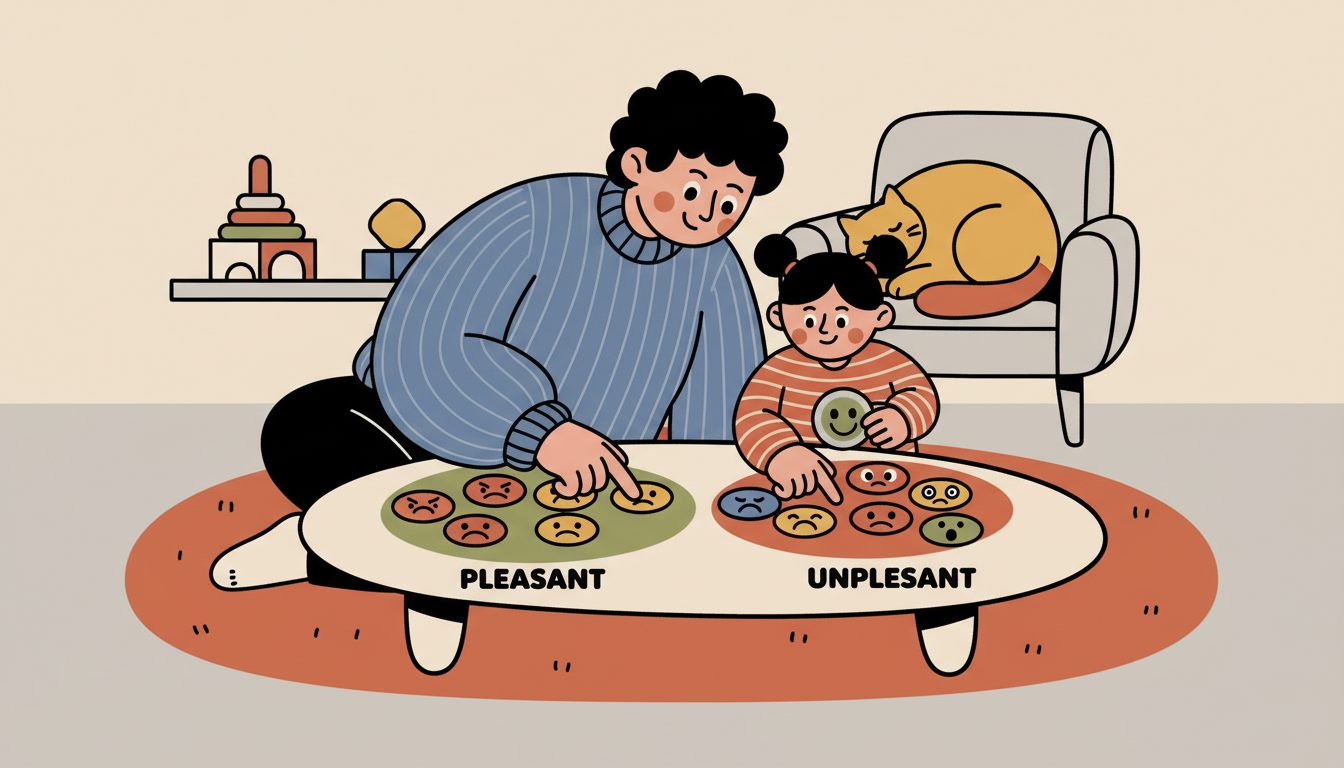
Draw or cut out pictures of faces showing different emotions. Work together to sort them into groups. You might sort by similar emotions, like grouping frustrated and angry together. Or sort by pleasant and unpleasant feelings. Talk about why certain emotions go together and how they are similar or different. This builds emotional understanding and categorization skills.
Part of the Imprint developmental journey — personalized to your child.
How to Do This Activity
Draw or cut out pictures of faces showing different emotions. Work together to sort them into groups. You might sort by similar emotions, like grouping frustrated and angry together. Or sort by pleasant and unpleasant feelings. Talk about why certain emotions go together and how they are similar or different. This builds emotional understanding and categorization skills.
Why It Works
This activity leverages children's emerging ability to classify by multiple attributes simultaneously, a key cognitive capability at this age. Sorting and categorizing emotions builds the emotional knowledge that predicts social competence and academic achievement. Students with higher emotional intelligence show significantly better academic performance and psychological well-being (Brackett, M. A., Rivers, S. E., & Salovey, P., 2011). The activity also builds sophisticated emotion vocabulary, which is essential for emotional recognition and expression. Children who can understand and differentiate complex emotions develop better emotional regulation abilities.
Tips for Parents
Let your child lead the sorting process. Their categories might surprise you and show their thinking.
Discuss why emotions belong in different groups. This builds deeper understanding beyond just naming feelings.
There is no single right way to sort emotions. Accept your child's reasoning and explore it together.
Materials Needed
Paper
Crayons or magazines with pictures
Scissors (with parent supervision)
Learning Methods
Metacognitive StrategiesCooperative LearningStructured Academic Learning

Loved this activity? Let us do the planning for you.
Imprint personalizes every activity to your child — their interests, their stage, the traits they're building — so playtime is more fun and every moment counts.
Science-backed. Private by design. No spam.