Emotion faces game
4–5 yearsSuccess MindsetMaterials: Optional: a mirror
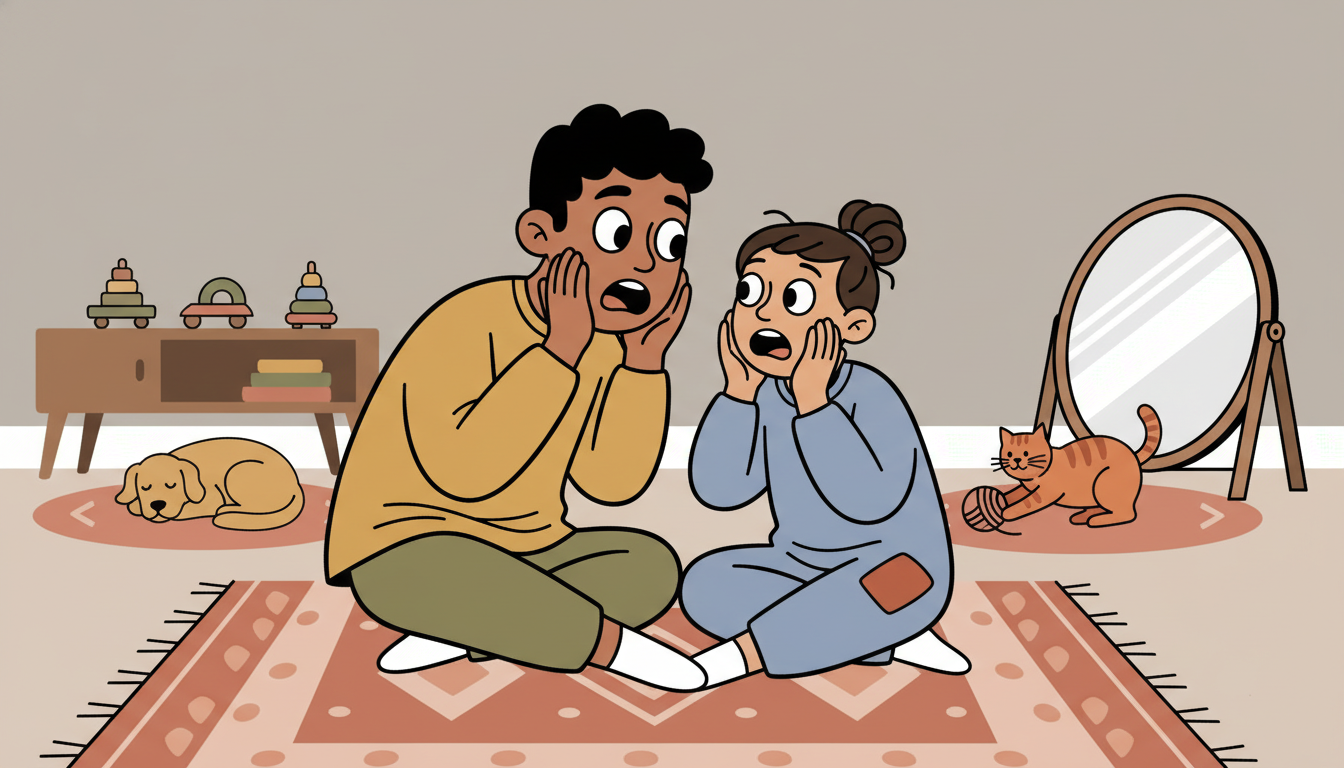
Take turns making different feeling faces and guessing what emotion the other person is showing. Start with basic emotions like happy, sad, angry, and scared, then add more complex ones like surprised, frustrated, or proud. Talk about times you each felt that way. You can also use a mirror to explore facial expressions together. This makes emotion recognition fun and interactive.
Part of the Imprint developmental journey — personalized to your child.
How to Do This Activity
Take turns making different feeling faces and guessing what emotion the other person is showing. Start with basic emotions like happy, sad, angry, and scared, then add more complex ones like surprised, frustrated, or proud. Talk about times you each felt that way. You can also use a mirror to explore facial expressions together. This makes emotion recognition fun and interactive.
Why It Works
Secure attachment helps children develop better emotion expression and recognition. Research shows securely attached children exhibit significantly more appropriate emotion expression and less task-incongruent affect during interactions (Borelli et al., 2021). Playing with emotions in a safe, fun context teaches children that feelings can be expressed and understood.
Tips for Parents
Make this playful and light. Exaggerate expressions to make it easier and more fun for your child.
Validate whatever emotions your child mentions. All feelings are okay to have and talk about.
Materials Needed
Optional: a mirror
Learning Methods
Cooperative LearningMetacognitive StrategiesProject-Based and Thematic Learning

Loved this activity? Let us do the planning for you.
Imprint personalizes every activity to your child — their interests, their stage, the traits they're building — so playtime is more fun and every moment counts.
Science-backed. Private by design. No spam.