Comfort the sad toy
2–3 yearsFamily ConnectionMaterials: Toys or stuffed animals
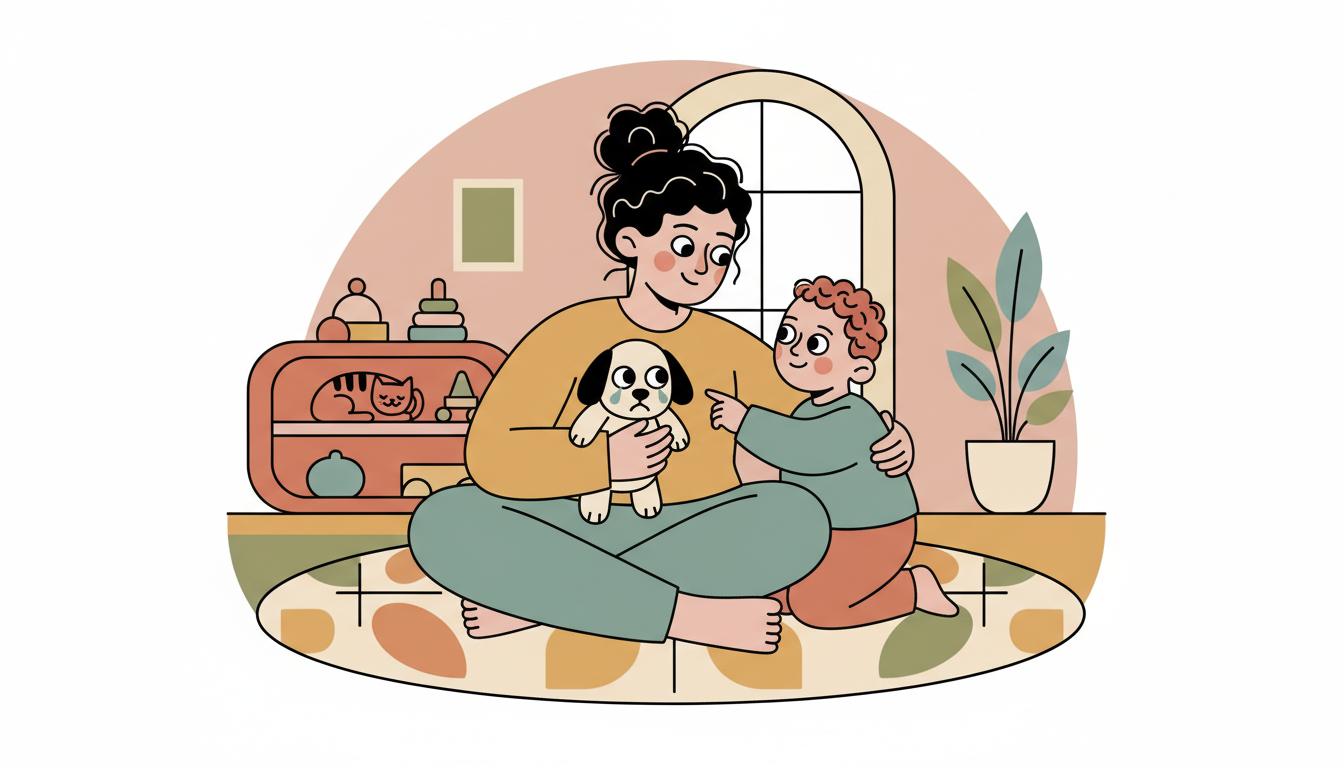
During play, pretend one of your child's toys is sad or hurt. Say 'Oh no, doggy fell down. Doggy is sad and crying.' See what your child does. If needed, model comforting: 'I will give doggy a hug. There, there, you will be okay.' Invite your child to help comfort the toy too.
Part of the Imprint developmental journey — personalized to your child.
How to Do This Activity
During play, pretend one of your child's toys is sad or hurt. Say 'Oh no, doggy fell down. Doggy is sad and crying.' See what your child does. If needed, model comforting: 'I will give doggy a hug. There, there, you will be okay.' Invite your child to help comfort the toy too.
Why It Works
Early empathy training through pretend play scenarios predicts prosocial behavior and peer acceptance later in childhood. This activity uses symbolic and pretend play, which is critical for emotional development, to practice responding compassionately to others' distress (Hoffman, M. L., 2000). The theory of mind foundations being established now through such activities are critical for all future empathy development.
Tips for Parents
Follow your child's lead. Some children will naturally comfort the toy. Others need you to show them first.
Praise any caring response. Even just touching the toy gently shows emerging empathy.
Materials Needed
Toys or stuffed animals
Learning Methods
Symbolic and Pretend PlaySongs, Stories, and RhymesSocial Learning Through Peers

Loved this activity? Let us do the planning for you.
Imprint personalizes every activity to your child — their interests, their stage, the traits they're building — so playtime is more fun and every moment counts.
Science-backed. Private by design. No spam.