Calm voice practice
4–5 yearsFamily ConnectionNo materials needed
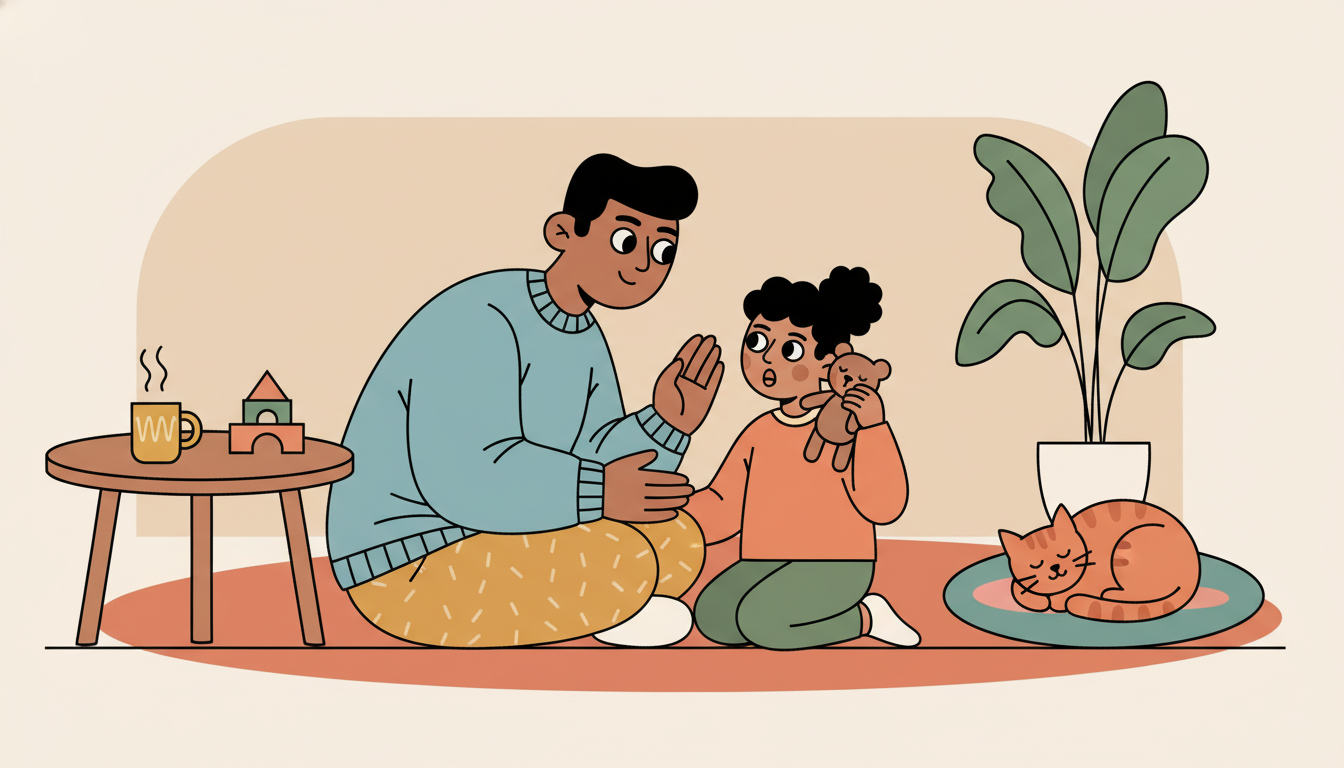
When your child gets upset during a disagreement, model and teach using a calm voice to express feelings. You might say your own feelings in a calm way first, then coach your child to try the same. Praise any effort to use words instead of yelling or physical responses. If needed, take a brief calm-down break before continuing the conversation about the conflict.
Part of the Imprint developmental journey — personalized to your child.
How to Do This Activity
When your child gets upset during a disagreement, model and teach using a calm voice to express feelings. You might say your own feelings in a calm way first, then coach your child to try the same. Praise any effort to use words instead of yelling or physical responses. If needed, take a brief calm-down break before continuing the conversation about the conflict.
Why It Works
Children who learn to calmly discuss disagreements show 30% better emotional regulation and relationship maintenance throughout development (Shantz, 1987). Staying regulated during your child's dysregulation models the exact skill you want them to develop. At this age, children can understand explicit teaching about emotional expression and have the language capacity to express frustration with words when coached.
Tips for Parents
Your own calm tone matters more than what you say. Children learn by watching you.
Keep your coaching brief. A simple reminder like calm words helps is often enough.
Recognize that learning this skill takes time and many practice opportunities.
Materials Needed
None
Learning Methods
Cooperative LearningMetacognitive StrategiesStructured Academic Learning

Loved this activity? Let us do the planning for you.
Imprint personalizes every activity to your child — their interests, their stage, the traits they're building — so playtime is more fun and every moment counts.
Science-backed. Private by design. No spam.