Bounce back teddy
2–3 yearsEmotional WellbeingMaterials: A stuffed animal or doll
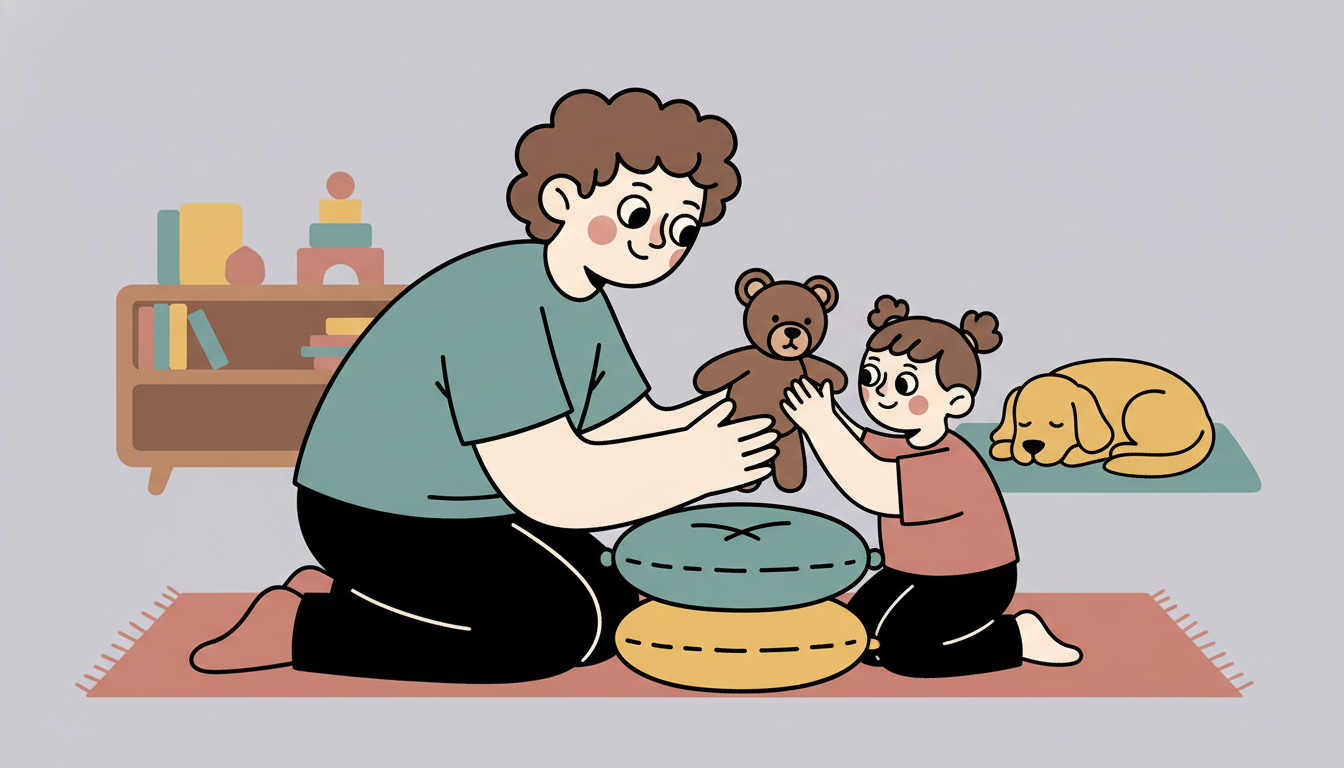
Use a stuffed animal to act out simple stories about facing small challenges and trying again. For example, have teddy try to climb onto a pillow but slip off, then try again and succeed. Keep the stories simple and concrete, matching your child's understanding. After the story, you might say, 'Teddy kept trying and did it.' This pretend play helps your child understand the concept of persistence in a safe, playful way that makes sense to their developing mind.
Part of the Imprint developmental journey — personalized to your child.
How to Do This Activity
Use a stuffed animal to act out simple stories about facing small challenges and trying again. For example, have teddy try to climb onto a pillow but slip off, then try again and succeed. Keep the stories simple and concrete, matching your child's understanding. After the story, you might say, 'Teddy kept trying and did it.' This pretend play helps your child understand the concept of persistence in a safe, playful way that makes sense to their developing mind.
Why It Works
Pretend play allows children to practice emotional and behavioral responses in a low-stakes environment. Research shows that early childhood resilience profiles, including emotional and behavioral resilience, predict better outcomes years later (Liew et al., 2008). Symbolic play helps children process experiences and develop coping strategies. By modeling persistence through play, you're building neural patterns for resilience during a critical period when the developing prefrontal cortex enables beginning emotional regulation.
Tips for Parents
Use simple language and clear actions. Your child understands concrete examples better than abstract ideas at this age.
Let your child take turns making teddy try things. They learn by doing, not just watching.
Connect the story to real moments. When your child faces a challenge later, you can say, 'Just like teddy, you can try again.'
Materials Needed
A stuffed animal or doll
Learning Methods
Interactive Play-Based LearningSymbolic and Pretend PlaySocial Learning Through Peers

Loved this activity? Let us do the planning for you.
Imprint personalizes every activity to your child — their interests, their stage, the traits they're building — so playtime is more fun and every moment counts.
Science-backed. Private by design. No spam.