Body feelings map
4–5 yearsEmotional WellbeingMaterials: Paper
Crayons or markers
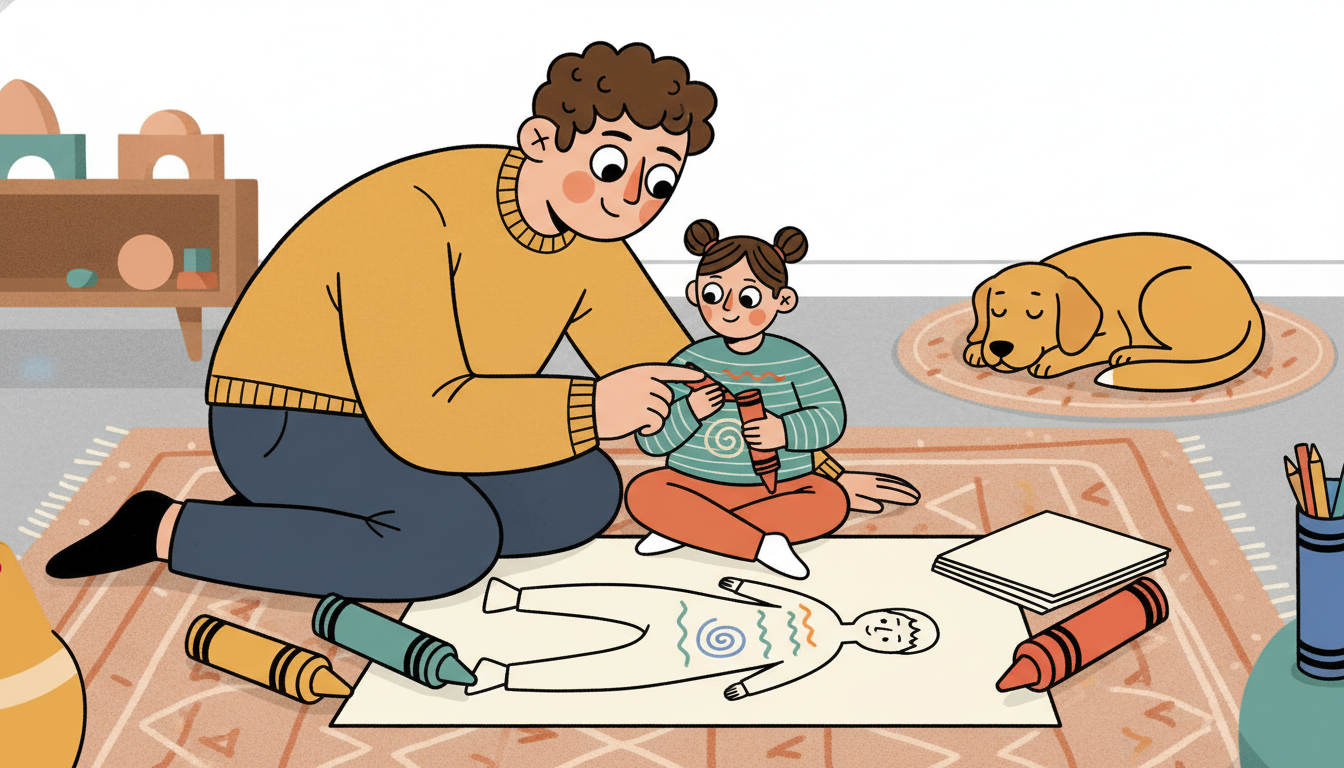
Draw an outline of a body together and talk about where different emotions show up physically. Discuss how anger might feel hot in the chest, worry might feel like butterflies in the stomach, or happiness might feel light. Let your child color or mark where they feel different emotions. This helps them recognize emotions through body signals before feelings become overwhelming.
Part of the Imprint developmental journey — personalized to your child.
How to Do This Activity
Draw an outline of a body together and talk about where different emotions show up physically. Discuss how anger might feel hot in the chest, worry might feel like butterflies in the stomach, or happiness might feel light. Let your child color or mark where they feel different emotions. This helps them recognize emotions through body signals before feelings become overwhelming.
Why It Works
Connecting emotions to physical sensations builds the self-awareness component of emotional intelligence. This activity makes abstract emotional experiences concrete, which aligns with children's cognitive ability to understand concrete situations at this age. Children with higher emotional intelligence experience significantly better mental health and relationship satisfaction throughout life (Bar-On, R., 2006). Teaching children to recognize early physical signs of emotions gives them more time to use regulation strategies before emotions escalate. This early awareness is foundational for the emotional regulation skills that contribute to lifelong emotional intelligence and well-being.
Tips for Parents
Share where you feel emotions in your own body. This normalizes the physical experience of emotions.
Revisit this map when your child experiences strong emotions. Ask where they feel it in their body.
Keep the body outline simple. A basic stick figure or oval works perfectly for this activity.
Materials Needed
Paper
Crayons or markers
Learning Methods
Metacognitive StrategiesCooperative LearningStructured Academic Learning

Loved this activity? Let us do the planning for you.
Imprint personalizes every activity to your child — their interests, their stage, the traits they're building — so playtime is more fun and every moment counts.
Science-backed. Private by design. No spam.