What helps you feel better
3–4 yearsEmotional WellbeingNo materials needed
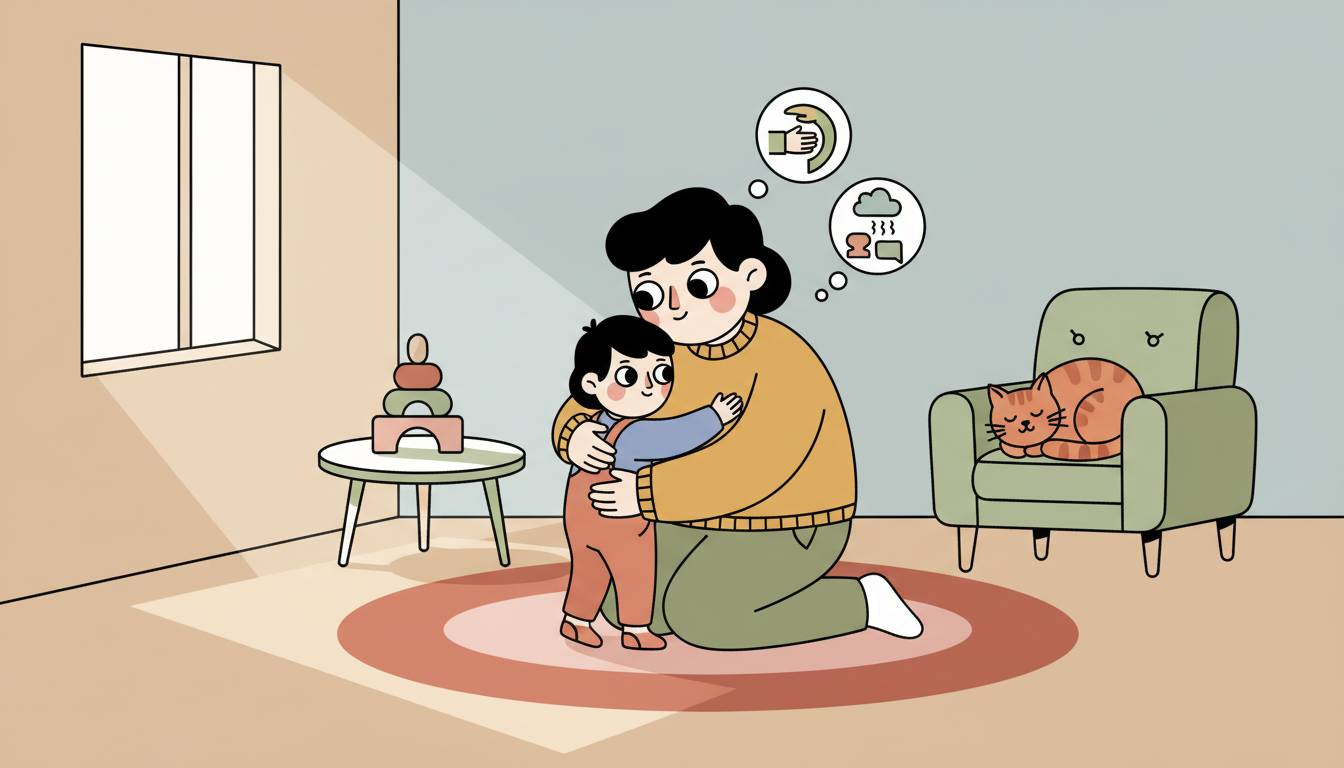
During quiet activities together, ask your child to think about times they felt upset and what made them feel better. Was it a hug, taking deep breaths, or talking about it? Help them notice what works for them. This builds self-awareness and gives them tools for future challenges.
Part of the Imprint developmental journey — personalized to your child.
How to Do This Activity
During quiet activities together, ask your child to think about times they felt upset and what made them feel better. Was it a hug, taking deep breaths, or talking about it? Help them notice what works for them. This builds self-awareness and gives them tools for future challenges.
Why It Works
Identifying personal coping strategies builds the self-awareness and emotional regulation that underpin resilience. Research demonstrates that resilience interventions teaching students to identify and use coping skills lead to significant increases in emotional regulation and adaptive behaviors (Castro-Olivo et al., 2022). Children who develop this self-knowledge show better ability to manage stress throughout their lives.
Tips for Parents
Start with recent, specific examples your child can remember.
Validate all their answers, even if they seem simple like "Mommy's hug."
Revisit this conversation regularly as your child grows and discovers new coping strategies.
Materials Needed
None
Learning Methods
Project-Based LearningInquiry-Based LearningStructured Learning Activities

Loved this activity? Let us do the planning for you.
Imprint personalizes every activity to your child — their interests, their stage, the traits they're building — so playtime is more fun and every moment counts.
Science-backed. Private by design. No spam.