Validation practice
2–3 yearsEmotional WellbeingNo materials needed
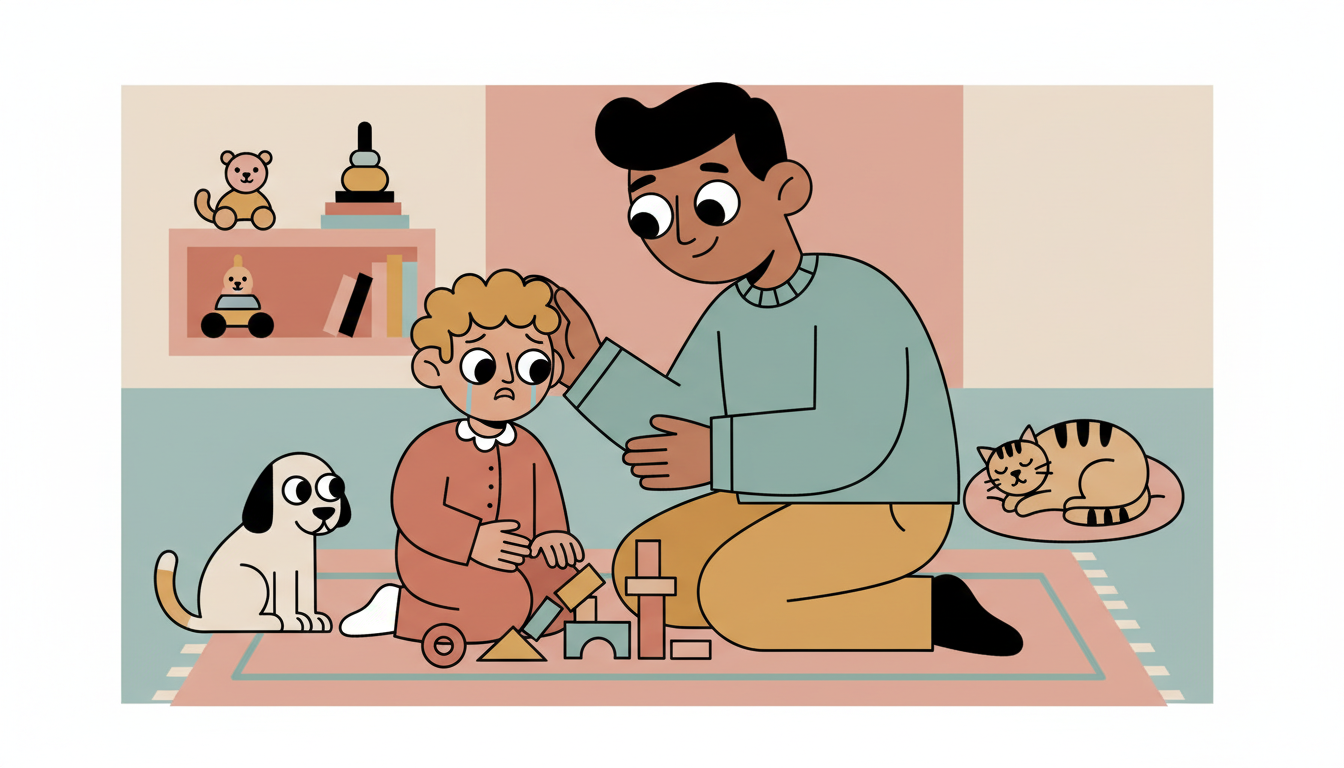
When your child shows any emotion, name it and acknowledge it before trying to solve the problem. You might say, 'You seem really frustrated that the tower fell down. That is frustrating.'
Part of the Imprint developmental journey — personalized to your child.
How to Do This Activity
When your child shows any emotion, name it and acknowledge it before trying to solve the problem. You might say, 'You seem really frustrated that the tower fell down. That is frustrating.'
This simple practice validates your child's emotional experience. It teaches them that all feelings are okay, even uncomfortable ones. Over time, this builds emotional awareness and trust.
Why It Works
Emotion coaching is the most evidence-based approach for developing emotional intelligence. Research shows that children whose emotions were acknowledged and labeled by parents at age 2-3 showed significantly better emotional regulation at age 4-5, and this early emotion coaching predicted fewer behavior problems in elementary school (Goleman, 1995). A strong positive link exists between emotional intelligence and better mental health outcomes (Mayer et al., 1999).
Tips for Parents
Validate the feeling while still setting limits on behavior. You can say, 'You're angry, and hitting is not okay.'
You don't have to fix the feeling or make it go away. Just naming it is enough.
Materials Needed
None
Learning Methods
Symbolic and Pretend PlaySongs, Stories, and RhymesSocial Learning Through Peers

Loved this activity? Let us do the planning for you.
Imprint personalizes every activity to your child — their interests, their stage, the traits they're building — so playtime is more fun and every moment counts.
Science-backed. Private by design. No spam.