Story time problem solving
2–3 yearsFamily ConnectionMaterials: Children's books with simple conflict themes
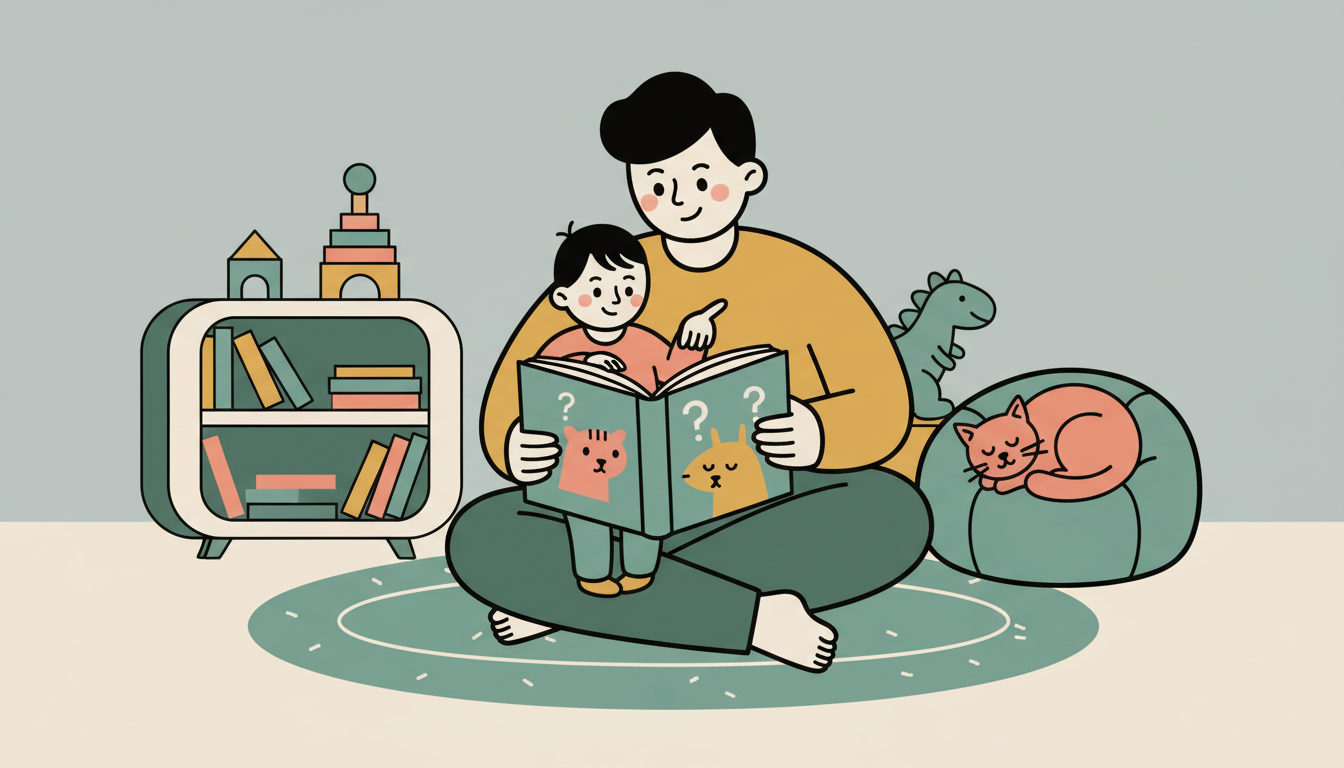
Choose books where characters have simple disagreements. Pause at conflict moments and ask 'What happened here? How do you think they feel?' Then ask 'What could they do?' Point to pictures as you talk. Keep it simple with one or two ideas. Books create safe distance to explore conflicts without personal stakes.
Part of the Imprint developmental journey — personalized to your child.
How to Do This Activity
Choose books where characters have simple disagreements. Pause at conflict moments and ask 'What happened here? How do you think they feel?' Then ask 'What could they do?' Point to pictures as you talk. Keep it simple with one or two ideas. Books create safe distance to explore conflicts without personal stakes.
Why It Works
Stories provide scaffolding for understanding social situations and solutions. Children who learn to identify and discuss conflicts, even in pretend scenarios, develop stronger problem-solving abilities. Research shows children learning these skills maintain 30% better emotional regulation and relationship maintenance (Shantz, 1987).
Tips for Parents
Pick books with clear, simple conflicts appropriate for this age. Don't worry if your child can't answer questions yet. You can model by answering your own questions. The goal is exposure to conflict resolution concepts, not perfect comprehension.
Materials Needed
Children's books with simple conflict themes
Learning Methods
Social Learning Through PeersSymbolic and Pretend PlayInteractive Play-Based Learning

Loved this activity? Let us do the planning for you.
Imprint personalizes every activity to your child — their interests, their stage, the traits they're building — so playtime is more fun and every moment counts.
Science-backed. Private by design. No spam.