Story feelings talk
3–4 yearsEmotional WellbeingMaterials: Picture books
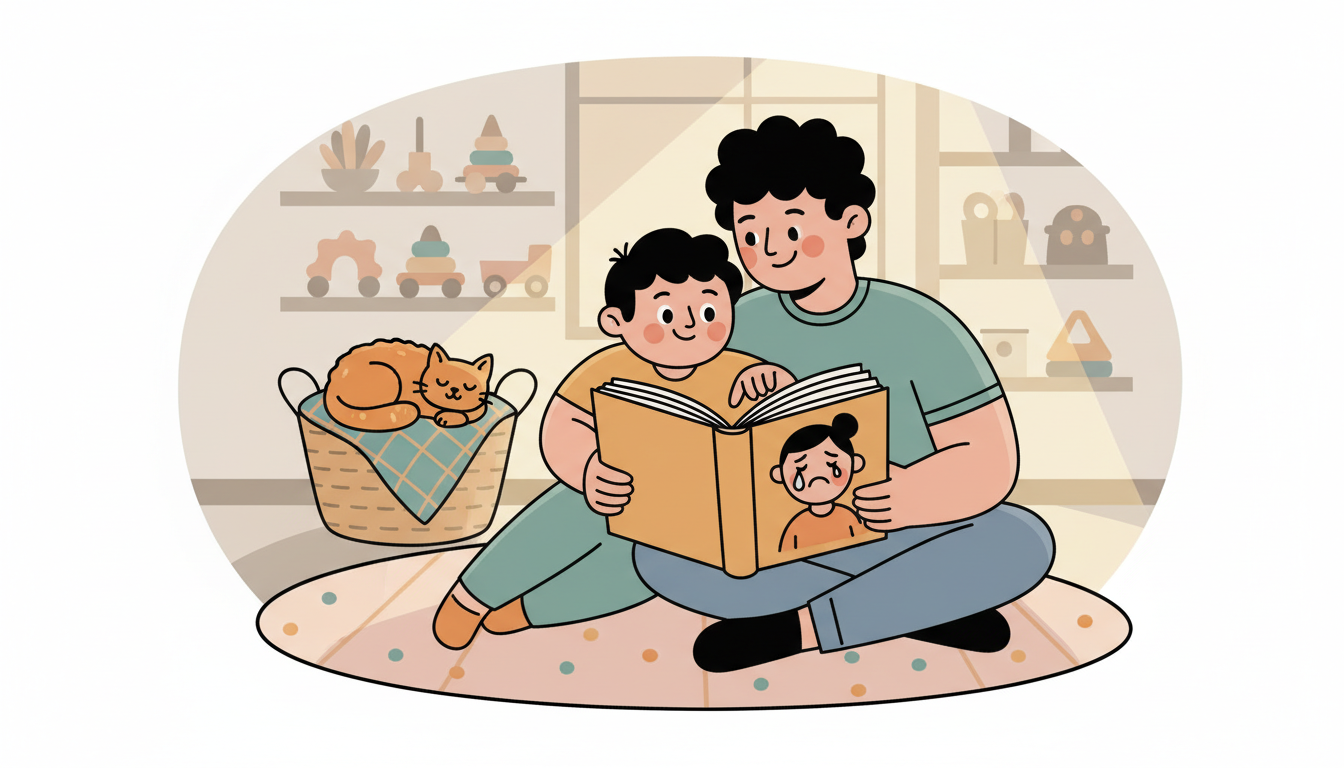
During your reading time, pause to discuss how story characters feel. Ask your child why they think the character feels that way. Point to facial expressions in pictures. Connect character emotions to times your child felt similar feelings. This builds empathy and emotional vocabulary through familiar stories.
Part of the Imprint developmental journey — personalized to your child.
How to Do This Activity
During your reading time, pause to discuss how story characters feel. Ask your child why they think the character feels that way. Point to facial expressions in pictures. Connect character emotions to times your child felt similar feelings. This builds empathy and emotional vocabulary through familiar stories.
Why It Works
Theory of mind emerges at this age, enabling understanding of others' perspectives and emotions for the first time. Students with higher emotional intelligence show significantly better psychological well-being and enhanced social interactions (Brackett et al., 2011). Story discussions strengthen emotional understanding during this sensitive period.
Tips for Parents
Choose books with clear facial expressions in the illustrations.
Ask how do you think they feel before giving answers.
Connect story emotions to your child's real experiences.
Materials Needed
Picture books
Learning Methods
Narrative and Literacy-Rich ExperiencesCollaborative and Cooperative PlayInquiry-Based Learning

Loved this activity? Let us do the planning for you.
Imprint personalizes every activity to your child — their interests, their stage, the traits they're building — so playtime is more fun and every moment counts.
Science-backed. Private by design. No spam.