Puppet emotion play
3–4 yearsEmotional WellbeingMaterials: Stuffed animals or simple puppets
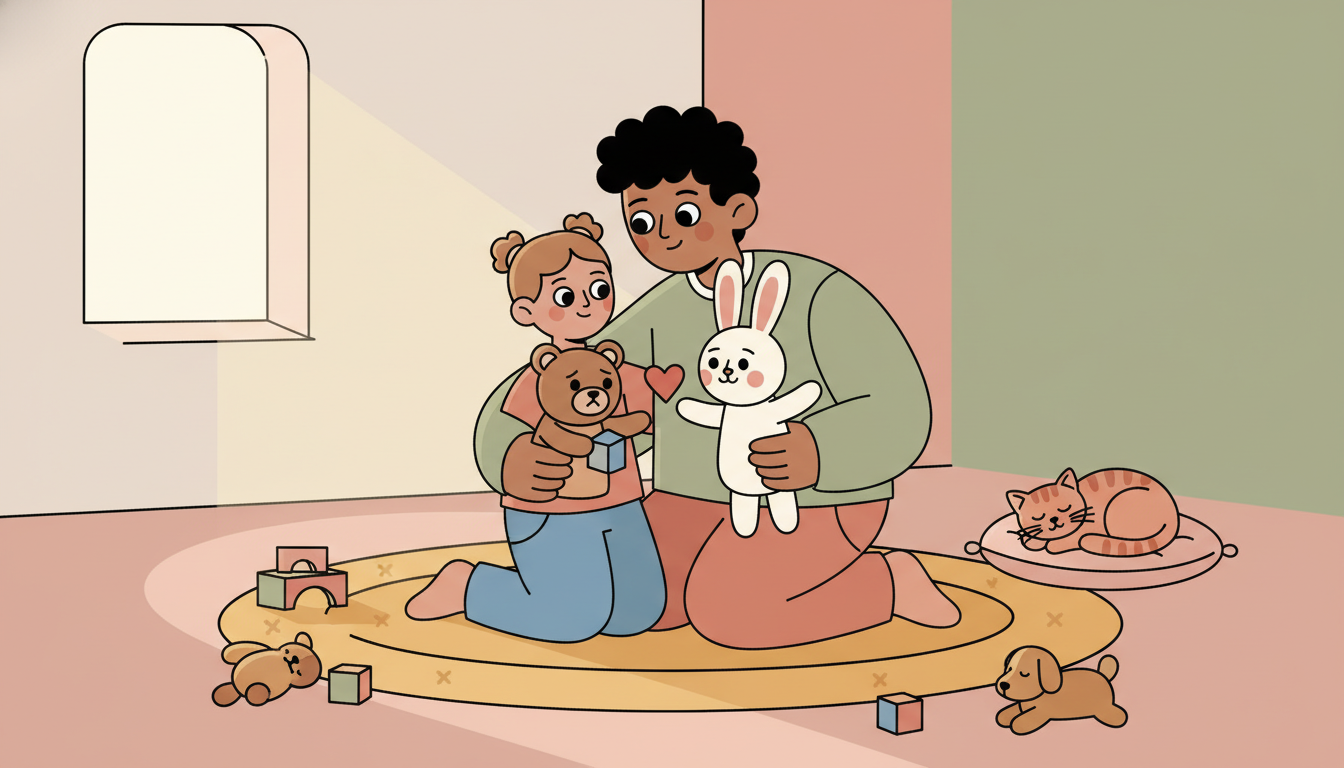
Use stuffed animals or simple puppets to act out emotional scenarios. Have one puppet lose a toy and feel sad, then work through the feeling together. Let your child guide the puppets through different situations. This provides safe distance to explore big emotions and practice empathy through pretend play.
Part of the Imprint developmental journey — personalized to your child.
How to Do This Activity
Use stuffed animals or simple puppets to act out emotional scenarios. Have one puppet lose a toy and feel sad, then work through the feeling together. Let your child guide the puppets through different situations. This provides safe distance to explore big emotions and practice empathy through pretend play.
Why It Works
Pretend play builds theory of mind and perspective-taking abilities during this critical developmental window. Children with higher emotional intelligence experience better relationship satisfaction and mental health (Bar-On, 2006). Using puppets gives children safe practice with emotional situations when emotional competence becomes developmentally possible.
Tips for Parents
Start with simple scenarios your child can relate to easily.
Let your child choose what happens next in the story.
Validate all emotions the puppets express during play.
Materials Needed
Stuffed animals or simple puppets
Learning Methods
Narrative and Literacy-Rich ExperiencesCollaborative and Cooperative PlayInquiry-Based Learning

Loved this activity? Let us do the planning for you.
Imprint personalizes every activity to your child — their interests, their stage, the traits they're building — so playtime is more fun and every moment counts.
Science-backed. Private by design. No spam.