Picture emotion sorting
2–3 yearsEmotional WellbeingMaterials: Pictures of faces from magazines or printed drawings
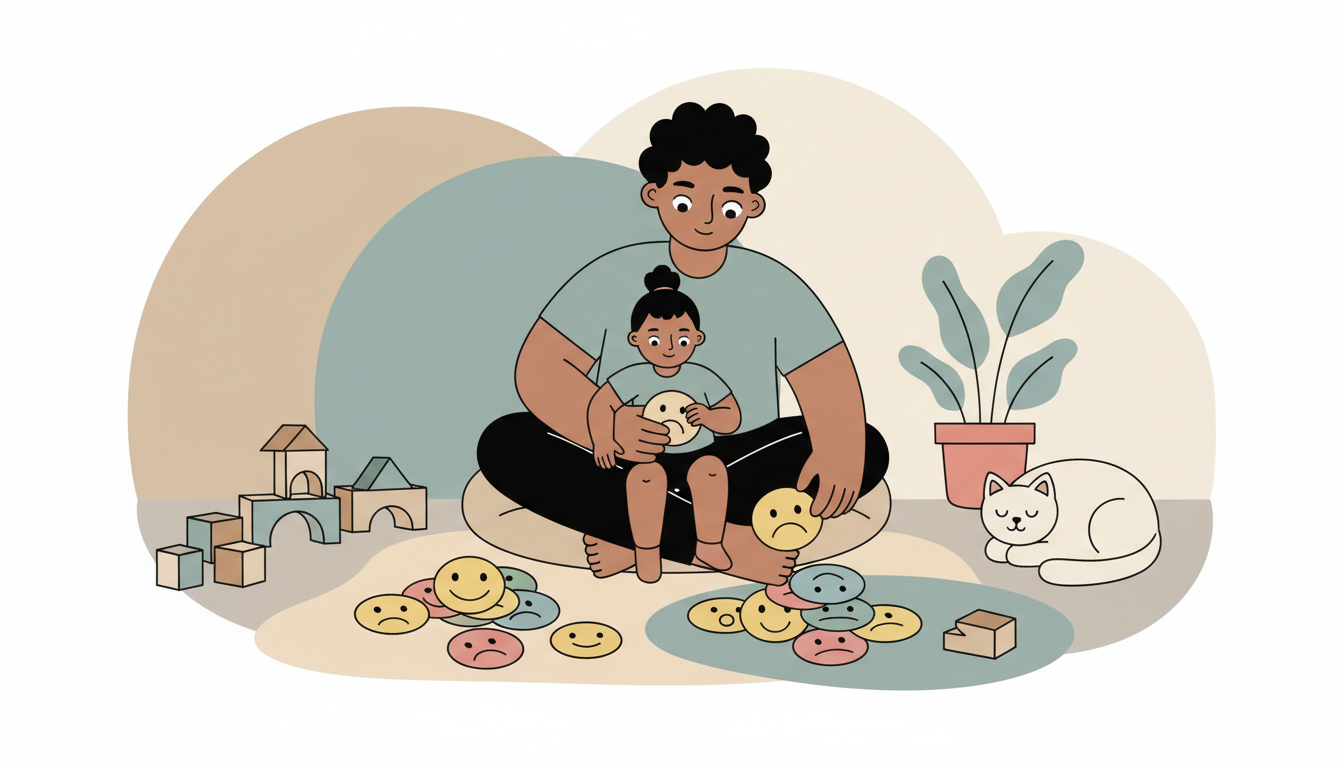
Cut out pictures of faces from magazines or print simple emotion drawings. Help your child sort them into groups like happy faces and sad faces. Name each emotion as you sort together.
Part of the Imprint developmental journey — personalized to your child.
How to Do This Activity
Cut out pictures of faces from magazines or print simple emotion drawings. Help your child sort them into groups like happy faces and sad faces. Name each emotion as you sort together.
This activity uses your child's emerging ability to categorize by one attribute while building emotional recognition skills. Sorting makes abstract feelings more concrete and understandable.
Why It Works
At 24-36 months, children are beginning to categorize by one attribute, making this developmentally appropriate. Research shows that students with higher emotional intelligence demonstrated significantly better psychological well-being and positive psychological characteristics (Brackett et al., 2011). Early development of emotional recognition skills leads to better emotional regulation and understanding, which predicts improved mental health and relationship satisfaction in adulthood (Bar-On, 2006).
Tips for Parents
Start with just two emotions to keep it simple. You can add more categories as your child gets better at the game.
Don't worry about perfect sorting. The goal is to talk about emotions and look at faces together.
Materials Needed
Pictures of faces from magazines or printed drawings
Learning Methods
Symbolic and Pretend PlaySongs, Stories, and RhymesSocial Learning Through Peers

Loved this activity? Let us do the planning for you.
Imprint personalizes every activity to your child — their interests, their stage, the traits they're building — so playtime is more fun and every moment counts.
Science-backed. Private by design. No spam.