Naming feelings together
1–2 yearsEmotional WellbeingNo materials needed
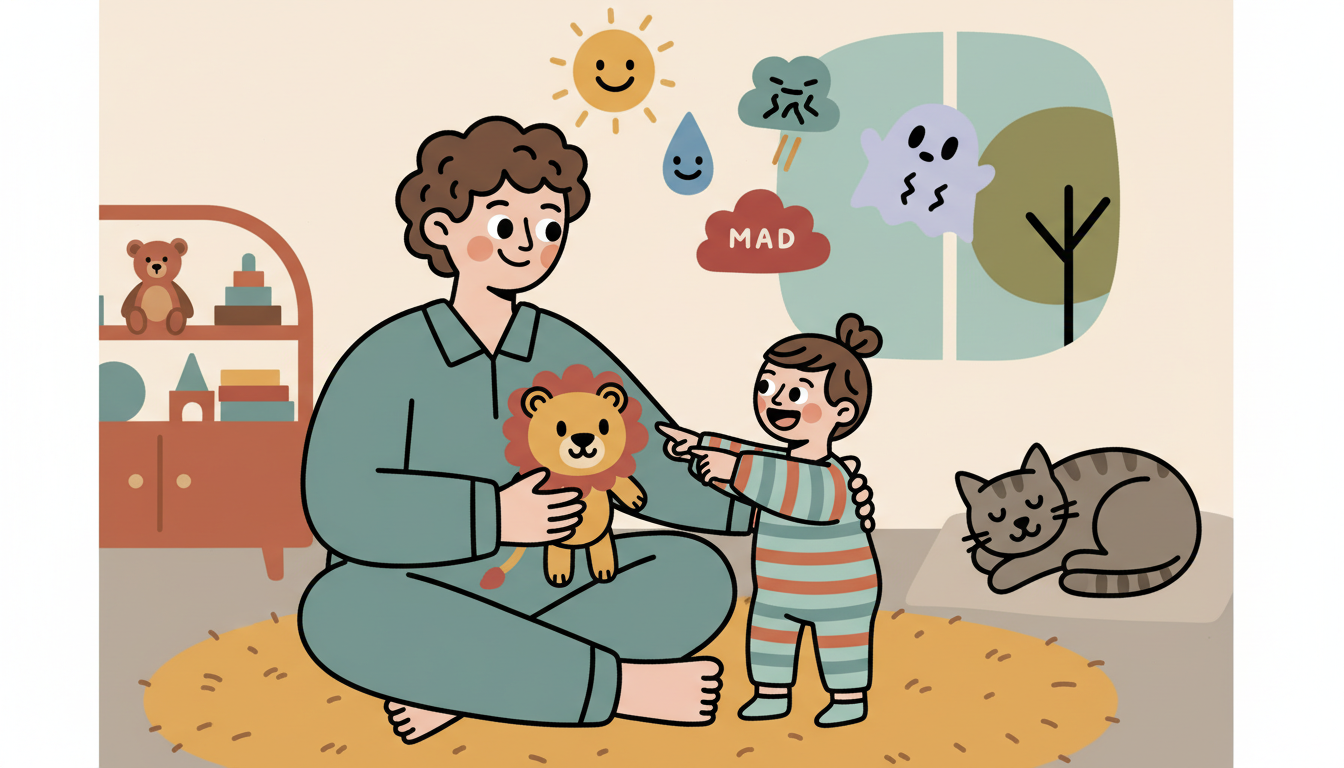
As you play with your child, label emotions as they happen. When your child laughs, say 'You're feeling happy.' When they seem frustrated with a toy, say 'You're feeling frustrated.' Use simple emotion words like happy, sad, mad, and scared. This helps your child connect words to their internal experiences.
Part of the Imprint developmental journey — personalized to your child.
How to Do This Activity
As you play with your child, label emotions as they happen. When your child laughs, say 'You're feeling happy.' When they seem frustrated with a toy, say 'You're feeling frustrated.' Use simple emotion words like happy, sad, mad, and scared. This helps your child connect words to their internal experiences.
Why It Works
Language development at this age enables explicit emotion labeling and discussion. When children learn to name their emotions, they develop better emotional recognition and expression skills that carry into adulthood (Goleman, 1995). This builds the foundation for self-awareness, a core component of emotional intelligence.
Tips for Parents
Keep it simple with one or two emotion words at a time.
Use a calm, matter-of-fact tone when naming emotions.
Label your own emotions too, like 'I'm feeling tired' or 'I'm feeling happy to see you.'
Materials Needed
None
Learning Methods
Language-Rich EnvironmentImitation and ModelingBeginning Symbolic Play

Loved this activity? Let us do the planning for you.
Imprint personalizes every activity to your child — their interests, their stage, the traits they're building — so playtime is more fun and every moment counts.
Science-backed. Private by design. No spam.