How would you feel game
3–4 yearsFamily ConnectionNo materials needed
During activity time, describe simple scenarios and ask your child how different people might feel. You might say, 'If someone took your friend's toy, how would your friend feel? How would the person who took it feel if they got in trouble?' Then ask, 'What could we do to help your friend feel better?' This teaches your child to think about others' feelings and develop caring responses. Keep scenarios simple and based on experiences your child knows.
Part of the Imprint developmental journey — personalized to your child.
How to Do This Activity
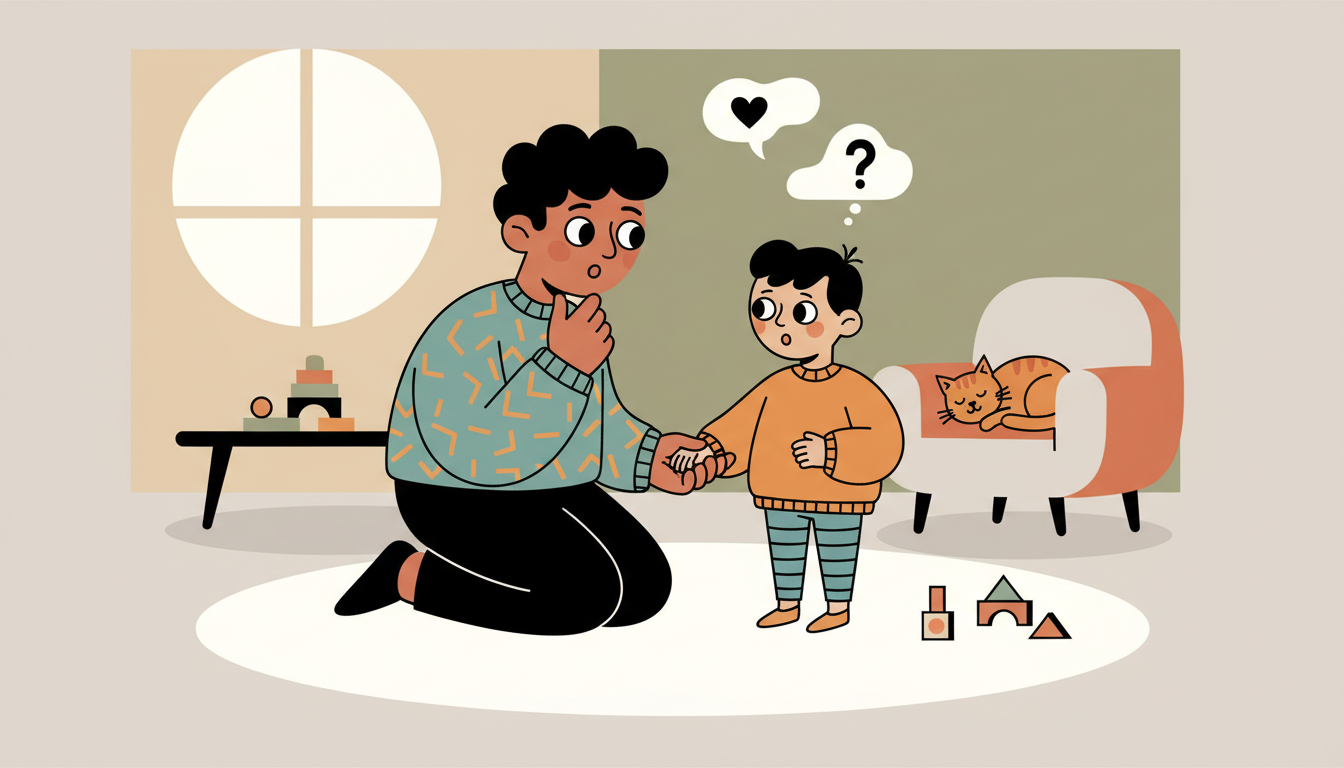
During activity time, describe simple scenarios and ask your child how different people might feel. You might say, 'If someone took your friend's toy, how would your friend feel? How would the person who took it feel if they got in trouble?' Then ask, 'What could we do to help your friend feel better?' This teaches your child to think about others' feelings and develop caring responses. Keep scenarios simple and based on experiences your child knows.
Why It Works
High empathy and emotional intelligence strongly predict positive relationships throughout life. Empathetic individuals are better at understanding others' perspectives and managing conflicts constructively (Hoffman, 2000). This activity directly targets the cognitive empathy skills that emerge during this sensitive period. By practicing perspective-taking through hypothetical scenarios, children develop the mental habit of considering others' feelings before acting, which becomes automatic over time.
Tips for Parents
Use situations from your child's daily life like sharing toys or waiting for a turn.
Ask about multiple people's feelings in the same scenario to build perspective-taking.
Praise your child when they suggest kind ways to help someone feel better.
Materials Needed
None
Learning Methods
Narrative and Literacy-Rich ExperiencesCollaborative and Cooperative PlayInquiry-Based Learning

Loved this activity? Let us do the planning for you.
Imprint personalizes every activity to your child — their interests, their stage, the traits they're building — so playtime is more fun and every moment counts.
Science-backed. Private by design. No spam.