Honesty story time
2–3 yearsSuccess MindsetMaterials: Age-appropriate picture books about honesty
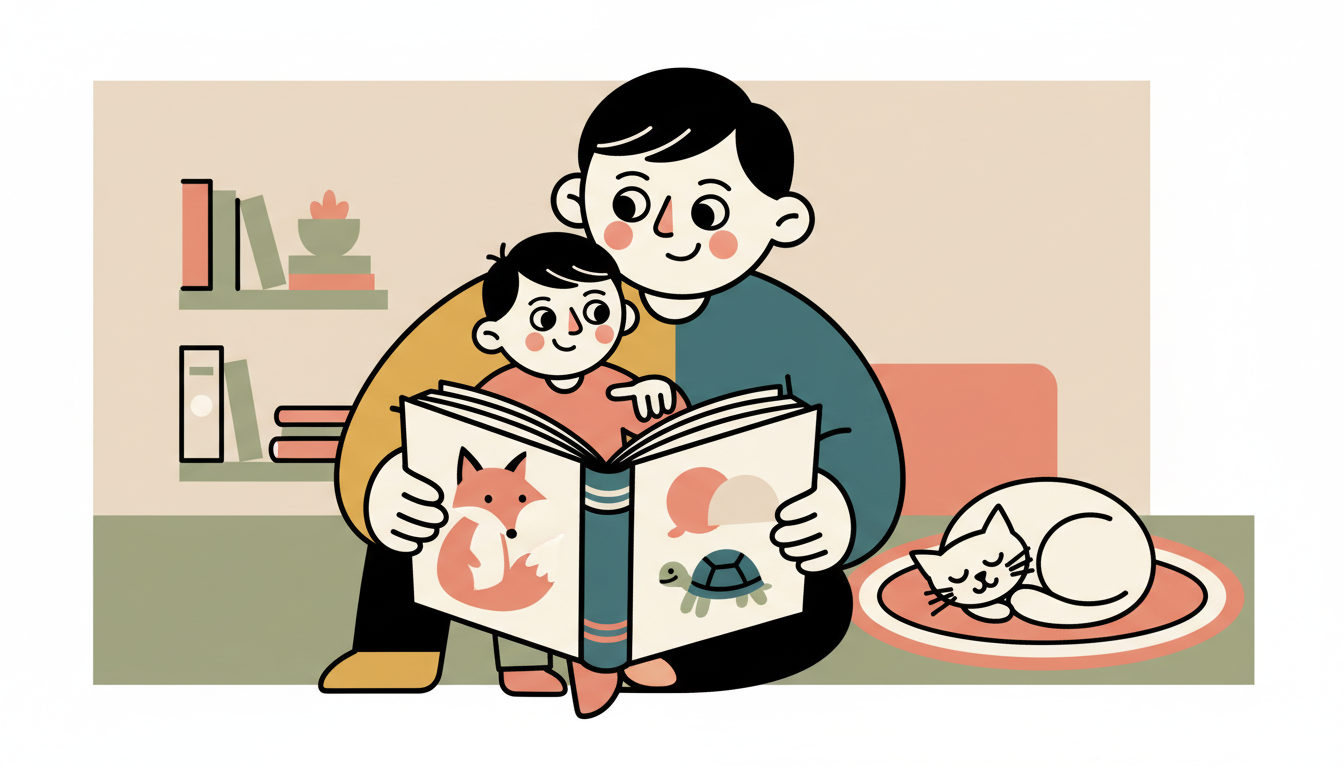
Read simple stories featuring characters who tell the truth or face consequences of dishonesty. After reading, ask your child basic questions about what happened. You might say, "What did the character do?" or "How do you think they felt?" Keep the discussion brief and focused on one or two simple points about honesty.
Part of the Imprint developmental journey — personalized to your child.
How to Do This Activity
Read simple stories featuring characters who tell the truth or face consequences of dishonesty. After reading, ask your child basic questions about what happened. You might say, "What did the character do?" or "How do you think they felt?" Keep the discussion brief and focused on one or two simple points about honesty.
Why It Works
Stories and narratives enhance memory and help children understand social concepts. Longitudinal studies show that children rated high on honesty and moral reasoning by age 5 have 30% lower rates of academic misconduct and disciplinary issues throughout their school careers (Eisenberg et al., 2015). Reading stories about honesty provides a foundation for developing these skills early.
Tips for Parents
Choose books with clear, simple plots that show characters admitting mistakes or telling the truth. Look for stories where honest behavior leads to positive outcomes.
Connect the story to your child's experiences when possible. You might say, "Remember when you told me about spilling your juice? That was being honest."
Materials Needed
Age-appropriate picture books about honesty
Learning Methods
Symbolic and Pretend PlaySongs, Stories, and Rhymes

Loved this activity? Let us do the planning for you.
Imprint personalizes every activity to your child — their interests, their stage, the traits they're building — so playtime is more fun and every moment counts.
Science-backed. Private by design. No spam.