Giving hugs for help
1–2 yearsEmotional WellbeingNo materials needed
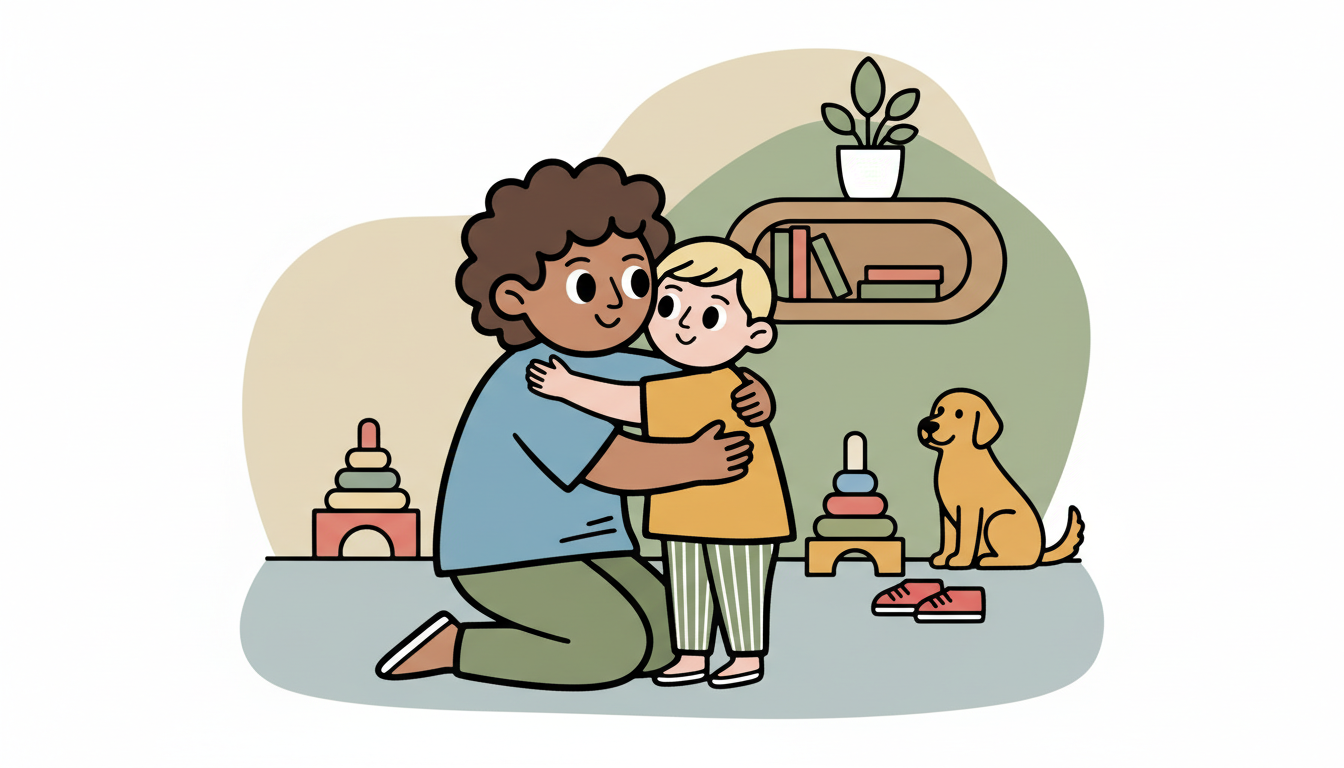
When someone helps your child with something like putting on shoes or cleaning up toys, suggest a thank you hug. Model by giving a hug yourself, then encourage your child to do the same. This physical expression of thanks feels natural for toddlers. It connects appreciation with warm, positive feelings and strengthens relationships through affection.
Part of the Imprint developmental journey — personalized to your child.
How to Do This Activity
When someone helps your child with something like putting on shoes or cleaning up toys, suggest a thank you hug. Model by giving a hug yourself, then encourage your child to do the same. This physical expression of thanks feels natural for toddlers. It connects appreciation with warm, positive feelings and strengthens relationships through affection.
Why It Works
Physical expressions of gratitude match the developmental stage where toddlers are learning non-verbal communication. Showing appreciation through hugs reinforces positive relationships and creates emotional connections to thankfulness. Research shows that childhood gratitude habits developed through regular acknowledgment predict adult gratitude practices, which are linked to 15% greater life satisfaction and reduced stress (Emmons & McCullough, 2003).
Tips for Parents
Always ask if the other person wants a hug before encouraging your child.
Model gentle, brief hugs so your child learns appropriate touch.
Praise your child when they show appreciation in any way.
Materials Needed
None
Learning Methods
Language-Rich EnvironmentImitation and Modeling

Loved this activity? Let us do the planning for you.
Imprint personalizes every activity to your child — their interests, their stage, the traits they're building — so playtime is more fun and every moment counts.
Science-backed. Private by design. No spam.