Feelings song and movement
2–3 yearsSuccess MindsetNo materials needed
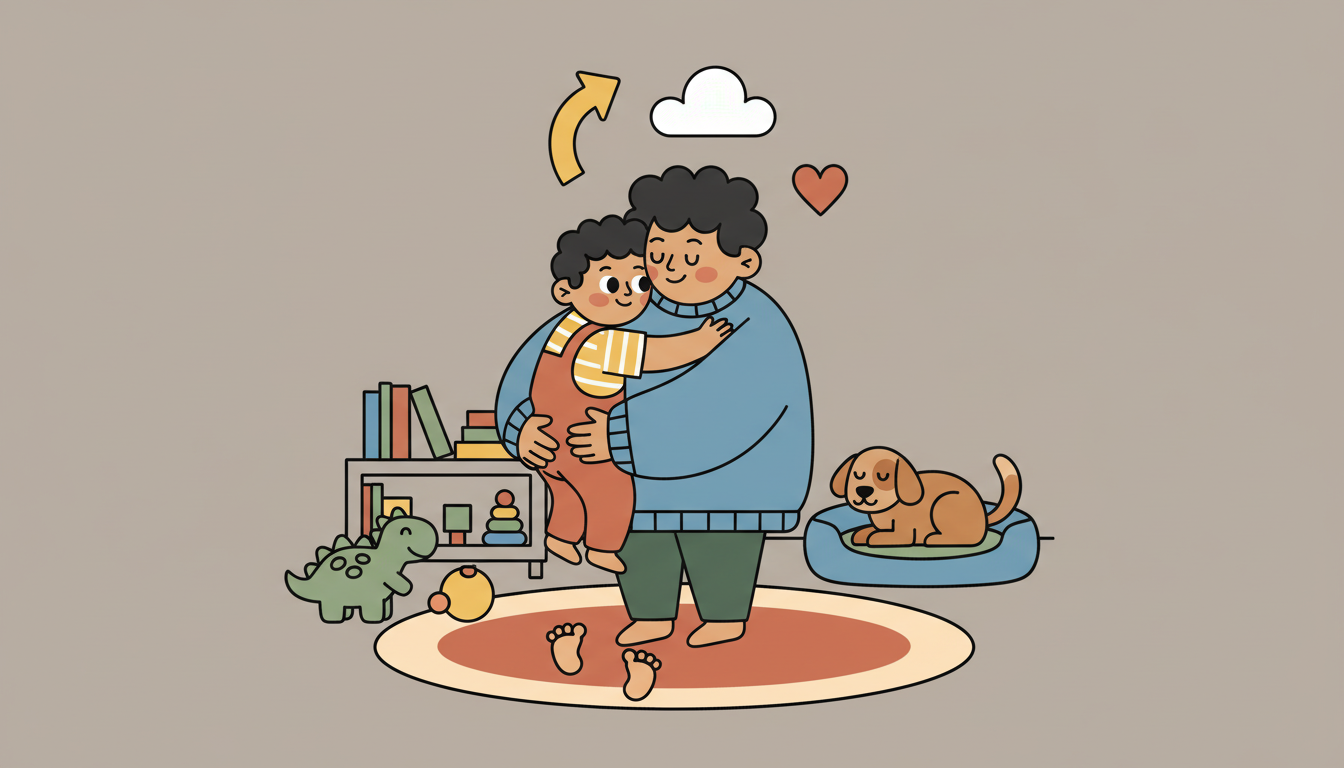
Sing simple songs about feelings with your child and add movements. For example, sing to a familiar tune "When I feel happy, I can smile" (smile together) or "When I feel scared, I can hug" (hug together). Make it playful and interactive. This teaches your child they can express emotions and come to you for comfort.
Part of the Imprint developmental journey — personalized to your child.
How to Do This Activity
Sing simple songs about feelings with your child and add movements. For example, sing to a familiar tune "When I feel happy, I can smile" (smile together) or "When I feel scared, I can hug" (hug together). Make it playful and interactive. This teaches your child they can express emotions and come to you for comfort.
Why It Works
Songs and repetitive patterns help young children learn and remember important concepts. Research shows that securely attached children exhibited better emotional recovery and more appropriate emotion expression (Borelli et al., 2021). Using music to practice emotional expression and comfort-seeking makes these skills more accessible and memorable for your child, strengthening their ability to seek support when they need it.
Tips for Parents
Keep the song simple with movements your child can do. Repeat the same song often so it becomes familiar.
Use the song during real emotional moments too. If your child is upset, you might softly sing "When I feel sad, I can hug."
Make it fun and light. The goal is connection and learning, not perfect singing or movements.
Materials Needed
None
Learning Methods
Symbolic and Pretend PlaySongs, Stories, and RhymesInteractive Play-Based Learning

Loved this activity? Let us do the planning for you.
Imprint personalizes every activity to your child — their interests, their stage, the traits they're building — so playtime is more fun and every moment counts.
Science-backed. Private by design. No spam.